
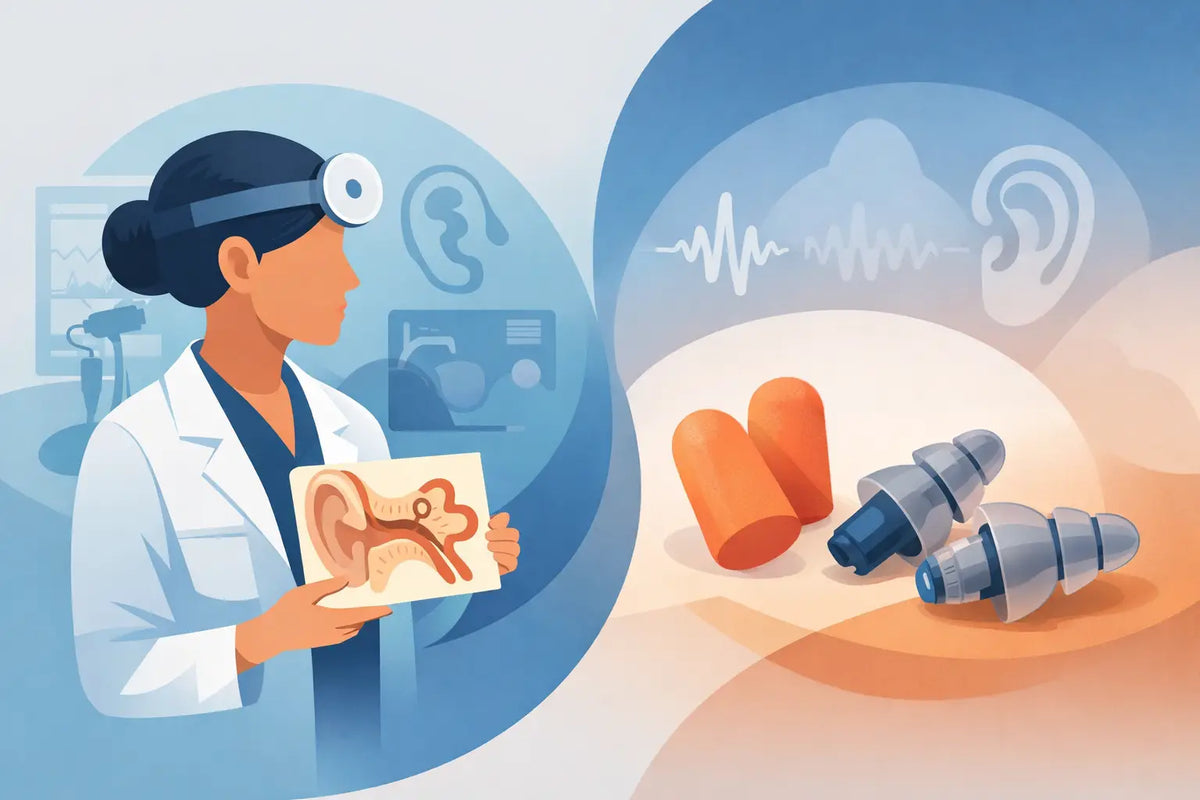
The difference is obvious the moment you leave a loud venue and your ears are not ringing. That is why many people start looking for audiologist recommended earplugs only after a concert, shift, flight or busy commute reminds them that hearing damage is easier to cause than to reverse. Good hearing protection should lower harmful noise without cutting you off from speech, warning sounds or the world around you.
What makes audiologist recommended earplugs different?
Not all earplugs are designed with hearing health in mind. Many low-cost options focus on blocking as much sound as possible, often with little consideration for balance, comfort or clarity. That can work in some situations, particularly for sleep or very high-noise environments, but it is not always the best answer for daily life.
Audiologist recommended earplugs are usually chosen with a different standard in mind. The goal is not simply to make everything quieter. The goal is to reduce sound to a safer level while keeping listening more natural. That matters if you want to hear conversation at work, follow announcements while travelling, enjoy music with less distortion, or stay aware of traffic and surroundings.
This approach comes from an understanding of how hearing damage happens. Risk is linked to both noise level and duration of exposure. If you regularly spend time in loud settings, even moderate improvements in protection can make a meaningful difference over time. Earplugs backed by audiology expertise are more likely to account for that real-world balance between protection and usability.
Why clarity matters as much as noise reduction
A common reason people give up on earplugs is that everything sounds dull. Speech becomes hard to follow. Music loses detail. You feel cut off, so the plugs end up in a pocket instead of in your ears.
That is a product problem, not a hearing protection problem.
When earplugs are designed well, they can reduce volume without creating that heavily muffled effect people associate with basic foam plugs. This is especially important for musicians, hospitality staff, tradespeople, frequent flyers and anyone who still needs to communicate in noisy spaces. If protection ruins intelligibility, people are less likely to wear it consistently.
Consistency matters. Hearing protection only works when it is actually used. For many adults, the best option is not the highest possible attenuation. It is the earplug they can wear comfortably and correctly for the full period of exposure.
Audiologist recommended earplugs for different situations
The right earplug depends on where and how you use it. That is one reason generic advice often falls short.
For concerts and live music, the aim is usually to lower overall volume while preserving the shape of the sound as much as possible. Music lovers and performers often want filtered protection that keeps speech and musical detail clearer than standard foam.
For work settings, needs vary more. A workshop, factory floor or construction site may require stronger attenuation and compatibility with other protective equipment. In some roles, clear communication and awareness of alarms are still essential, so over-blocking can create practical problems.
For travel, comfort becomes a bigger factor. Earplugs for flights or regular commuting need to feel easy to wear for longer periods. If they create pressure, irritation or a plugged-up sensation, many people stop using them.
For noise-sensitive users, the target may be relief rather than occupational protection alone. In that case, earplugs still need to reduce strain without making daily interaction unnecessarily difficult.
The best choice depends on noise level, duration, fit and listening needs. There is no single earplug that is perfect for every setting.
Fit is not a small detail
Even a well-designed earplug will underperform if it does not fit properly. This is where many people get a false sense of security. They assume that because the plug is in the ear, it is working as intended. In reality, a poor seal can reduce protection significantly.
Comfort and fit also influence long-term use. If earplugs feel too large, too rigid or irritating after an hour, people tend to remove them or insert them loosely. That lowers protection at exactly the point it is needed.
Audiology-led products tend to take fit more seriously because real protection depends on proper wear. Softer materials, shape, insertion depth and filter design all affect how an earplug performs in practice. For some users, reusable universal-fit options work well. For others, especially those with fit challenges or frequent high-noise exposure, custom solutions may be worth considering.
When foam earplugs are useful and when they are not
Foam earplugs are not automatically poor. They can be effective in certain environments and they remain a practical option for short-term use, sleep, or situations where maximum reduction matters more than sound quality. They are widely available and often inexpensive.
The trade-off is that they can muffle heavily, vary in fit and feel uncomfortable for some users. They are also commonly inserted incorrectly, which reduces their real protection. If your main complaint is that earplugs make everything sound muddy or stop you hearing people properly, foam may not be the best choice for your routine.
That is often where audiologist recommended earplugs stand apart. They are more likely to be selected for measured attenuation, wearability and clearer listening, not just raw noise blocking.
What to look for before you buy
If you are comparing options, start with the situation rather than the packaging claim. Ask what noise you are trying to reduce, how long you will wear the earplugs, and whether you need to hear speech, music or safety cues clearly.
Then look at attenuation with context. More reduction is not always better. Too little may leave you exposed, but too much can isolate you and discourage regular use. The ideal level is one that brings noise into a safer, more manageable range.
Material and shape matter too. Reusable earplugs should feel secure without causing soreness. If you plan to wear them often, easy cleaning and durable construction matter. If you need them for events or work, consistency from one use to the next matters more than novelty features.
It is also worth paying attention to who stands behind the product. In a category tied directly to hearing health, expert input matters. A hearing protection brand developed from an audiology perspective is more likely to focus on outcomes that actually matter - protection, clarity, comfort and sustained use.
Who should consider audiologist recommended earplugs?
Anyone exposed to repeated loud sound can benefit, but some groups have more to gain from specialist protection. Musicians and concertgoers often need reduced volume without losing detail. Trade and industrial workers may need dependable attenuation alongside communication. Frequent travellers may want relief from cabin and transport noise without discomfort. Health-conscious professionals often simply want better prevention before symptoms start.
You do not need to wait for ringing, sound sensitivity or listening fatigue to take hearing protection seriously. Prevention is easier than treatment. Once hearing is damaged, it cannot usually be restored by a better purchasing decision later.
That is why many people move away from commodity earplugs and towards options informed by hearing science. They want something they will actually wear, in the places where hearing is most at risk.
A better standard for hearing protection
Choosing earplugs should not feel like choosing between safety and clarity. The best products are designed to support both. That is the value of audiologist recommended earplugs. They reflect a more useful question than simply how much sound can be blocked. They ask how hearing can be protected in a way people can live with.
For buyers who want more than a basic disposable solution, that difference matters. Brands such as Jett Maxwell have helped raise expectations by focusing on hearing protection that reduces harmful noise while preserving the clarity people rely on every day.
If your earplugs leave you straining to hear, tempted to remove them, or unsure whether they are doing enough, that is usually a sign to choose more carefully. Hearing protection works best when it fits your life well enough to become routine.