
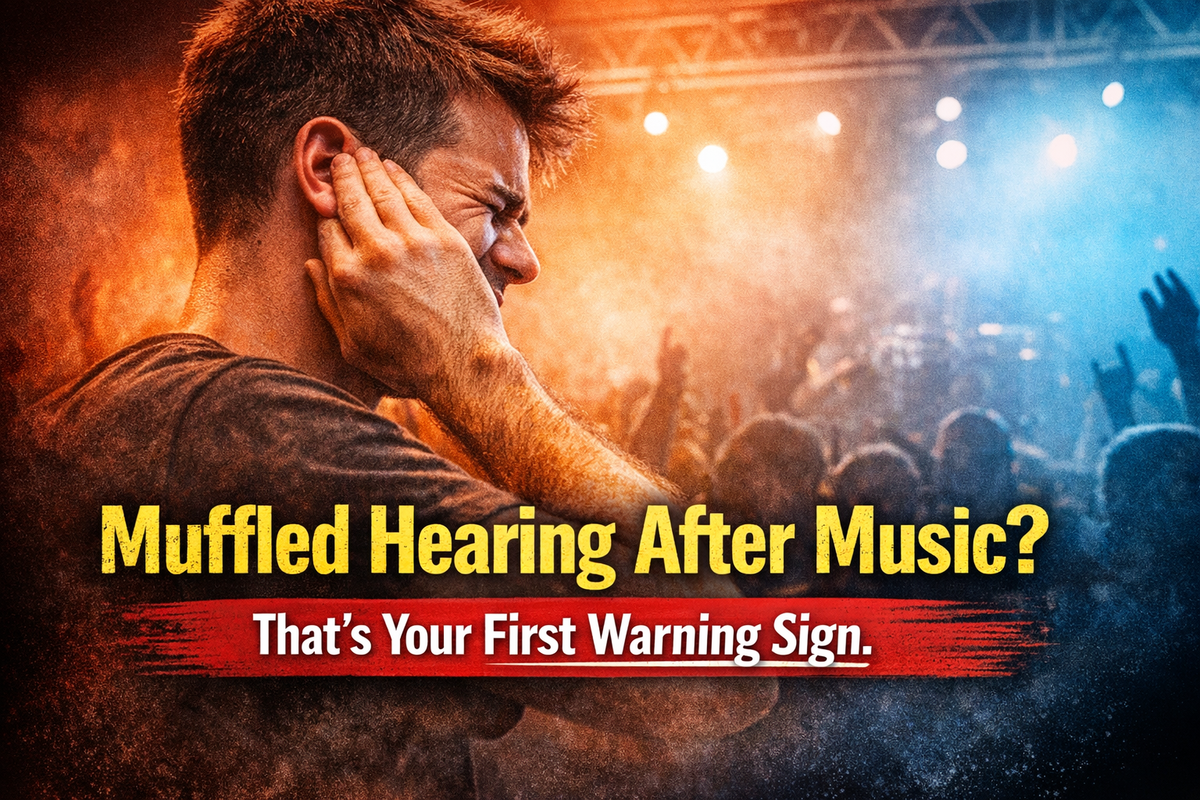
What Temporary Threshold Shift Really Is
Temporary Threshold Shift is the temporary loss of hearing sensitivity after loud noise exposure.
People experience it as:
• Muffled or dull hearing
• Ringing or buzzing (tinnitus)
• Needing the TV louder
• Speech sounding unclear
• Sensitivity to noise
• A blocked or pressured feeling
It usually fades over hours or days — which is why people are falsely reassured.
But inside your ear, something very different is happening.
Your Middle Ear Tries to Protect You — But It Can’t
Inside your middle ear are two tiny muscles — the stapedius and tensor tympani.
When sound becomes loud, they contract automatically (the acoustic reflex) to slightly reduce how much sound energy reaches your inner ear.
This is your ear’s built-in emergency brake.
The problem?
• The reflex reacts slowly
• It fatigues quickly
• It barely reduces high-frequency sound
• It cannot protect against sustained noise
So even though your middle ear tries to help, damaging sound still floods your cochlea.
The real injury happens deeper.
Where The Damage Actually Happens
Inside your cochlea are microscopic hair cells and nerve synapses that convert sound into electrical signals for your brain.
When these are overloaded by loud noise:
• Hair cells fatigue and bend
• Nerve synapses partially disconnect
• Blood flow and oxygen drop
• Neural signalling weakens
Your brain receives less information — so your hearing threshold “shifts.”
That dull, muffled feeling is nerve stress and micro-trauma.
Some of this damage never fully repairs.
Every TTS event leaves microscopic permanent loss behind.
You just don’t feel it yet.
Why Hearing Loss Feels “Sudden” Later
People don’t suddenly lose their hearing.
They slowly destroy it through repeated TTS episodes.
Each episode chips away at neural connections — until one day your brain can no longer compensate.
Then it feels sudden.
It wasn’t.
Your ears were warning you for years.
Why Ringing Ears Are a Red Flag
Ringing after noise exposure means your auditory nerve has been overloaded.
That ringing is your brain filling in missing signals — a sign of nerve injury.
Ignore it often enough and tinnitus becomes permanent.
This is how it starts.
Why Cheap Foam Earplugs Don’t Solve The Problem
Foam plugs block sound — but they:
• Kill music clarity
• Muffle speech
• Feel uncomfortable
• Create pressure
• Get removed halfway through
Which means people stop wearing them.
And once the plugs are out, the damage continues.
False protection is not protection.
The Smarter Solution: Filter, Don’t Block
Your ears don’t need silence.
They need controlled sound.
Jett Maxwell Tone-Filter Plugs use acoustic filtering to reduce damaging sound energy while keeping music and speech natural and clear — so you actually keep them in.
Protection you keep in = protection that works.
If You’ve Felt This, You’re Already On The Line
Muffled hearing.
Ringing ears.
Sensitivity after noise.
Those are injury signals.
Not harmless side-effects.
Not “tired ears.”
Your ears are telling you the safe limit has been exceeded.
And you now have a choice:
Ignore it — or stop it getting worse.
You only get one set of ears.
Protect them before your warning signs become permanent.