
A single loud night can leave your ears ringing by bedtime. The problem is that hearing damage does not always arrive with a dramatic warning. That is one reason why hearing protection should be treated as routine prevention, not something reserved for factories, building sites or live music professionals.
Most people think about hearing only when something feels wrong - muffled sound, ringing, sensitivity, or the sense that conversations have become harder to follow. By then, some damage may already have happened. Hearing protection matters because the inner ear is delicate, noise exposure adds up over time, and once hearing is damaged, it cannot simply be restored by willpower or rest.
Why hearing protection is not optional in loud environments
Your ears are built to handle everyday sound, not repeated or extreme noise. Inside the inner ear are tiny sensory hair cells that help convert sound into signals your brain can understand. Excessive noise can damage these cells. Unlike many other cells in the body, they do not regenerate.
That is the core answer to why hearing protection matters. It reduces the amount of harmful sound reaching the ear before damage occurs. Prevention is far more effective than trying to manage the consequences later.
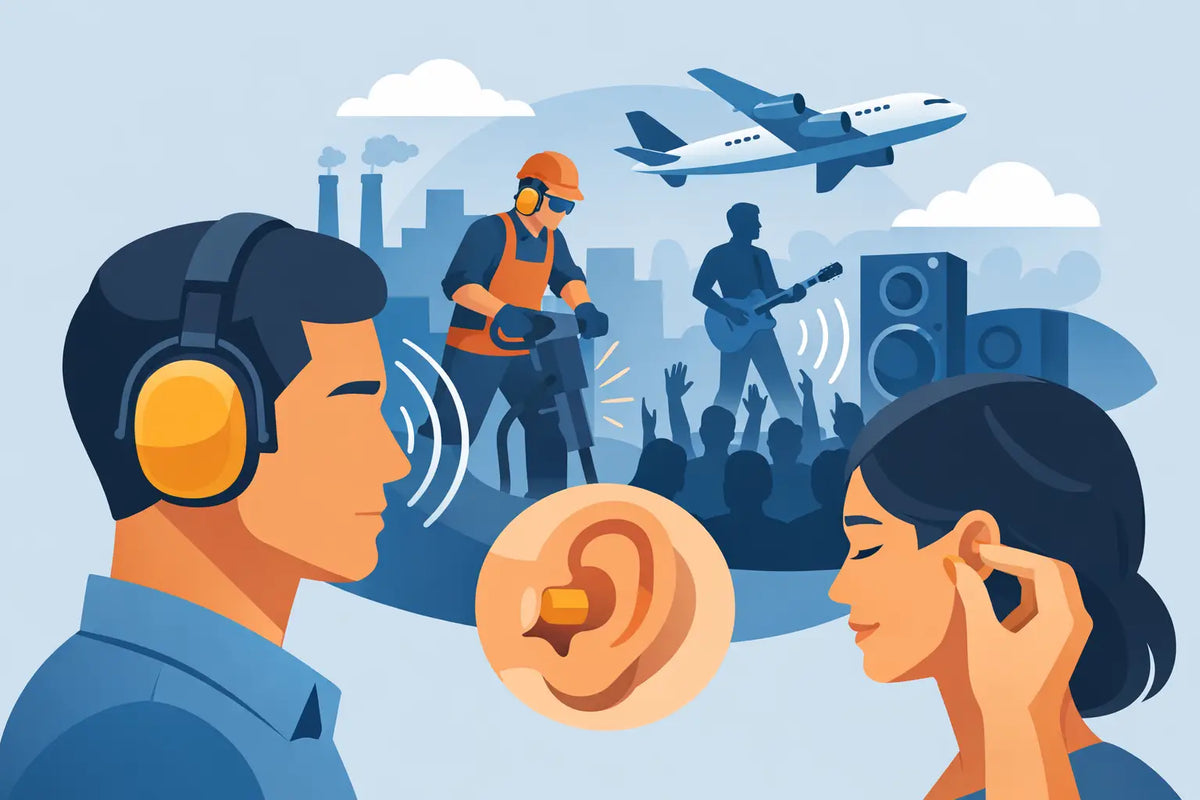
This applies across more settings than many people realise. Loud noise is not limited to heavy industry. It can come from concerts, commuting, flights, motorbikes, power tools, gyms, nightclubs, sporting events, hospitality work and even regular DIY. Some exposures are short but intense. Others are moderate but frequent. Both can be a problem.
The risk depends on volume, duration and repetition. A very loud sound can be damaging quickly. Lower levels may still become harmful if you are around them often enough. That is why people who say, "It was only one event" or "I am only exposed now and then" are not always in the clear. Noise dose matters.
Hearing damage is often gradual
One reason people delay protection is that hearing loss usually does not feel immediate. Vision changes are obvious. Hearing changes can be subtle. You may still hear, but with less precision. Speech may seem less crisp. Busy places may feel more tiring. You may ask people to repeat themselves more often, especially when there is background noise.
This gradual shift matters because it can affect daily life long before someone thinks of it as a hearing issue. Work meetings become harder to follow. Social settings take more effort. Music can lose detail. Fatigue rises because the brain is working harder to fill in missing information.
Tinnitus is another major concern. Ringing, buzzing or hissing in the ears after noise exposure is often treated as temporary and harmless. Sometimes it is temporary. Sometimes it is an early sign that the ears have been under too much strain. Repeated episodes should not be ignored.
Why "I can cope with loud noise" is not the same as being safe
Tolerance is not protection. You may be used to loud environments and still be accumulating damage. Some people also assume that if their ears stop ringing by morning, everything is fine. Recovery of symptoms does not guarantee that no harm was done.
There is also a common misconception that hearing loss is only a concern later in life. Age-related change is real, but noise exposure can accelerate it. Protecting hearing earlier helps preserve more of it later.
The real benefit of hearing protection is not silence
Many people avoid earplugs because they expect everything to sound blocked, dull or disconnected. That concern is understandable. Traditional foam plugs can be useful in some settings, but they often over-muffle sound and reduce speech clarity. If protection makes communication too difficult, people are less likely to wear it properly or consistently.
Good hearing protection is not about shutting the world out. It is about reducing harmful noise while keeping useful sound more intelligible. That distinction matters in the real world.
If you work around machinery, you still need awareness. If you are at a gig, you want to enjoy the music, not hear a muddy blur. If you travel often, you may want relief from engine noise without feeling cut off from announcements or conversation. The best protection balances safety with clarity.
This is where audiology-led design makes a meaningful difference. Protection should not be treated as a commodity when the goal is long-term hearing health. Fit, attenuation profile and comfort all influence whether a product actually helps in everyday life.
Why hearing protection needs to match the situation
There is no single solution for every noisy environment. The right level of protection depends on what kind of sound you are dealing with and what you still need to hear.
For example, musicians and concertgoers often need flatter sound reduction so music remains more natural. Trade workers may need dependable attenuation with secure fit and practical wear over long periods. Frequent flyers may prioritise comfort during extended travel and relief from sustained cabin noise. Someone who is noise-sensitive may simply want to reduce auditory stress without losing all environmental awareness.
This is why the question is not just "Do I need hearing protection?" but "What kind of protection will I actually wear and benefit from?" Too little protection may not be enough. Too much, or the wrong type, can make communication harder and reduce compliance.
Comfort affects safety
An uncomfortable earplug is often a short-lived earplug. If it creates pressure, slips out, irritates the ear canal or leaves you constantly adjusting it, it is less likely to be used consistently. From a hearing health perspective, that matters.
Effective protection has to work acoustically, but it also has to fit daily life. That includes comfort, ease of insertion, predictable performance and the ability to wear it for the full period of exposure.
Common moments when people should think about hearing protection
Not every loud situation looks dramatic. Some of the most overlooked noise exposure happens in routine life. People often need protection when using power tools at home, attending live events, travelling frequently, riding motorbikes, working in hospitality, teaching in noisy spaces, or spending shifts in trade and industrial settings.
Parents should also think ahead for teenagers and young adults who regularly attend clubs, festivals and amplified events. Early habits make a difference. Preventive hearing care is easier to start before symptoms appear.
If you ever leave a place with ringing ears, dulled hearing or listening fatigue, your ears have likely been exposed to too much sound. That does not mean every episode causes measurable long-term loss, but it does mean the exposure was not benign.
Why hearing protection belongs in preventive health
People are comfortable with the logic of sunglasses, sunscreen and seatbelts. Hearing protection belongs in the same category. It is a practical measure that lowers risk before there is a problem to fix.
The difficulty is that hearing damage is invisible. You cannot inspect the inner ear at home and see what has changed. Because of that, many people underestimate the value of protection until they notice persistent symptoms.
From an audiology perspective, the case is straightforward. Repeated noise exposure can harm hearing. Harm can accumulate. Prevention is simpler than treatment. The sensible response is not fear. It is preparation.
That preparation should also be realistic. You do not need to avoid music, travel, work or social events. You need protection that suits the environment and preserves enough clarity to keep functioning normally. That is the point.
For adults who want to look after their long-term hearing without feeling isolated, better hearing protection solves a genuine problem. It helps reduce risk while keeping speech and surroundings more usable. That is why specialist, clarity-focused protection has become more relevant than ever.
Jett Maxwell builds around that balance - block harmful noise, keep clarity, and protect the hearing you will still need tomorrow.
Your hearing does a quiet amount of work every day. Looking after it now is one of the few health decisions that can spare you years of avoidable frustration later.