
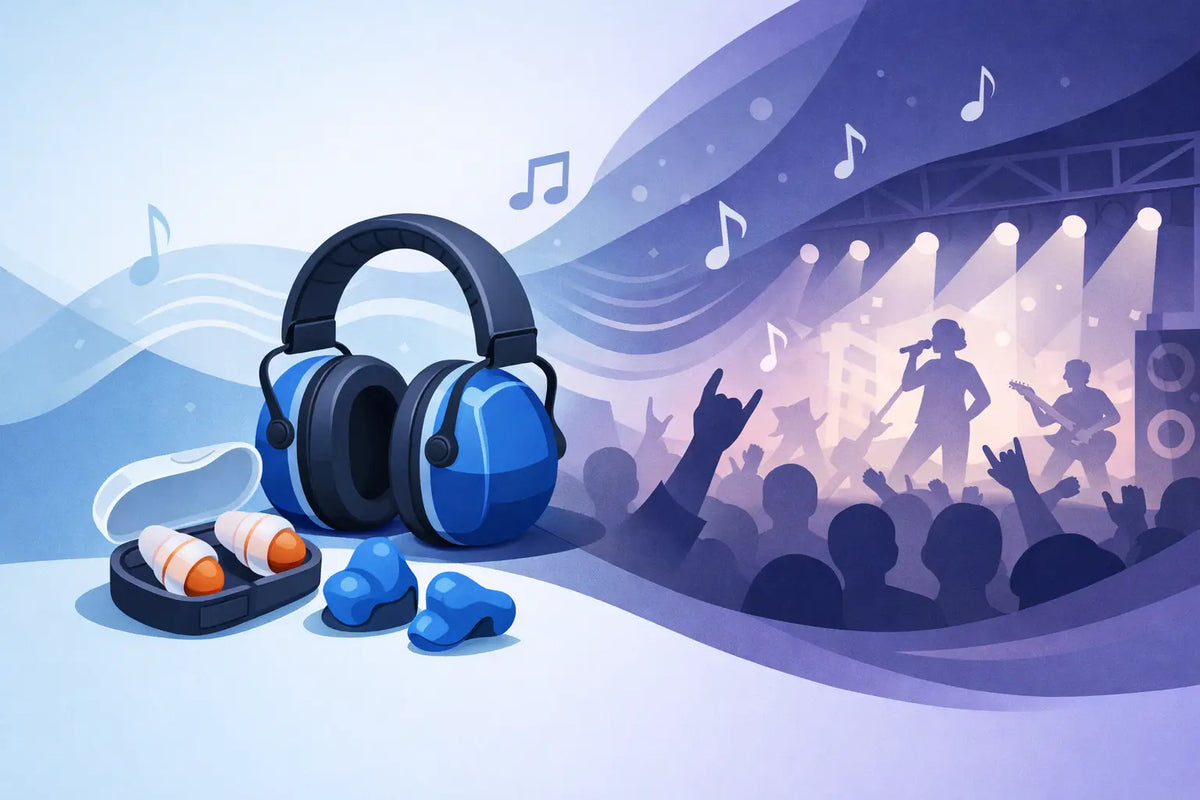
If your ears are still ringing the morning after a gig, your hearing was exposed to more noise than it can safely handle. Finding the best ear protection for concerts is not about shutting music out. It is about lowering damaging volume while keeping enough clarity to enjoy the set, follow speech and leave without that dulled, fuzzy feeling.
Concert sound levels often sit well above what hearing professionals consider safe for extended exposure. The risk is not limited to standing by the speakers at a festival. Indoor venues, clubs, arenas and even smaller live rooms can all push sound high enough to cause temporary threshold shift, tinnitus and, over time, permanent hearing damage. The good news is that the right ear protection can make a real difference without ruining the experience.
What makes the best ear protection for concerts?
The short answer is balance. The best concert ear protection reduces sound to a safer level without making music feel flat or distant. That is where many basic foam plugs fall short. They can block a lot of sound, but they often do it unevenly, cutting higher frequencies more aggressively and leaving everything muddy.
For concerts, most people are better served by filtered earplugs. These are designed to lower volume more evenly across frequencies, which helps preserve the character of music. You still hear vocals, instruments and crowd sound, just at a less harmful level. If you want protection that lets you stay connected to the performance, this matters.
Fit matters just as much as the filter. Even a well-designed earplug will underperform if it does not seal properly. Too loose, and sound leaks in. Too tight, and you are unlikely to wear it for the whole show. The best option is the one you will actually keep in your ears from support act to encore.
Why ordinary foam earplugs are not always the best choice
Foam earplugs have their place. They are inexpensive, widely available and capable of high noise reduction when inserted correctly. In very loud environments, that level of attenuation can be useful. But concerts are not just about reducing volume. They are about preserving listening quality as well.
Foam plugs tend to muffle speech and music, which is why many concertgoers try them once and never use them again. They may feel disconnected from the room, remove the plugs halfway through the set, and end up with the same exposure they were trying to avoid. Protection only works when it is worn consistently.
That does not mean foam is always wrong. If you are attending an extremely loud event and your priority is maximum reduction at the lowest cost, it can be a practical fallback. But if you regularly go to gigs and care about sound quality, filtered earplugs are usually the better long-term choice.
Filtered earplugs vs custom earplugs
There are two main categories worth considering. Universal filtered earplugs come with pre-set filters and interchangeable ear tips. They are the most practical option for many people because they are affordable, portable and easy to replace. A good pair can offer a strong balance of comfort, clarity and protection for occasional to regular concert use.
Custom-moulded earplugs are made to fit the exact shape of your ear canal. They are often chosen by musicians, sound engineers and frequent live music attendees who want a precise fit and reliable wear over long periods. They can also be fitted with different filters depending on the level of attenuation required.
The trade-off is cost. Custom protection is more expensive and usually requires a professional fitting. For someone who goes to one or two shows a year, that may be unnecessary. For someone in loud venues every weekend, it can be a worthwhile investment in comfort and consistency.
How much noise reduction do you need?
More attenuation is not always better. At concerts, many people do well with moderate reduction because it lowers risk while preserving a natural listening experience. If the earplugs reduce too much, users often remove them to hear better, especially when talking between sets.
The ideal level depends on the venue, where you are standing and how long you will be exposed. A small club near the stage is different from seated arena tickets at the back. If you attend festivals, move between stages and spend hours in noisy spaces, a little more reduction may make sense. If your main concern is clear music at moderate protection levels, a lower or mid-range filter may be the better fit.
This is where audiology-led product design stands out. Good hearing protection is not simply about blocking as much sound as possible. It is about reducing risk in a way people can comfortably live with and wear consistently.
Comfort is not a minor detail
A surprising number of people judge ear protection only by advertised noise reduction. In reality, comfort often decides whether a product succeeds or fails. Concerts are active environments. You may be singing, talking, walking, dancing and wearing your earplugs for several hours. Poor fit becomes distracting very quickly.
Look for soft ear tips in multiple sizes, low-profile designs that do not protrude too much, and materials that feel stable without causing pressure. If you find yourself constantly adjusting the plugs, the fit is probably wrong. A secure, comfortable seal should feel unobtrusive after a few minutes.
If you have narrow ear canals or have struggled with standard earplugs before, do not assume all products will feel the same. The shape, flexibility and tip options vary significantly. This is one reason specialist brands often outperform generic alternatives.
Signs a concert earplug is worth buying
The best ear protection for concerts usually shares a few core traits. It offers filtered attenuation rather than blunt sound blocking. It is comfortable enough for extended wear. It stays in place. It preserves speech intelligibility better than basic foam. And it comes from a company that treats hearing protection as a hearing health product, not a throwaway accessory.
It is also worth paying attention to whether the product explains its attenuation clearly. Vague claims are not especially helpful. Buyers should be able to understand what kind of reduction they are getting and what the product is designed for.
For people who want a more health-led approach, audiologist-informed hearing protection can offer extra confidence. That clinical perspective matters because noise exposure is cumulative. A ringing ear after one show may fade. Repeated exposure is where long-term problems begin.
Common mistakes concertgoers make
The first is waiting until symptoms appear before taking action. Tinnitus, sound sensitivity and difficulty hearing in noisy rooms do not always arrive suddenly. Hearing damage can build slowly.
The second is wearing earplugs only for the loudest songs or only when standing near the speakers. Exposure is about volume and time. If the venue is loud, partial use leaves a lot of risk on the table.
The third is choosing the cheapest option and assuming all ear protection is basically the same. It is not. Materials, acoustic filters, fit and design all affect both protection and listening quality.
The fourth is inserting earplugs incorrectly. Even excellent earplugs perform poorly if they are not seated properly. A poor seal reduces effectiveness and can make sound quality worse.
Who should consider custom protection?
If concerts are a regular part of your life, custom earplugs deserve serious consideration. They are especially useful for musicians, venue staff, DJs, photographers, sound engineers and frequent gig-goers who spend long periods in high-volume environments.
They also make sense if you have tried several universal options and still struggle with comfort or retention. A custom fit can solve that problem in a way off-the-shelf products sometimes cannot. For those who need dependable performance night after night, custom protection is often the most practical route rather than an indulgence.
A better way to think about hearing protection
The goal is not to make concerts quieter in a disappointing way. The goal is to reduce harmful exposure while keeping the experience intact. Good ear protection should let you enjoy the set, hear your friends, and walk out of the venue without sacrificing tomorrow’s hearing for tonight’s encore.
That is why products shaped by hearing expertise matter. Brands such as Jett Maxwell focus on a more useful standard - block noise, keep clarity and hear tomorrow. For concertgoers, that is the right benchmark.
If you love live music, protect your ears before you think you need to. The best time to start is before the ringing becomes part of the routine.