
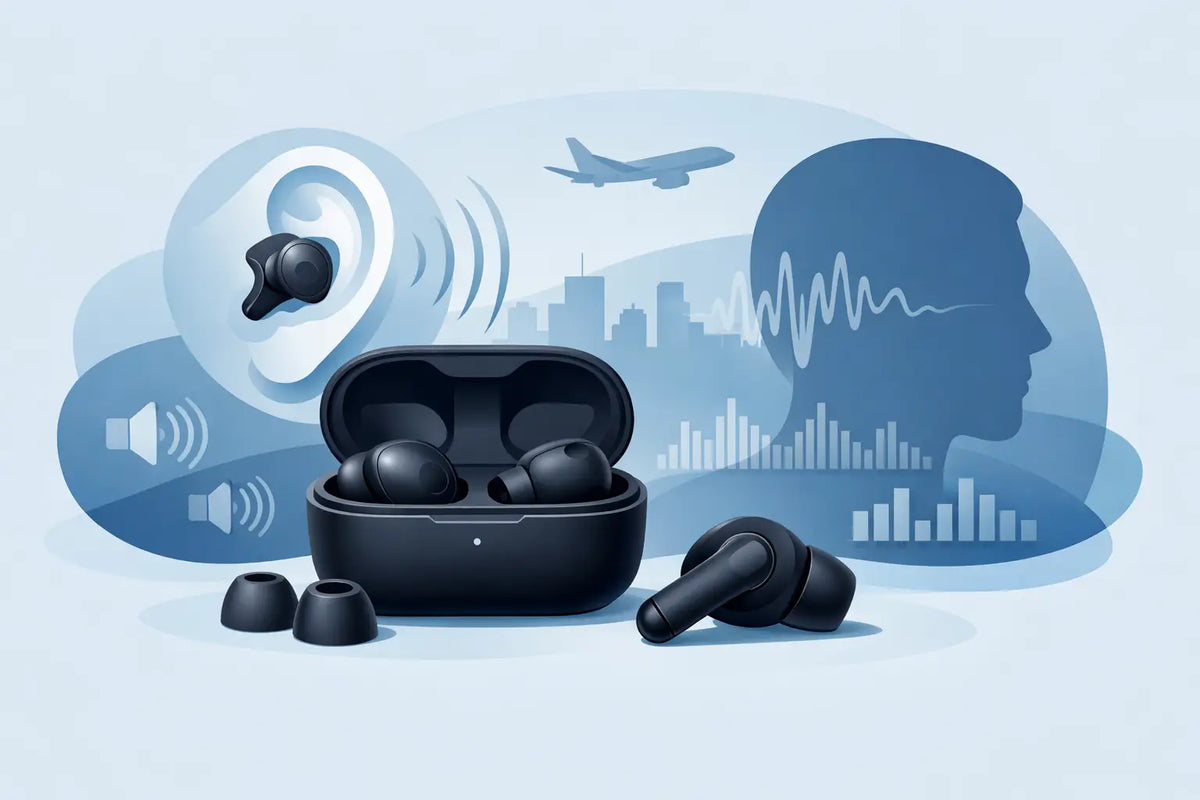
A loud gig sounds exciting for one evening. The ringing afterwards is less impressive. If you are searching for the best noise protection earbuds, the real question is not which product blocks the most sound. It is which one protects your hearing properly while still letting you stay aware, comfortable and connected.
That distinction matters. Many people buy the first pair they see, then stop using them because speech becomes muddy, the fit is awkward or the pressure feels tiring after an hour. Good hearing protection should be effective enough to reduce harmful exposure, but practical enough that you will actually wear it.
What makes the best noise protection earbuds?
The best options do three things well. They lower noise to safer levels, they do it in a controlled way, and they remain comfortable for the setting you are in. If one of those elements is missing, the product is often disappointing in real use.
Too much attenuation can be as unhelpful as too little. In a workshop, on a flight or at a live event, completely shutting yourself off is not always the goal. You may still need to hear instructions, announcements, conversation or warning sounds. That is why better-designed hearing protection aims to reduce damaging noise without turning everything into a dull blur.
This is where many cheap foam plugs fall short. They can be useful in some situations, especially for sleeping or very high-noise environments, but they often distort sound and make communication harder. For buyers who want protection with better clarity, specialised earbuds or filtered earplugs are usually the stronger choice.
Best noise protection earbuds for different needs
There is no single best product for every person because noise exposure is not all the same. The right choice depends on where you wear them, how long you wear them and what you still need to hear.
For concerts, clubs and musicians
Music lovers usually want lower volume, not lifeless sound. Earbuds designed for live events should reduce intensity more evenly across frequencies, so vocals and instruments still sound balanced. That helps prevent the common mistake of removing protection halfway through the night because everything feels muffled.
Musicians and regular gig-goers tend to benefit from products developed with acoustic filtering rather than simple blockage. The trade-off is that premium filtered options often cost more than basic foam plugs. In return, they are far more wearable for people who care about sound quality.
For work and trade environments
If you work around machinery, tools or repeating impact noise, protection needs become more serious. Here, the priority is reliable attenuation and secure fit. Comfort still matters, but not at the expense of protection.
That said, communication on site is often essential. The best earbuds for this use case balance protection with speech intelligibility, especially in environments where hearing instructions quickly can affect safety. If a product isolates you too much, it may not suit the role even if the stated noise reduction looks impressive.
For travel and daily noise sensitivity
Aeroplanes, trains, open-plan offices and city commuting create a different problem. The aim is often to reduce fatigue, not just prevent acute damage. In these settings, softer-feeling earbuds with moderate attenuation may make more sense than heavy-duty options.
People with noise sensitivity also tend to notice comfort more quickly. If the tip material irritates the ear canal or creates too much pressure, even a technically good product will end up in a drawer. Daily usability matters.
Passive protection vs active noise cancelling
This is one of the biggest points of confusion. Active noise cancelling earbuds are not automatically the best noise protection earbuds.
Noise cancelling technology is designed to reduce certain background sounds, especially steady low-frequency noise such as engine rumble. It can improve comfort during travel or office use, but it is not the same as certified hearing protection. Many consumer earbuds focus on listening experience first, with hearing safety as a secondary effect.
Passive protection works differently. It creates a physical barrier and, in better designs, uses acoustic filtering to manage how sound enters the ear. For genuinely noisy settings, passive hearing protection is usually the more dependable choice. In some cases, active and passive features can coexist, but buyers should not assume that premium electronics equal proper hearing protection.
If your concern is long-term hearing health, look beyond marketing terms. Ask what the product is intended to do. Reduce distraction? Improve travel comfort? Or protect hearing during harmful noise exposure? Those are related but different goals.
How to judge fit, comfort and seal
Even the best-designed earbuds cannot protect properly if they do not fit well. A poor seal reduces performance and often tempts people to keep adjusting them, which becomes frustrating fast.
A good fit should feel secure without pain. You should not need to force the earbud deep into the ear canal, and you should not feel excessive pressure after a short period. Different ear tip sizes are useful, but the material matters too. Some people prefer soft silicone for repeated use, while others find alternative materials more stable during movement.
There is also a simple truth many buyers overlook: comfort is part of protection. If earbuds become irritating after twenty minutes, they are unlikely to stay in place for a full shift, flight or set. That means less real-world protection, whatever the specification sheet says.
The numbers matter, but not on their own
Noise reduction ratings can be helpful, but they do not tell the whole story. A bigger number is not always better for every setting.
If you are attending a concert, for example, extremely high attenuation may make the experience feel detached and unnatural. If you are using power tools for extended periods, stronger reduction may be more appropriate. Context is everything.
It is also worth remembering that laboratory ratings do not always match day-to-day wear. Real performance depends on insertion, ear shape, movement and consistency of use. This is another reason professionally informed design matters. Products built from an audiology perspective are more likely to consider how protection works in real life, not only on paper.
Signs a product is worth avoiding
If a pair of earbuds promises complete silence, be cautious. That is rarely realistic or even desirable. Good hearing protection should reduce harmful noise, not create false expectations.
Be wary of vague claims with no explanation of intended use. A product made for sleeping may not suit live music. A pair marketed for commuting may not be suitable for industrial noise. One-size-fits-all language often hides weak performance.
Very cheap options can also become expensive in the long run if they are uncomfortable, ineffective or quickly replaced. With hearing protection, value is not just about purchase price. It is about whether the product helps you protect hearing consistently over time.
Who should choose audiology-led hearing protection?
If you care about preserving clarity as much as reducing noise, audiology-led design is worth paying attention to. This is especially true for musicians, frequent event-goers, workers who rely on communication, and anyone already noticing sensitivity or temporary ringing after noise exposure.
An audiology-informed approach tends to focus on the outcome that matters most: lowering risk without making everyday listening impossible. That is a better standard than simply making the world quieter.
For that reason, brands such as Jett Maxwell stand out in a crowded market. The difference is not just branding. It is the emphasis on hearing health, speech clarity and practical protection people can keep using.
Choosing the right pair for you
Start with your main environment. If your biggest issue is amplified music, choose filtered protection designed to keep sound natural. If you spend time around machinery or tools, prioritise secure fit and suitable attenuation for that exposure. If your problem is travel fatigue or sensitivity to everyday noise, focus on comfort and wearability for longer sessions.
Then be honest about your habits. If you know you dislike bulky products, do not buy the strongest option purely because the number looks impressive. If you need to speak with colleagues, do not choose something that makes every voice sound distant. The best choice is the one you will wear properly and consistently.
Hearing damage often builds gradually. That is why the smartest purchase is rarely the loudest-looking or most heavily advertised one. It is the pair that fits your environment, protects without isolating you too much, and makes regular use easy. Protecting your hearing should feel like a sensible part of daily life, not a compromise you have to tolerate.