
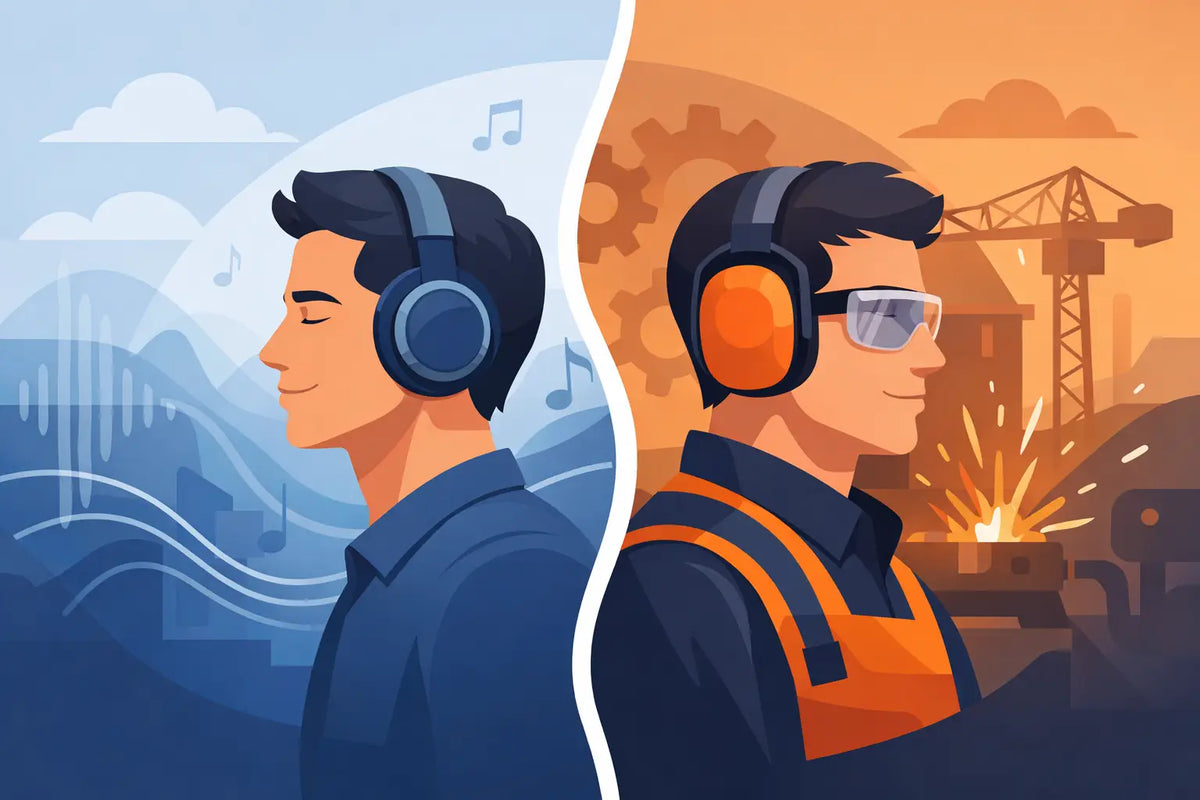
You can sit on a plane in noise cancelling headphones and feel relief within seconds. That does not mean your ears are properly protected for every noisy setting. The confusion around noise cancelling vs hearing protection is common, and it matters because comfort and safety are not the same thing.
Noise reduction technologies can make the world feel quieter. Hearing protection is designed to reduce the sound energy reaching your ears to safer levels. Those two goals overlap in some situations, but they are not interchangeable. If you work in loud environments, attend concerts, travel often, ride a motorbike, or simply want to look after your hearing long term, knowing the difference helps you choose the right solution before damage is done.
Noise cancelling vs hearing protection: the key difference
Noise cancelling is mainly about perceived quiet. Hearing protection is about limiting harmful exposure.
Most noise cancelling headphones use active noise control. Small microphones pick up outside sound, and the device creates an opposite signal to reduce what you hear, especially lower-frequency, steady noises such as engine rumble, cabin hum, or air conditioning. That is why they work so well on flights and trains.
Hearing protection works differently. Earplugs and earmuffs physically reduce the amount of sound entering the ear. Properly designed hearing protection is assessed by how much sound it attenuates across frequencies, not simply by whether it feels calm or pleasant. That distinction is crucial. A device that makes a space feel more comfortable may still leave you overexposed to damaging sound.
This is where many people get caught out. They assume that because something reduces annoyance, it also reduces risk. In hearing health, those are separate questions.
Why noise cancelling feels protective
Active noise cancelling can be genuinely helpful. It reduces listening fatigue, makes travel less draining, and can lower the need to turn up music or podcasts just to mask background noise. In some everyday settings, that is a real benefit for your ears.
For example, if you are on a flight and normally raise your volume to compete with engine noise, noise cancelling headphones may help you listen at a lower level. That can reduce one source of unnecessary exposure. The same applies in open-plan offices or during commutes.
But there is a limit. Active systems are strongest against predictable low-frequency noise. They are less reliable against sudden impact sounds, very high sound levels, or broad-spectrum noise such as machinery, live music, power tools, gunfire, or motorsport. In those environments, hearing protection is not optional just because the sound seems less intrusive.
What hearing protection is designed to do
Hearing protection is built around attenuation - reducing sound reaching the eardrum. Good products do this with a clear purpose: bringing noise down to a safer level while preserving as much useful sound as possible.
That last part matters. People often picture hearing protection as blocking everything out and making speech muddy. Cheap foam plugs can feel like that. Better hearing protection, especially products developed with an audiology perspective, aims for something more refined. It reduces harmful noise while maintaining speech intelligibility and environmental awareness more effectively.
That is particularly important for musicians, venue staff, factory workers, tradespeople, frequent flyers, and anyone who needs protection without feeling cut off. The right protection should help you hear tomorrow without losing the clarity you need today.
Can noise cancelling headphones protect your hearing?
Sometimes, a little. Reliably, not enough.
If you are using noise cancelling headphones in a moderately noisy environment and they help you keep your listening volume lower, they may reduce your overall hearing strain. That is a useful side benefit. But they are not generally treated as certified hearing protection unless they are specifically designed, tested, and labelled for that purpose.
This is the practical test: would you trust standard noise cancelling headphones on a building site, at a drum kit, beside industrial equipment, or in front of festival speakers? You should not. They are not made for that job.
Even when headphones have some passive isolation from their ear cups, the protection can vary depending on fit, seal, frequency, and the type of noise present. Active circuitry can also be less effective with sharp, changing sounds. In high-risk settings, relying on noise cancelling alone can create false confidence.
When hearing protection is the better choice
If the environment is loud enough that you need to raise your voice to be heard at close range, hearing protection should be part of the conversation. The same applies if your ears ring afterwards, sounds seem dull after exposure, or the noise is repeated as part of work, hobbies, travel, or events.
Concerts are a clear example. Noise cancelling headphones are not the smart answer in front of amplified music. You need hearing protection that lowers volume without ruining the experience. The best options are designed to attenuate more evenly, so music stays recognisable rather than turning into muffled bass and dull vocals.
Workplace noise is another. Tools, machinery, workshops, warehouses, and industrial settings demand proper protection matched to the exposure level. Comfort still matters, but comfort without sufficient attenuation is not protection.
Then there is motorcycling, motorsport, and frequent travel. Wind noise and engine noise can be both exhausting and harmful over time. Here, specialised hearing protection often makes more sense than consumer noise cancelling products because the goal is not just a calmer experience - it is sustained hearing health.
Noise cancelling vs hearing protection for different users
For travellers, noise cancelling headphones can be excellent for comfort and lower-volume listening. If your main issue is aircraft cabin hum, they are useful. But if you are also dealing with prolonged loud transit noise, earplugs designed for travel or broader hearing protection may still be worth considering.
For music lovers, musicians, and concertgoers, purpose-built earplugs are usually the better answer. You want volume reduced, not detail destroyed. That is where acoustic filtering matters.
For trade and industrial workers, proper hearing protection is essential. This is not an area for guesswork or convenience-led substitutes.
For people with noise sensitivity, the answer depends on the setting. Noise cancelling can be soothing in everyday environments. Hearing protection may be better when actual exposure risk is present. Some people use both at different times, but the reason for each should be clear.
The trade-off people really care about: safety or clarity?
It is not actually a choice between the two. The best hearing protection aims for both.
This is where product quality matters more than many buyers realise. Low-cost solutions often attenuate unevenly, feel uncomfortable, or make communication frustrating. That leads people to remove them, wear them incorrectly, or avoid protection altogether. A technically stronger product with better fit and clearer sound is not just nicer to use. It is more likely to be worn consistently, which is what protects hearing in real life.
From an audiology standpoint, the ideal outcome is simple: reduce harmful noise without making the user feel isolated, unsafe, or disconnected. That principle sits at the heart of better hearing protection design and explains why not all earplugs perform the same way.
How to choose properly
Start with the noise, not the product category. Ask what kind of sound you are dealing with, how loud it is, how long you are exposed, and whether you still need to hear speech, warnings, or music clearly.
If the environment is mainly low-frequency and steady, such as plane or train noise, noise cancelling may improve comfort and help reduce your listening volume. If the environment is loud, variable, or potentially hazardous, choose hearing protection designed for attenuation.
Fit is just as important as specification. An excellent product worn poorly will underperform. Comfort, seal, and consistency of use all affect real-world protection. That is one reason audiologist-informed products stand apart from generic options. They are built around how people actually hear, wear, and tolerate protection over time.
Jett Maxwell’s approach reflects that principle - block noise, keep clarity and hear tomorrow.
A better question than noise cancelling vs hearing protection
Instead of asking which one is better in general, ask which problem you are trying to solve. If you want a quieter journey and lower listening volume, noise cancelling can help. If you want to protect your hearing from potentially damaging exposure, choose proper hearing protection.
The danger is not using the wrong product by accident once. It is repeating that mistake for years because the quieter option felt safe enough. Hearing damage is cumulative, and it is far easier to prevent than to reverse.
The smartest choice is usually the one that respects both comfort and hearing health. If a product makes life quieter, that is useful. If it actually protects your ears while preserving the sounds you still need to hear, that is better.