
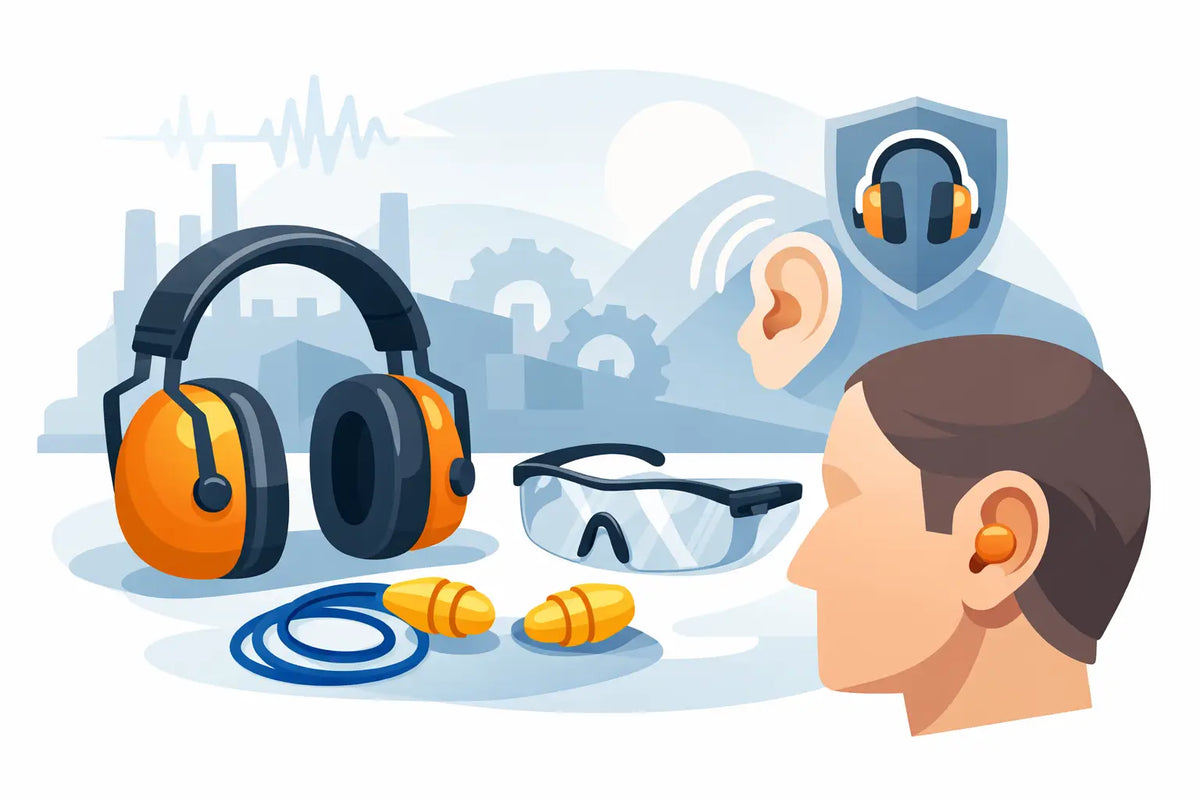
A single loud shift, one speaker stack at close range, or years of daily machinery noise can all leave the same result - hearing that never fully comes back. That is why people ask, what is hearing protection PPE, and when does it actually matter? The short answer is simple: it is personal protective equipment designed to reduce harmful sound reaching the ear, helping prevent noise-induced hearing damage while allowing you to function safely in the real world.
Hearing damage is rarely dramatic at first. More often, it starts with ringing after a gig, muffled hearing after work, or the sense that speech is getting harder to follow in busy places. Those early signs are easy to dismiss. They should not be. Once the inner ear is damaged, the effects are usually permanent.
What is hearing protection PPE and what does it do?
Hearing protection PPE is equipment worn on or in the ears to reduce sound exposure. In workplace settings, it sits alongside other forms of personal protective equipment such as eye protection, gloves, or respirators. Its purpose is not to block every sound. Its purpose is to bring dangerous noise down to a safer level.
That distinction matters. Good hearing protection should reduce risk without cutting you off from speech, warning signals, or your surroundings more than necessary. In some settings, maximum blocking is useful. In others, especially where communication matters, over-blocking can create its own problem.
From an audiology perspective, the goal is protection with usable hearing. That means choosing the right level and type of attenuation for the environment, not simply the strongest product available.
Why hearing protection PPE matters
Excessive noise can damage the delicate structures of the inner ear. This can lead to permanent hearing loss, tinnitus, sound sensitivity, or difficulty understanding speech in background noise. These effects can build over time from repeated exposure, or happen much faster after very loud sound.
The risk is not limited to factories and building sites. Musicians, venue staff, frequent flyers, motorcyclists, tradespeople, sports fans, nightclub staff, and anyone using power tools can all be exposed to harmful levels. Even leisure noise counts. Your ears do not distinguish between a grinder and a concert.
The challenge is that harmful noise is not always obvious. If you need to raise your voice to speak to someone an arm's length away, the environment may already be loud enough to warrant protection. If your ears ring afterwards, that is a warning sign, not a normal side effect.
The main types of hearing protection PPE
The most common forms are earplugs and earmuffs. Both can be effective, but they work differently and suit different users.
Earplugs sit in the ear canal and reduce sound before it reaches the eardrum. Foam earplugs are widely used because they are inexpensive and can offer high attenuation when inserted correctly. The problem is that many people do not insert them properly, which reduces their real-world protection. They can also make sound feel dull or muffled, which some users dislike.
Reusable earplugs are often made from silicone or similar materials and may be designed for general noise, travel, sleep, or music use. Filtered versions are especially useful when sound clarity matters, because they reduce volume more evenly across frequencies. That helps preserve speech and environmental awareness better than basic foam options.
Earmuffs cover the outer ear and form a seal around it. They are easy to put on and take off, which makes them practical for intermittent noise. They are commonly used in industrial settings, workshops, shooting sports, and grounds maintenance. The downside is bulk. They can feel hot, interfere with other equipment, or be less convenient for long wear.
In very high-noise environments, dual protection using both earplugs and earmuffs may be appropriate. That said, more is not always better in every situation. If communication and situational awareness are critical, the balance needs careful thought.
When is hearing protection PPE required?
In occupational settings, hearing protection PPE is typically required when noise exposure reaches levels that could damage hearing and cannot be adequately controlled by other means. Employers have duties around assessing noise risk and providing suitable protection where needed.
But outside formal workplace rules, the principle is the same. If you are regularly exposed to loud sound, hearing protection should be part of the plan. That applies whether you are using tools at home, commuting by motorbike, attending live events, or working in music, hospitality, aviation, or manufacturing.
A useful mindset is to stop treating hearing protection as something only for heavy industry. It is preventive health equipment. You do not wait for damage before taking it seriously.
How to choose the right hearing protection PPE
The best choice depends on noise level, duration of exposure, the need for communication, comfort, and how likely you are to wear it consistently. Protection that stays in the drawer does not protect hearing.
Noise reduction rating matters, but it should not be the only thing you look at. Laboratory figures do not always match everyday use. Fit, seal, and wear time all affect performance. A lower-rated product worn correctly and consistently can be more protective than a higher-rated one used badly.
Comfort is not a minor detail. If earplugs hurt, feel intrusive, or make conversation impossible, many people remove them too early. That is why filtered hearing protection has become so valuable for users who need protection without losing clarity. For musicians, event staff, and consumers who want a more natural listening experience, this can make the difference between occasional use and regular use.
You should also consider the environment. Foam plugs may make sense for short-term high-noise jobs where disposability is helpful. Reusable filtered plugs are often better for repeated social, travel, or music exposure. Earmuffs can be ideal for DIY, gardening equipment, and workplaces where they must be removed and replaced quickly.
What hearing protection PPE does not do
It does not make you invulnerable to noise. If exposure is extreme or prolonged, even good protection has limits. It also does not reverse damage that has already happened.
It is not a substitute for controlling noise at source where that is possible. In work settings, reducing machine noise, isolating noisy processes, or limiting exposure time should still be considered. PPE is one part of hearing conservation, not the whole strategy.
It also does not mean every product will suit every ear. People vary. Ear canal shape, sensitivity, job demands, and personal tolerance all affect what works best. That is why generic solutions can fall short, especially for users who need both protection and acoustic clarity.
Common mistakes people make
One of the biggest mistakes is assuming any earplug is good enough. Cheap, poorly fitting products may reduce sound unevenly, feel uncomfortable, or perform inconsistently. Another is using hearing protection only when noise feels unbearable. Damage can occur before sound becomes subjectively intolerable.
Many people also take hearing protection out to talk, then forget to put it back in. That repeated removal matters more than it seems. Short periods of unprotected exposure can sharply reduce the benefit of wearing PPE the rest of the time.
A final mistake is waiting for symptoms. Tinnitus, dull hearing after noise, or struggling to hear in busy rooms are signs that the ears have already been under stress. Prevention works best before those signs become frequent.
Hearing protection PPE for everyday life
For many adults, the most useful hearing protection is not the industrial sort they imagine. It is the kind they can comfortably wear at concerts, during flights, on noisy commutes, while using tools, or in workplaces where they still need to hear clearly.
That is where audiology-informed design matters. Better hearing protection does more than lower volume. It helps reduce harmful exposure while keeping speech more natural and the listening experience less cut off. For a brand like Jett Maxwell, that balance is central: block noise, keep clarity, and hear tomorrow.
If you have been putting off hearing protection because everything you have tried sounds muffled or feels uncomfortable, that is not a reason to give up. It is a sign to choose more carefully. The right PPE should protect your hearing in a way you can live with, because the best hearing protection is the one you will actually wear when it counts.