
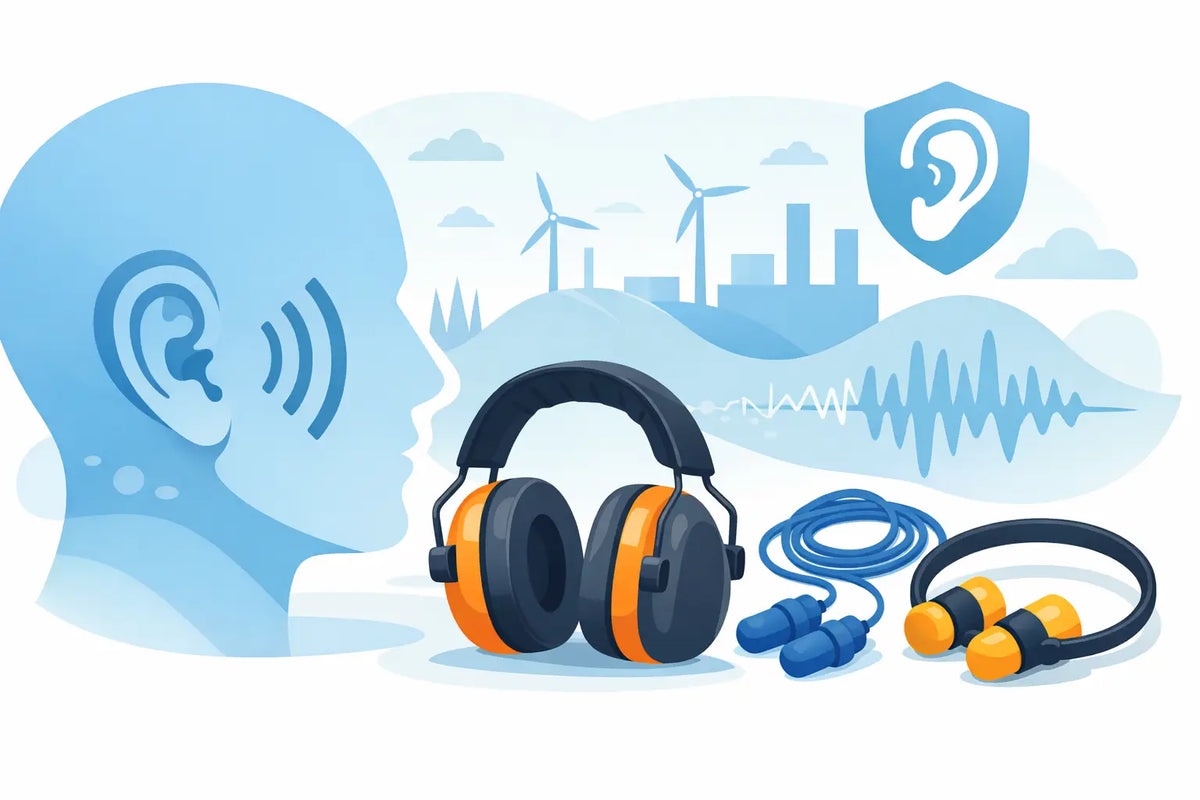
A loud gig can leave your ears ringing for hours. A day on site can make normal conversation feel strangely dulled by evening. That temporary change often gets brushed off, but it is exactly why people ask, what is hearing protection, and whether they really need it.
Hearing protection is any device designed to reduce the level of sound reaching your ears so that noise exposure is less likely to cause damage. The best options do more than simply block sound. They lower harmful noise while still allowing you to follow speech, stay aware of your surroundings and protect your hearing over time.
What is hearing protection and why does it matter?
At its simplest, hearing protection is a barrier between your ears and excessive noise. That barrier may be soft foam earplugs, reusable filtered earplugs, custom-moulded plugs or earmuffs that seal around the ear. Each works by reducing sound energy before it reaches the delicate structures of the inner ear.
This matters because hearing damage is cumulative. It is not only caused by one dramatic event. Repeated exposure to loud music, machinery, aircraft noise, power tools, motorsport, clubs, bars and even some everyday hobbies can gradually affect hearing. Once the sensory cells in the inner ear are damaged, they do not regenerate.
That is why hearing protection should be viewed as preventive care, not an optional extra. You do not wait for clear signs of permanent loss before taking action. You protect hearing early, especially if noise exposure is regular.
How hearing protection works
Sound travels as vibrations. When noise enters the ear at high intensity, it places stress on the auditory system. Hearing protection reduces that intensity, usually measured in decibels, so the ear receives a safer dose of sound.
The key point is that not all protection works in the same way. Basic foam plugs are often inexpensive and widely available, but they can over-block some sounds, feel uncomfortable if poorly fitted and make speech difficult to understand. For some people, that trade-off is acceptable for short-term use in very noisy environments. For others, especially musicians, travellers or professionals who still need awareness, it is a poor fit.
More advanced hearing protection uses acoustic filters to reduce volume more evenly. This helps preserve sound balance and speech intelligibility instead of turning everything into a muffled blur. That difference is significant. If protection feels isolating or distorted, people are less likely to wear it consistently.
The main types of hearing protection
Most people will come across hearing protection in one of four forms.
Foam earplugs expand inside the ear canal and can provide strong attenuation when inserted correctly. They are common in workplaces and useful where maximum simplicity matters, but fit can be inconsistent, and many users insert them incorrectly.
Reusable earplugs are typically made from silicone or similar materials and are designed for repeated use. Some are solid plugs, while others include filters. Filtered versions are often preferred by people who want protection without losing clarity.
Custom-moulded earplugs are shaped to the individual ear. They are usually chosen by people with frequent noise exposure, such as musicians, regular event-goers or workers who need comfort over long periods. They tend to offer a more secure fit and more predictable performance, though they are a bigger upfront investment.
Earmuffs sit over the entire outer ear and create an acoustic seal. They can be highly effective in industrial settings, for shooting sports or around very loud tools. The downside is bulk, heat and reduced practicality in some day-to-day situations.
Sometimes double protection is appropriate, such as wearing earplugs under earmuffs in extremely loud environments. That depends on the risk level and the task involved.
What good hearing protection should feel like
Good hearing protection should feel secure, comfortable and easy to keep wearing. That sounds obvious, but it is one of the main reasons people abandon poor-quality products. If earplugs create pressure, fall out, distort sound or make communication too difficult, they often end up unused.
Effective protection should reduce harmful noise without making you feel cut off. In many environments, awareness still matters. You may need to hear instructions at work, announcements while travelling, conversation at a live event or environmental cues in public spaces. Protection that preserves useful sound is often the difference between occasional use and lasting habit.
This is where an audiology-led approach matters. The goal is not simply to block as much as possible. The goal is to reduce risk while maintaining function.
When should you use hearing protection?
If you have to raise your voice to speak to someone nearby, the environment is likely loud enough to justify protection. The same applies if your ears ring afterwards, sounds seem dull once you leave, or you regularly spend time around amplified music, engines, tools or industrial equipment.
Many people think of hearing protection only in extreme settings, but risk often shows up in ordinary routines. Commuting by air, attending fitness classes, using DIY equipment, riding motorcycles, going to festivals or working in open industrial spaces can all increase cumulative exposure.
The exact level of protection needed depends on the noise, how long you are exposed and whether you still need communication. A construction worker, drummer and frequent flyer may all need hearing protection, but not necessarily the same type.
What hearing protection does not do
Hearing protection reduces exposure. It does not make any sound level safe for any length of time. If the environment is extremely loud, safe exposure time still matters.
It also does not treat existing hearing loss or tinnitus. It can help prevent further damage and, in some cases, reduce aggravation from noisy environments, but it is not a cure.
And it is not one-size-fits-all. A cheap pair of generic plugs might be enough for occasional use, but if you rely on clear sound, wear protection often or have had trouble with comfort in the past, a more specialised solution is usually worth considering.
Choosing the right hearing protection
The best choice starts with your environment. Ask three simple questions. How loud is it? How long am I exposed? Do I need to hear speech or detail clearly?
If the answer is very loud, long duration and minimal need for conversation, higher-attenuation options may be appropriate. If you need to protect your ears but still communicate, filtered protection is often the better route. If you wear hearing protection regularly, comfort and fit should move higher up your priority list because even excellent attenuation means little if the product stays in your pocket.
Material, shape, hygiene and reusability also matter. Some users prefer disposable options for convenience. Others want something more durable and acoustically consistent. There is no single best format for every person, only the right match for the job.
For that reason, informed buyers often look beyond price alone. Hearing protection is a health product, not just an accessory. Performance, comfort and clarity all affect whether it genuinely protects hearing in real life.
What is hearing protection from an audiology perspective?
From an audiology perspective, hearing protection is part of long-term hearing conservation. It sits alongside noise awareness, exposure management and early action when symptoms appear. The focus is not simply on making loud environments tolerable. It is on reducing preventable damage without compromising daily function more than necessary.
That is why specialist hearing protection has become more relevant for modern users. People want to protect their hearing at concerts without ruining the sound. They want relief during travel without missing announcements. They want safer working conditions without losing communication on the job. Brands such as Jett Maxwell are built around that balance - block noise, keep clarity and hear tomorrow.
A better way to think about protection
The outdated view is that hearing protection is only for factory floors and shooting ranges. The better view is simpler. If noise is part of your life, hearing protection is part of looking after your health.
You do not need to wait until your ears ring more often, speech becomes harder to follow in busy places or hearing tests show a change. The sensible moment to protect hearing is before the damage becomes obvious.
If a product helps you feel safer, hear clearly enough to stay connected and wear it consistently, it is doing what hearing protection should do. Your hearing has to last a lifetime. Treating it that way is a smart place to start.