
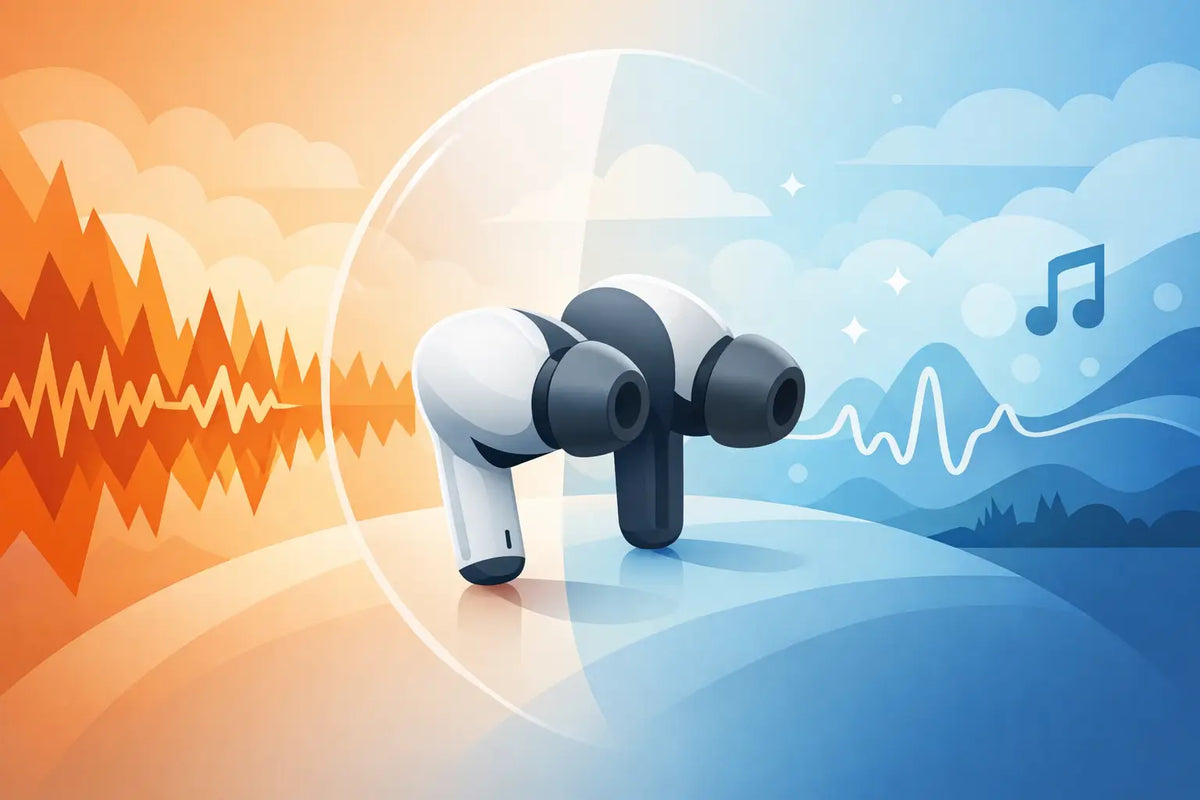
A packed train carriage, a loud rehearsal room, a day on site, a long-haul flight - these are the moments when noise protection earbuds stop being a nice extra and start becoming a practical health decision. The right pair should lower harmful noise without cutting you off from conversation, announcements or the sounds around you that still matter.
That balance is where many people get disappointed. Cheap foam options can block sound, but they often do it bluntly. Everything becomes dull, speech gets muddy, and wearing them for any length of time can feel like a compromise. Better hearing protection is not just about making things quieter. It is about reducing the right amount of noise, in the right way, so you can protect your hearing and still function normally.
What noise protection earbuds are designed to do
Noise protection earbuds are made to reduce the intensity of sound reaching the ear. Their main job is to lower noise exposure to safer levels and help reduce the risk of temporary ringing, listening fatigue and long-term hearing damage.
That sounds straightforward, but there is an important difference between simply blocking sound and controlling it well. Basic earplugs often create an uneven effect, cutting high frequencies more heavily and making voices less clear. Quality earbuds for hearing protection are designed to provide more balanced attenuation. In plain terms, they reduce volume while preserving more natural sound.
For many adults, that is the difference between actually using hearing protection and leaving it in a pocket. If you cannot hear speech properly, if music sounds distorted, or if the fit becomes uncomfortable after half an hour, you are less likely to wear them when you need them most.
Why clarity matters as much as noise reduction
It is easy to assume the strongest protection is always best. In reality, it depends on where and how you will use it.
If you work in a very loud environment, higher attenuation may be necessary. If you are attending concerts, travelling, commuting or working in a busy open-plan setting, too much reduction can feel isolating. You may find yourself removing the earbuds repeatedly to hear instructions, have a conversation or stay aware of your surroundings.
That is why speech intelligibility matters. Hearing protection should not force you to choose between safety and useful hearing. A well-designed earbud lowers damaging sound energy but keeps enough detail for speech and environmental awareness. This is especially important for musicians, hospitality staff, trade workers, regular flyers and anyone who spends time in changing sound environments rather than one fixed level of noise.
There is also the fatigue factor. Harsh noise is tiring, even when it is not painfully loud. Reducing that load without creating a plugged-up sensation can make long events, busy workplaces and travel noticeably easier on the ears.
Noise protection earbuds vs foam earplugs
Foam earplugs have a place. They are inexpensive, widely available and useful in situations where maximum low-cost noise reduction is the only priority. For short-term use, they can help.
Their drawbacks are just as familiar. The fit can be inconsistent, especially if they are not inserted properly. They often make your own voice sound boomy, which many people find uncomfortable. Most importantly, they can muffle sound so heavily that communication becomes difficult.
Noise protection earbuds are usually chosen by people who want a more refined result. They are often made from softer, reusable materials, shaped for a more stable fit, and designed with filters or acoustic channels that manage sound more evenly. That does not make every reusable earbud superior to every foam plug, but it does explain why informed buyers tend to move beyond disposable options once they understand the trade-off.
How to choose noise protection earbuds
The best choice depends on your noise exposure, fit preferences and how much clarity you need during use. There is no single model that suits every ear or every environment.
Start with your real-life noise exposure
Think about where you will actually wear them. A drummer, a concertgoer, a cabin crew member and a commuter all need protection, but not necessarily the same level or style.
If your exposure is frequent and high, look for earbuds designed specifically for repeated wear in demanding environments. If your use is occasional, comfort and convenience may matter more than the highest specification on paper. The common mistake is buying for the loudest possible scenario, then finding the product too intrusive for day-to-day use.
Look for balanced attenuation
A high noise reduction figure can be useful, but it is not the whole story. How that attenuation is distributed across frequencies matters. Products that preserve a more natural listening experience are often easier to wear consistently because speech and surroundings remain clearer.
This is where audiology-informed design makes a genuine difference. Better acoustic filtering aims to reduce risk without turning everything into a low, muffled blur.
Do not ignore comfort
Even excellent sound performance means very little if the fit is poor. Earbuds that create pressure, slip out easily or irritate the ear canal are unlikely to become part of your routine.
Soft materials, more than one tip size and a secure but not aggressive seal all help. If you plan to wear them for flights, long shifts or events lasting several hours, comfort is not secondary. It is part of performance.
Check whether they are reusable and easy to maintain
For regular use, reusable earbuds are often the more practical option. They can offer better value over time and reduce waste compared with disposables. That said, they do need proper cleaning and storage.
If maintenance feels awkward, people tend to stop using a product. Choose something that fits into normal life rather than adding friction to it.
Who benefits most from noise protection earbuds?
The short answer is anyone exposed to repeated loud sound, even if that exposure feels ordinary rather than extreme.
Musicians and concertgoers are obvious examples, because music-related hearing damage often builds gradually. Industrial and trade workers also benefit, especially when they need to hear instructions or warning signals while reducing machinery noise. Travellers may not think of themselves as a hearing protection audience, but aircraft cabins, underground networks and prolonged transport noise can contribute to listening fatigue.
Then there are people who are simply more health-conscious about hearing than previous generations were encouraged to be. They do not want to wait for tinnitus, sound sensitivity or difficulty following speech before taking action. That preventive mindset is sensible. Hearing damage is much easier to avoid than to reverse.
Signs your current hearing protection is not working well enough
If you already use earplugs or earbuds, the question is not just whether they reduce sound. It is whether they are reducing it in a way you can live with.
If conversations become almost impossible, if you regularly remove them in noisy places, if they hurt after a short time, or if the sound becomes so distorted that you avoid wearing them, your current setup may not be doing the job properly. Protection only works when it is worn consistently.
Another warning sign is false reassurance. Some people wear basic plugs irregularly and assume that means their hearing is covered. Partial use in high-noise environments may still leave a significant gap in protection, particularly over months and years.
Why expert-led hearing protection stands apart
The hearing protection market is crowded, and not all products are built with the same priorities. Some compete almost entirely on price. Others focus on appearance or broad lifestyle claims without explaining how they manage sound.
An audiology-led approach starts from hearing health, not novelty. It asks practical questions. How much noise needs to be reduced? How can speech remain clearer? What will encourage long-term wear? How can comfort support compliance rather than undermine it?
That perspective matters because hearing protection is not a fashion purchase in the usual sense. It is a product with direct consequences for wellbeing. A specialist brand such as Jett Maxwell approaches noise reduction with that in mind, focusing on protection that supports clarity rather than sacrificing it.
The smarter way to think about daily hearing protection
The best noise protection earbuds are rarely the ones that promise to block everything. More often, they are the pair you can wear confidently in real situations - at work, in transit, at events and in the middle of everyday noise - without feeling cut off from the world around you.
Good hearing protection should feel like a sensible part of modern self-care, not a last resort after damage has already started. If your earbuds help you hear less of what harms you and more of what matters, you are making a better choice for today and for the years ahead.