
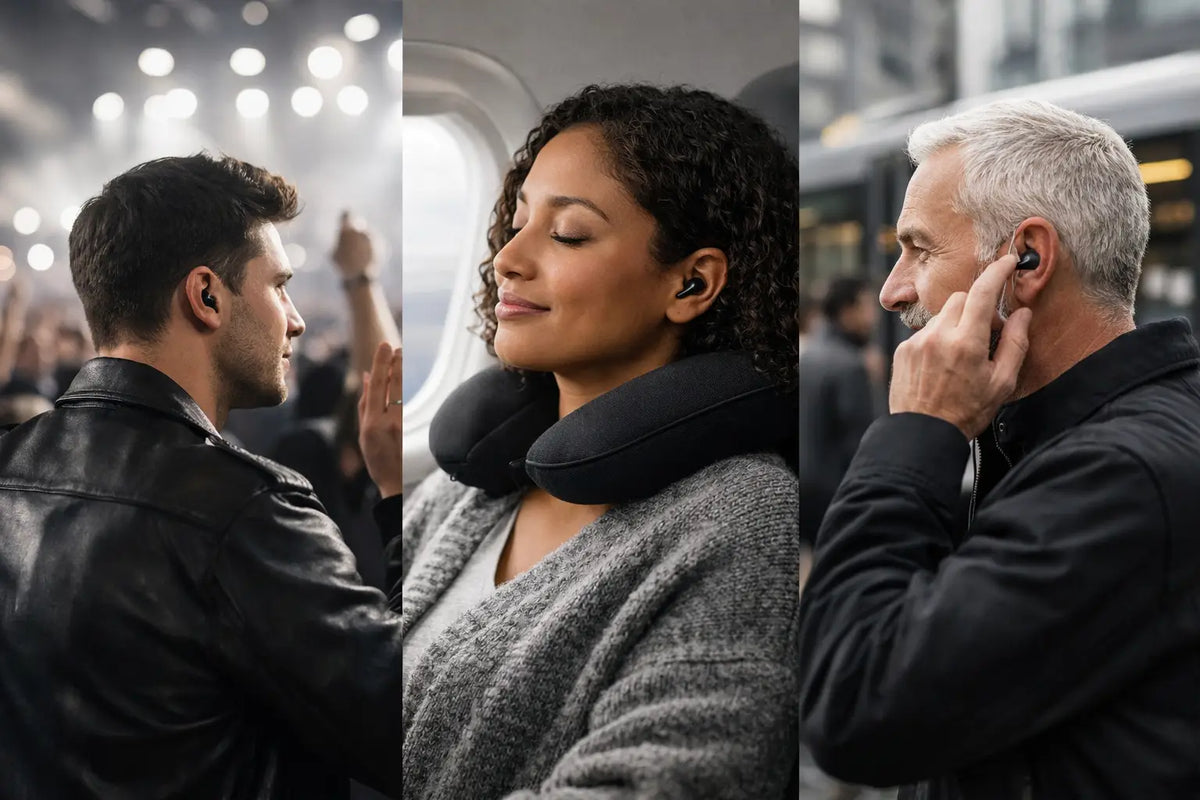
A ringing feeling after a gig, a long train journey that leaves you drained, or turning the television up after a noisy day can all prompt the same question: how loud is too loud? Safe listening levels explained simply comes down to three things - volume, time and distance. The louder the sound, the less time your ears need to spend around it.
This is not about avoiding music, busy places or the sounds you enjoy. It is about making sensible choices that let you stay present while reducing unnecessary noise exposure over time.
Safe listening levels explained: volume is only part of it
Sound level is measured in decibels, written as dB. Decibels are not a simple, straight-line scale: a small rise in the number can represent a meaningful increase in sound energy. That is why the difference between a comfortable playlist and a very loud one matters more than it may seem.
A quiet conversation is often around 60 dB. Busy roads, household appliances, public transport and crowded venues can be noticeably louder, while amplified music can rise further again. The exact level changes with the room, your position, the equipment and the source itself. A concert near the speakers will not sound the same as the back of the venue.
Rather than treating one number as a universal cut-off, think in terms of exposure. At around 85 dB, a commonly used reference point, an exposure period of roughly eight hours is often used in noise guidance. With every 3 dB increase, that time halves: around four hours at 88 dB, two at 91 dB, one at 94 dB and about 15 minutes at 100 dB.
These figures are useful for understanding the pattern, not for timing every part of your day with a stopwatch. Personal sensitivity varies, measurements are not always exact, and a mobile phone app cannot replace calibrated equipment. The practical message is clear: loud sound calls for shorter exposure, more distance or suitable hearing protection.
Why the same volume can feel different
Your listening environment affects both the sound level and how hard it feels to listen. A favourite song in a quiet room may be comfortable at a modest volume. The same song on a packed train can lead you to turn your headphones up to compete with the background noise.
This is one reason noise-cancelling headphones can be useful when used sensibly. By reducing background sound, they may make it easier to listen at a lower volume. They do not make any chosen volume automatically safe, but they can reduce the temptation to keep increasing it.
Distance matters too. Moving away from a speaker stack, choosing a quieter part of a venue or taking a short break outside can make a genuine difference. Sound changes across a room, so the loudest place is rarely your only option.
Time is the factor people most often overlook. A brief loud moment is different from standing beside amplified music for several hours. It also helps to consider your whole day. A noisy commute, a gym class, headphones at work and an evening event can all add to the same overall exposure.
A practical way to judge your listening level
You do not need specialist equipment to make better choices. Start by noticing whether you can speak comfortably to someone nearby. If you need to raise your voice to be heard at close range, the environment is likely loud enough to deserve some thought.
With headphones, use your own comfort as a prompt, but do not rely on comfort alone. Your ears can adapt to a louder setting, particularly after a few songs. If you regularly listen in noisy places, lower the volume before you press play and use a better seal or noise-cancelling feature rather than turning it up.
Many devices also offer volume limits or listening notifications. These are worth setting up, especially for regular headphone use. They are guides rather than guarantees, but they can make habits more visible.
For events, plan before you arrive. Keep some distance from loudspeakers where possible, give yourself occasional quieter breaks, and take hearing protection with you rather than hoping the room will be manageable. Preparation is particularly helpful if you know that sound can become overwhelming or tiring.
Hearing protection should not mean missing the moment
The usual frustration with basic foam earplugs is understandable: they can reduce sound, but music and conversation may feel dull or distant. For a festival, rehearsal, club, sporting event or busy journey, many people want less intensity without feeling cut off from what is happening.
That is where reusable filtered earplugs can be a practical option. They are designed to lower the overall level while aiming to preserve more balance and clarity than a simple block of foam. Fit still matters. An earplug that is uncomfortable, loose or inserted inconsistently is less likely to be worn for the full event.
Jett Maxwell Tone-Filter earplugs are made for this everyday balance - reducing noise while helping music, speech and the atmosphere remain clearer. The right choice depends on the setting, your comfort and the level of noise involved. For situations with specific workplace requirements, use protection selected for that task and follow the relevant safety guidance.
Build quieter habits without making life smaller
The most sustainable approach is not to treat every sound as a problem. It is to make small adjustments when sound is clearly loud, prolonged or difficult to escape. Turn the volume down a step. Sit further from the speakers. Pause between sets. Carry earplugs in the case you already take out with you.
If you experience ringing, muffled hearing or unusual sensitivity after noise, give your ears a quieter period and avoid adding more loud exposure straight away. If symptoms are sudden, persistent or concerning, speak to an audiologist or another appropriate healthcare professional for individual advice.
Parents and carers can use the same principles for children: reduce volume, limit long periods of loud listening, create breaks and make protection feel normal rather than restrictive. For neurodivergent people and anyone with sound sensitivity, the goal may be comfort as much as volume reduction. A quieter option can make travel, social occasions and public spaces more manageable.
The useful question is not just how loud
When deciding whether to protect your hearing, ask three questions: How loud is it? How long will I be there? Can I move away, take a break or reduce the level? Those answers are more useful than trying to find one perfect number for every situation.
Hearing protection is not a sign that you are opting out. It is a way to keep enjoying the music, people and places that matter, with a little more control over the noise around you.