


Most concert-goers leave venues with ringing ears, dismissing it as a normal part of the experience. Yet exposure to sounds above 85 decibels for extended periods causes permanent hearing damage, and typical concerts reach 100-110 dB. Professional ear protection preserves your hearing whilst maintaining the sound quality that makes live music magical. This article explores why professional-grade earplugs are essential for anyone who loves concerts, how they differ from standard foam options, and how to choose the right protection for your needs.
Table of Contents
- How Loud Music Causes Hearing Damage
- What Makes Professional Ear Protection Different
- Choosing And Using Professional Ear Protection Effectively
- Summary Of The Benefits Of Professional Ear Protection
- Discover Professional Ear Protection Solutions
- How Long Can I Safely Stay At A Loud Concert Without Ear Protection?
- Will Professional Earplugs Affect The Quality Of Live Music I Hear?
- How Do I Make Sure My Earplugs Fit Correctly For Best Protection?
Key takeaways
| Point | Details |
|---|---|
| Hearing damage threshold | Sounds above 85 dB cause permanent damage with prolonged exposure, whilst concerts typically exceed 100 dB. |
| Professional protection advantage | High-fidelity earplugs reduce volume evenly across frequencies, preserving sound clarity unlike foam plugs. |
| Safe exposure limits | At 110 dB, safe exposure without protection is under two minutes, but professional earplugs extend this significantly. |
| Proper fit matters | Ill-fitting earplugs drastically reduce effectiveness, making correct insertion and tip selection crucial. |
| Sound quality preservation | Professional earplugs maintain frequency balance, allowing you to enjoy music without muffling or distortion. |
How loud music causes hearing damage
Noise-induced hearing loss (NIHL) occurs when excessive sound levels damage the delicate hair cells in your inner ear. These cells don’t regenerate, making any hearing loss permanent. Concert venues regularly expose attendees to sound levels between 100 and 110 dB, well above the safe threshold.
At 110 dB, safe exposure is no more than two minutes without protection to avoid damage. Most concerts last two to three hours, creating a dangerous mismatch between exposure duration and safety limits. The louder the environment, the faster damage accumulates.
Two types of hearing damage commonly affect concert-goers: temporary threshold shift (TTS) and permanent threshold shift (PTS). TTS causes the muffled hearing and ringing you notice after leaving a venue, which may resolve within hours or days. PTS represents irreversible damage that accumulates with repeated exposure.
Research reveals concerning patterns amongst music enthusiasts:
- Studies show both acute and subclinical hearing damage occurs after concert attendance, even when attendees don’t notice immediate symptoms
- Tinnitus, characterised by persistent ringing or buzzing, affects many regular concert-goers
- Aural dullness, where sounds seem muted or distant, signals temporary or permanent hearing changes
- High-frequency hearing loss develops gradually, making speech comprehension difficult in noisy environments
“The hair cells in your cochlea are incredibly fragile. Once damaged, they cannot repair themselves, and modern medicine cannot restore them. Prevention through proper ear protection is the only effective strategy.”
Many people experience hearing damage after gigs without recognising the long-term implications. That familiar post-concert ringing isn’t a badge of honour but a warning sign of cellular damage. Each exposure without protection increases your risk of permanent hearing loss, tinnitus, and reduced sound perception quality.
The cumulative nature of NIHL makes prevention critical. Young adults who regularly attend concerts without protection often develop measurable hearing loss by their thirties. Professional ear protection addresses this risk whilst preserving the live music experience you love.
What makes professional ear protection different
High-fidelity earplugs represent a fundamental shift from traditional foam options. These professional devices use acoustic filters to achieve flat attenuation, reducing volume evenly across all frequencies. This preserves the natural balance of music, allowing you to hear every instrument and vocal clearly at a safer level.
High-fidelity earplugs attenuate sound evenly, preserving sound clarity whilst reducing harmful volume. Standard foam earplugs, by contrast, block high frequencies more aggressively than low frequencies. This creates the occlusion effect, where your own voice sounds unnaturally loud whilst music becomes muffled and bass-heavy.
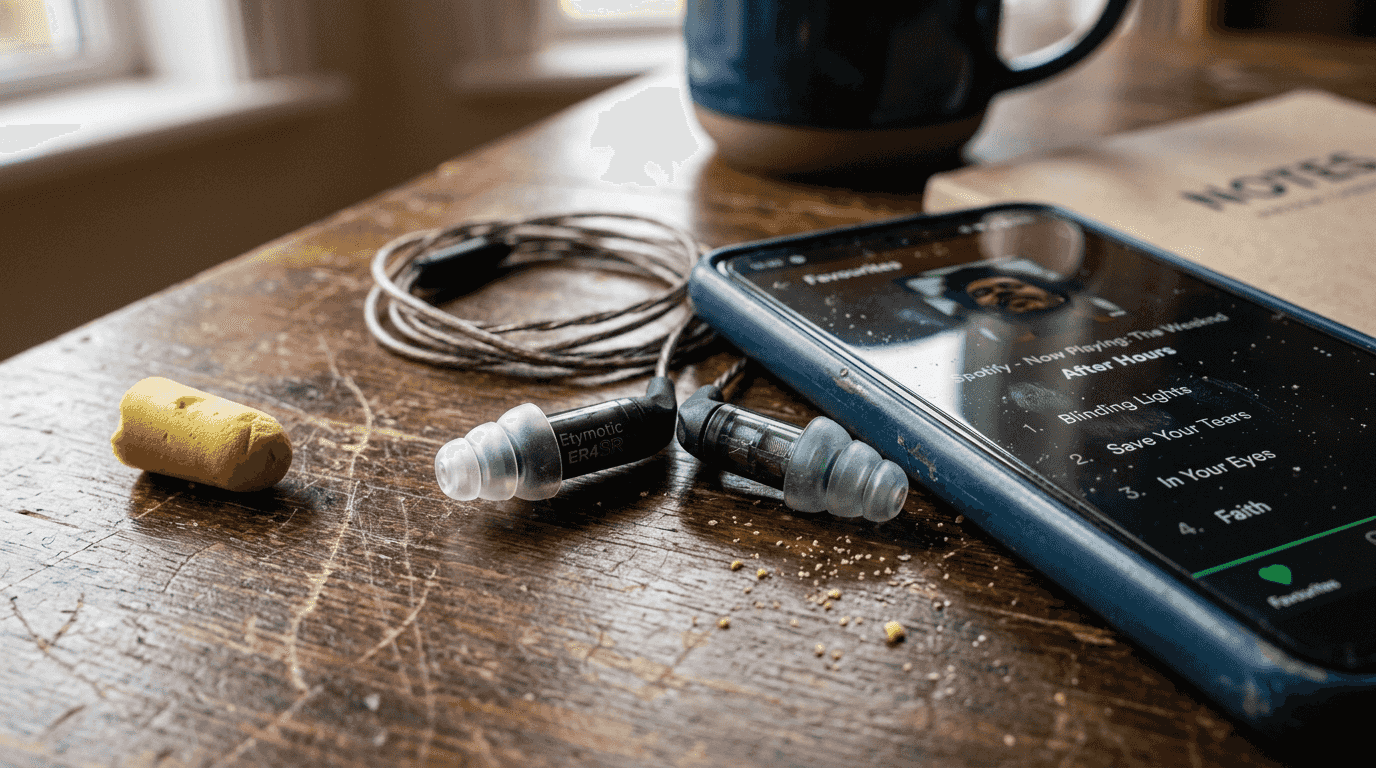
Foam plugs distort sound and block high frequencies more, resulting in muffled audio that diminishes the concert experience. Professional models replicate your ear canal’s natural acoustic response, maintaining sound quality whilst protecting your hearing.
Pro Tip: Select earplugs with multiple tip sizes included in the package. Proper fit dramatically affects both comfort and protection effectiveness, and ear canal sizes vary significantly between individuals.
Popular high-fidelity options demonstrate the range available:
| Model | Noise Reduction | Key Features | Best For |
|---|---|---|---|
| Eargasm High Fidelity | 21 dB | Dual-filter design, aluminium case | All-round concert use |
| Loop Experience Plus | 18 dB | Silicone comfort tips, four sizes | Extended wear comfort |
| Etymotic ER20XS | 20 dB | Replicate ear’s natural response | Audiophile-grade clarity |
| Vibes Hi-Fidelity | 22 dB | Discreet clear design | Subtle appearance |
| Tone Filter (Jett Maxwell) | 18-20 dB | Audiologist-designed, reusable | Professional-grade protection |
Devices like these reduce noise 18-21 dB with minimal distortion, making them ideal for music lovers who refuse to compromise on sound quality. The consistent attenuation across frequencies means you hear the same mix the sound engineer created, just at a safer volume.
Professional earplugs achieve this through precision-engineered acoustic filters rather than simple foam barriers. These filters use carefully calculated apertures and chambers to control sound transmission. The result is protection that feels invisible, allowing natural sound perception whilst preventing damage.
The difference becomes obvious when you compare experiences. Foam earplugs make conversations difficult and music unenjoyable, leading many people to remove them partway through events. Professional options feel comfortable enough to wear all night whilst maintaining the audio fidelity that makes live music special.
Your ears face daily hearing damage risks beyond concerts, making investment in quality protection worthwhile for long-term hearing health. Professional earplugs serve multiple purposes, from festivals and clubs to loud restaurants and commuting.
Choosing and using professional ear protection effectively
Selecting appropriate earplugs requires balancing comfort, noise reduction, and sound clarity. Start by considering how often you attend loud events and your budget. Off-the-shelf options offer excellent protection at accessible prices, whilst custom-moulded versions provide superior fit for frequent users.
Custom-moulded earplugs offer best fit but at higher cost, whilst off-the-shelf options balance protection and convenience. Custom versions require an audiologist to take ear impressions, then manufacture earplugs matching your unique ear canal shape. This ensures optimal seal and comfort but typically costs £150-300.
Off-the-shelf professional earplugs cost £15-40 and provide excellent protection when fitted correctly. Most include multiple tip sizes to accommodate different ear canals. The key is experimenting to find the combination that creates a secure seal without discomfort.
Proper fit is crucial, as ill-fitting earplugs reduce effectiveness significantly. A good seal prevents sound from bypassing the filter, ensuring you receive the full protection rating. Poor fit also causes discomfort that leads to removal, defeating the purpose entirely.
Follow these steps for optimal insertion and care:
- Wash your hands thoroughly before handling earplugs to prevent introducing bacteria into your ear canal.
- Select the tip size that feels snug but comfortable; the earplug should seal without causing pressure or pain.
- Pull your ear upward and outward with your opposite hand to straighten the ear canal for easier insertion.
- Insert the earplug gently with a slight twisting motion until it sits flush with your ear opening.
- Hold the earplug in place for several seconds to allow the material to settle and create a proper seal.
- Test the fit by speaking; your voice shouldn’t sound excessively loud or echo (signs of poor seal).
- Clean earplugs after each use with mild soap and water, allowing them to dry completely before storage.
- Store earplugs in their protective case to prevent damage and contamination when not in use.
Pro Tip: Clean your earplugs regularly and store them safely to maintain performance. Dirt and earwax buildup reduce acoustic filter effectiveness and create hygiene risks. Replace earplugs when the material shows wear or the filters become clogged.
Experiment with different tip materials as well. Silicone tips offer durability and easy cleaning, whilst foam tips provide softer comfort for extended wear. Some users prefer triple-flange designs that create multiple seal points along the ear canal.
Don’t expect perfection immediately. Your brain needs time to adjust to hearing music through earplugs, even high-fidelity ones. Wear them for entire concerts rather than inserting and removing repeatedly. Most people adapt within 15-20 minutes and soon forget they’re wearing protection.
Consider purchasing multiple pairs for different situations. Lower reduction ratings (15-18 dB) work well for moderately loud venues, whilst higher ratings (20-25 dB) suit festivals and standing near speakers. Having options ensures you’re always appropriately protected without over-attenuating in quieter settings.
Summary of the benefits of professional ear protection
Professional ear protection delivers multiple advantages that extend far beyond simply reducing volume. The primary benefit remains preventing permanent hearing damage and tinnitus, conditions that dramatically impact quality of life. Once hearing loss occurs, no treatment can restore it, making prevention through proper protection essential.
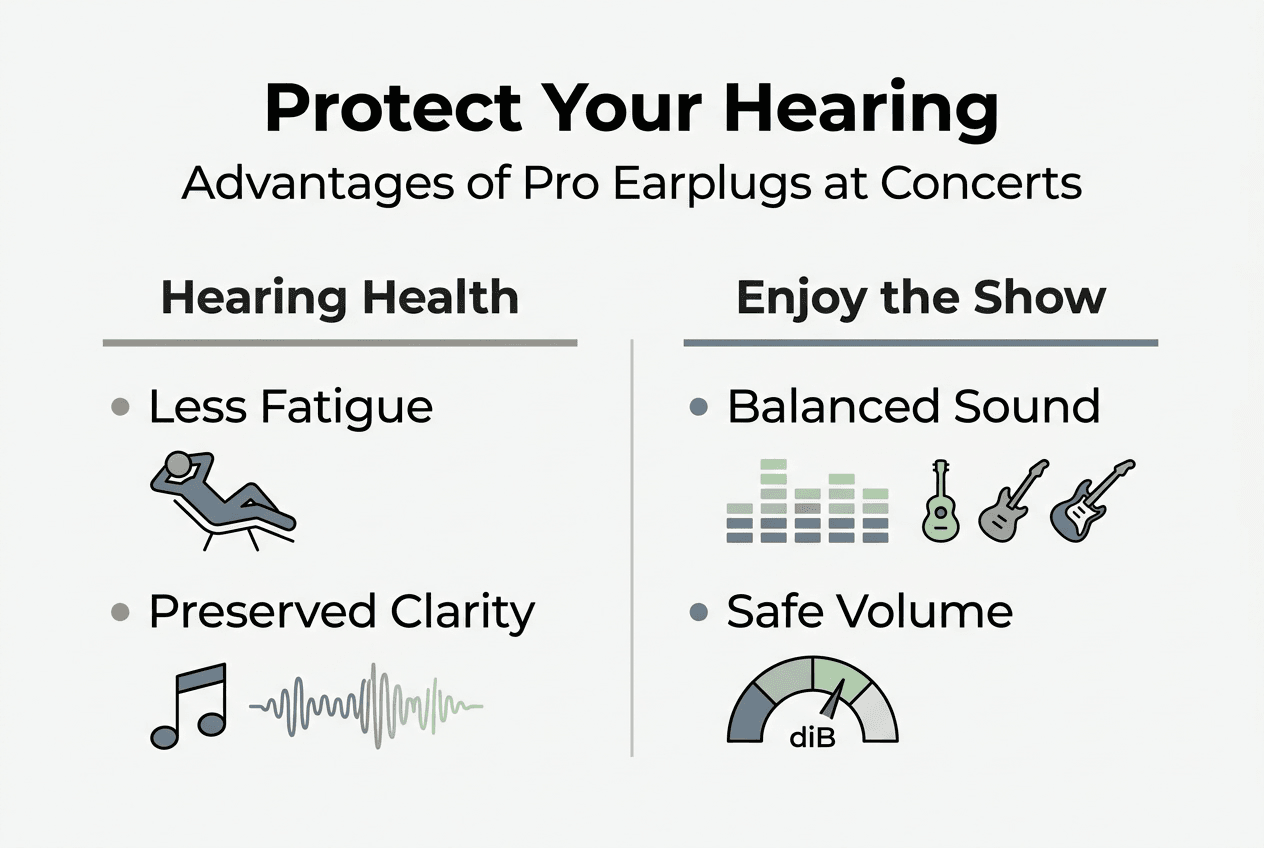
Studies confirm high-fidelity earplugs significantly reduce hearing threshold shifts after loud music exposure. Research participants using professional earplugs showed minimal temporary hearing changes compared to unprotected attendees, who experienced measurable threshold shifts lasting days.
Key benefits include:
- Maintaining natural sound clarity whilst reducing harmful volume levels
- Enjoying concerts longer without fatigue, headaches, or discomfort
- Protecting against both temporary and permanent hearing damage
- Preserving your ability to hear subtle details in music and conversation
- Reducing post-event tinnitus and aural dullness
- Enabling safer participation in loud hobbies and social activities
“High-fidelity earplugs represent the most effective non-invasive intervention for preventing noise-induced hearing loss in recreational settings. They maintain sound quality whilst providing clinically significant protection, encouraging consistent use amongst music enthusiasts.”
The lifestyle benefits extend beyond hearing preservation. People who protect their hearing report less fatigue after events, better sleep quality, and reduced anxiety about noise exposure. You can socialise freely without worrying about long-term consequences or experiencing the disorientation that follows unprotected exposure.
Professional earplugs also enhance your listening experience in many cases. By reducing overall volume, they prevent the acoustic overload that causes distortion in your ears. You hear clearer sound with better instrument separation, particularly in venues with poor acoustics or excessive volume.
Your hearing health awareness directly impacts your long-term quality of life. Hearing loss correlates with social isolation, depression, and cognitive decline in later years. Protecting your hearing now preserves your ability to enjoy conversations, music, and environmental sounds decades into the future.
The financial argument also favours prevention. Professional earplugs cost £15-40 for reusable models that last years. Hearing aids, by contrast, cost thousands of pounds and require ongoing maintenance and replacement. The small investment in protection delivers enormous returns in preserved hearing function.
Consider the cumulative exposure across your lifetime. If you attend 20 concerts yearly without protection, you’re accumulating hundreds of hours of damaging noise exposure. Professional earplugs transform this from a serious health risk into safe enjoyment, allowing you to maintain your passion for live music without compromise.
Preventing daily hearing damage requires awareness and consistent protective habits. Professional ear protection makes this practical and comfortable, removing barriers to consistent use.
Discover professional ear protection solutions
Jett Maxwell offers audiologist-designed hearing protection specifically engineered for music lovers who refuse to compromise on sound quality. Our tone filter hearing protection combines professional-grade acoustic filtering with comfortable, reusable construction. These earplugs preserve the natural frequency balance of live music whilst reducing harmful volume to safe levels.
Each pair includes multiple tip sizes to ensure proper fit and maximum effectiveness. The precision-engineered filters provide consistent 18-20 dB attenuation across all frequencies, maintaining the audio fidelity that makes concerts special. Whether you’re a regular festival-goer or occasional concert attendee, professional ear protection represents a small investment in lifelong hearing health.
Explore our range of hearing protection solutions, including our audiologist noise protection hoodie for raising awareness about hearing health. Consider a hearing protection gift card for the music enthusiast in your life who hasn’t yet prioritised their hearing safety.
How long can I safely stay at a loud concert without ear protection?
At what decibel level does hearing damage begin?
Hearing damage begins at sustained exposure to sounds above 85 dB. Concerts typically reach 100-110 dB, well into the danger zone. At 110 dB, safe exposure without protection is no more than two minutes. Most concerts last hours, creating significant risk without proper protection.
How much longer can I stay with professional earplugs?
Professional earplugs reduce sound levels by 18-22 dB, effectively lowering a 110 dB concert to 88-92 dB. This extends safe exposure from minutes to several hours, allowing you to enjoy entire events safely. The exact duration depends on the venue’s volume and your earplug’s noise reduction rating.
What are early warning signs of hearing damage?
Ringing or buzzing in your ears (tinnitus) after events signals hearing damage. Muffled hearing, difficulty understanding speech, or sounds seeming distant indicate temporary or permanent threshold shifts. If you experience these symptoms regularly, you’re accumulating damage that professional earplugs prevent.
Will professional earplugs affect the quality of live music I hear?
How do professional earplugs preserve sound quality?
High-fidelity earplugs evenly reduce volume without distorting or muffling sound. They achieve flat attenuation across all frequencies, maintaining the natural balance between bass, midrange, and treble. You hear the same mix the sound engineer created, just at a safer volume that prevents damage.
Why do foam earplugs sound so bad in comparison?
Foam earplugs block high frequencies more aggressively than low frequencies, creating uneven attenuation. This makes music sound muffled and bass-heavy whilst causing the occlusion effect where your own voice echoes unnaturally. Professional earplugs use precision acoustic filters instead of simple foam barriers, preserving frequency balance.
Will I notice I’m wearing them during the concert?
Most people adapt to professional earplugs within 15-20 minutes and forget they’re wearing them. The sound quality remains natural enough that you can enjoy music fully whilst receiving protection. Unlike foam plugs that feel intrusive and uncomfortable, properly fitted professional earplugs feel nearly invisible during use.
How do I make sure my earplugs fit correctly for best protection?
What’s the best way to insert professional earplugs?
Proper fit is essential, so experiment with tip sizes and insertion techniques for a snug seal. Pull your ear upward and outward to straighten the canal, then insert the earplug with a gentle twisting motion. Hold it in place briefly to allow the material to settle and create a proper seal.
How do I know if my earplugs are fitted correctly?
Correctly fitted earplugs sit flush with your ear opening without causing pressure or discomfort. Your voice shouldn’t sound excessively loud or echo when speaking. If you can easily hear conversations at normal volume but loud sounds feel reduced, the fit is likely correct. Poor fit allows sound to bypass the filter, reducing protection significantly.
Should I try different tip sizes?
Absolutely. Ear canal sizes vary considerably between individuals, and using the wrong size dramatically reduces effectiveness. Most professional earplugs include multiple tip options. Try each size to find the combination that creates a secure seal without discomfort, and don’t hesitate to use different sizes for each ear if needed.