
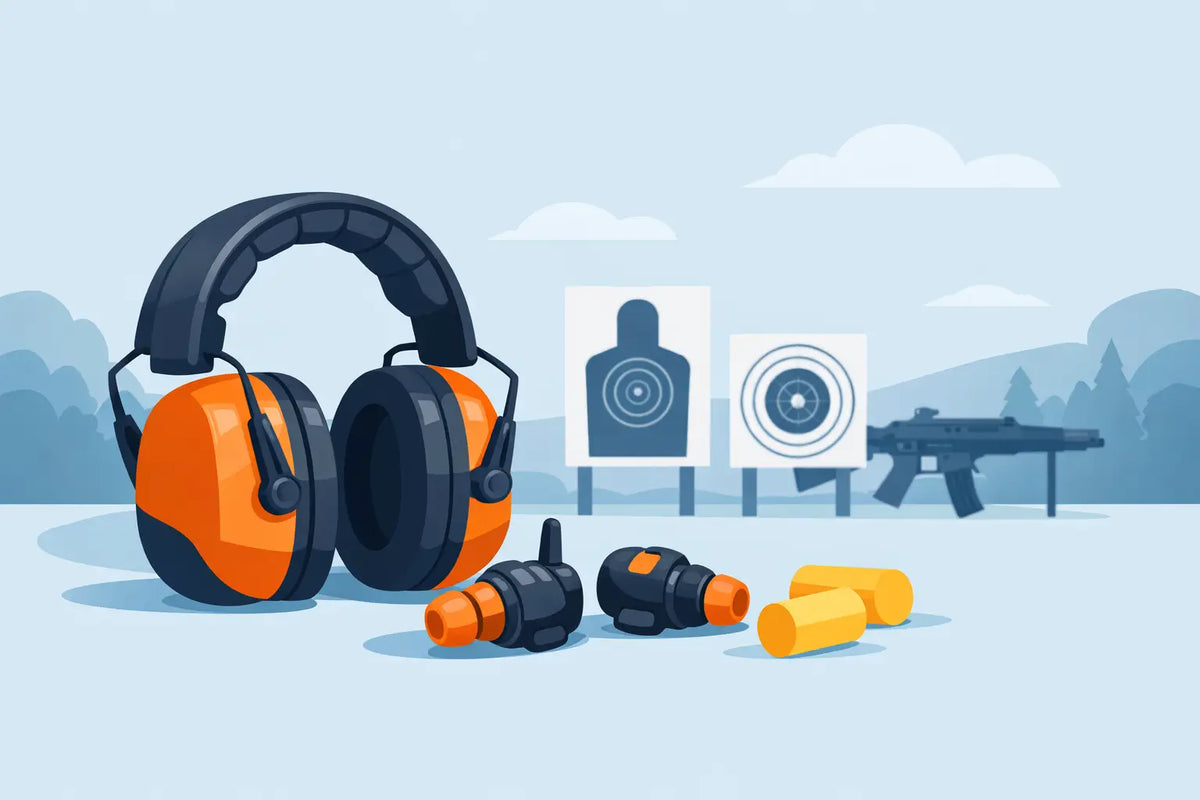
A single gunshot can reach a level that damages hearing in an instant. That is why choosing the best ear protection for shooting is not a minor gear decision. It is a hearing health decision, and the right choice depends on your firearm, your shooting environment, and how much awareness you need while you shoot.
Many people start with whatever is cheapest at the gun counter. That usually means basic foam plugs or bulky muffs with little thought about fit, comfort, or communication. The problem is simple: if protection is uncomfortable, muffles too much, or feels impractical, people wear it inconsistently. In hearing protection, inconsistent use is a risk.
What makes the best ear protection for shooting?
The best option is the one that reduces harmful impulse noise to a safer level and still lets you function properly on the range or in the field. That means looking beyond packaging claims and thinking about real-world use.
For shooting, the main issue is impulse noise. It is sudden, sharp, and intense. Unlike steady background noise from machinery or traffic, gunfire gives your ears almost no warning. Repeated exposure can contribute to permanent hearing damage and tinnitus, even when shots are spaced out over a session.
Good shooting protection needs to do three things well. It must attenuate enough noise, fit securely every time, and remain comfortable for the full session. If any one of those fails, protection drops.
Why fit matters as much as rating
Buyers often focus on noise reduction figures alone. Ratings matter, but they do not tell the whole story. A high-rated product that leaks around the seal or sits poorly in the ear will underperform.
This is especially common with foam plugs. On paper, they can offer strong attenuation. In practice, many users insert them too shallowly or remove them repeatedly to hear instructions. The result is less protection than expected.
With earmuffs, seal quality is the weak point. Safety glasses, hat brims, hair, or poor headband tension can break the seal and reduce performance. That does not make muffs a poor choice. It means fit and compatibility matter.
Earplugs, earmuffs, or both?
There is no single answer for every shooter. The right format depends on your noise exposure, comfort needs, and whether speech clarity matters during use.
Earplugs for shooting
Earplugs are compact, easy to carry, and generally work well with rifles, shotguns, and other setups where a bulky ear cup might interfere with stock placement. They can also feel cooler and less cumbersome during longer sessions.
The trade-off is that insertion technique matters. Disposable foam plugs can perform very well if fitted correctly, but many people do not achieve a proper seal. Reusable filtered plugs can be more convenient and more consistent, particularly for adults who want protection without feeling fully cut off from their environment.
For some shooters, clarity-preserving earplugs are a better long-term solution than dense foam. They can help reduce damaging sound while keeping speech and range commands more intelligible. That balance matters if you want to protect hearing without disconnecting from what is happening around you.
Earmuffs for shooting
Earmuffs are simple to put on and easy to monitor visually. For beginners, that simplicity is a genuine advantage. You can usually tell quickly whether the cups are seated properly, and there is less technique involved than with plugs.
They are often a strong choice for indoor ranges, where reflected sound can make exposure more intense. Electronic earmuffs add another benefit: they can reduce gunfire while allowing lower-level sounds, such as conversation or instruction, to remain audible.
The downside is bulk. Some earmuffs can interfere with cheek weld and firearm positioning, especially for rifle users. Heat and pressure can also become an issue over time.
Double protection
In higher-noise situations, using earplugs and earmuffs together is often the safest choice. This is particularly sensible indoors, around short-barrelled firearms, when shooting in groups, or whenever exposure feels especially aggressive.
Double protection does not simply mean buying the two highest-rated products you can find. It means using two well-fitted layers that work together comfortably enough for the full session. If one layer causes irritation and gets removed halfway through, the benefit disappears.
How to choose the right level of protection
The best ear protection for shooting is not always the product with the most dramatic claim on the box. It is the product matched to your use.
If you shoot occasionally outdoors with a smaller calibre firearm, a well-fitted, high-quality earplug or electronic muff may be enough. If you shoot indoors, use louder firearms, or spend long periods on the range, you should lean towards stronger protection and often double up.
It also helps to think in terms of behaviour. Will you wear it correctly every time? Can you still hear what you need to hear? Does it stay comfortable after an hour? Those questions are more useful than marketing language.
Indoor versus outdoor shooting
Indoor ranges are typically more demanding on hearing protection because sound reflects from walls and ceilings. The noise can feel sharper and more enclosed, and the cumulative exposure may be worse than many new shooters expect.
Outdoors, sound has more space to disperse, but that does not make gunfire safe. Impulse noise remains hazardous, and windy conditions or field communication needs can change what type of protection feels practical.
Rifles, shotguns, and fit conflicts
Long guns can create fit issues with earmuffs. If the cup contacts the stock, the seal may shift, and even a small break can reduce protection. In that case, low-profile muffs or properly fitted earplugs may be the better choice.
Handgun shooters often find muffs easier to use, especially on a range where communication and quick on-off use are part of the session. Again, it depends on the shooting setup rather than a universal rule.
Features worth paying for
Not every premium feature matters. Some do.
Electronic level-dependent protection is one of the most useful upgrades for many shooters. It helps preserve awareness and conversation while still controlling peak noise. For anyone receiving coaching, following range commands, or shooting socially, that can improve both safety and consistency.
Comfort features are also worth attention. Softer cushions, lower clamping pressure, stable earplug materials, and a secure fit all affect whether protection gets worn properly. Hearing protection only works when it stays in place.
From an audiology perspective, clarity is not a luxury feature. It supports correct use. People are more likely to keep protection in if they do not feel isolated, overblocked, or forced to choose between hearing safety and hearing speech.
Common mistakes people make
The most common mistake is assuming any hearing protection is good enough for shooting. Shooting noise is not ordinary noise exposure. Products designed for travel, concerts, or workplace background noise may not be suitable for high-level impulse sound.
Another mistake is relying on poorly fitted foam plugs. Foam can be effective, but only when inserted correctly and left in place. If the plug sits partly outside the canal, protection drops quickly.
Many shooters also keep old earmuffs for too long. Cushions harden, seals wear down, and headbands lose tension. Protection that once worked well can become less reliable without looking obviously damaged.
Finally, some users remove protection between shots to talk. That habit adds repeated unprotected exposure and defeats the point of wearing it in the first place.
When custom or specialist protection makes sense
If you shoot regularly, struggle with comfort, or want better speech audibility, specialist hearing protection is worth considering. This is where audiology-informed design becomes particularly valuable.
A better fit can improve both protection and wear time. For adults who have found standard plugs too muffled or irritating, products built around clearer acoustic filtering can offer a more usable balance. Jett Maxwell’s approach reflects that wider principle well: block harmful noise, keep clarity, and make protection easier to live with.
That matters because hearing damage is cumulative. You may not notice a problem after one session, but repeated exposure adds up. Prevention is always easier than managing hearing loss or tinnitus later.
A practical way to decide
Start with your shooting environment. If you mainly shoot indoors or around louder firearms, plan for higher protection and consider doubling up. If you shoot outdoors and need better communication, look closely at electronic muffs or clarity-focused earplugs.
Then test for fit and comfort honestly. Can you wear the protection for the full session without fiddling with it? Can you maintain a proper shooting position? Can you hear instructions without removing it? Those answers usually point you towards the right product faster than specifications alone.
Your hearing does not recover once it is damaged. The best choice is the one you will wear every time, fitted properly, with enough protection for the noise in front of you. If a product helps you stay safe without cutting you off from the world around you, that is usually a very good sign.