
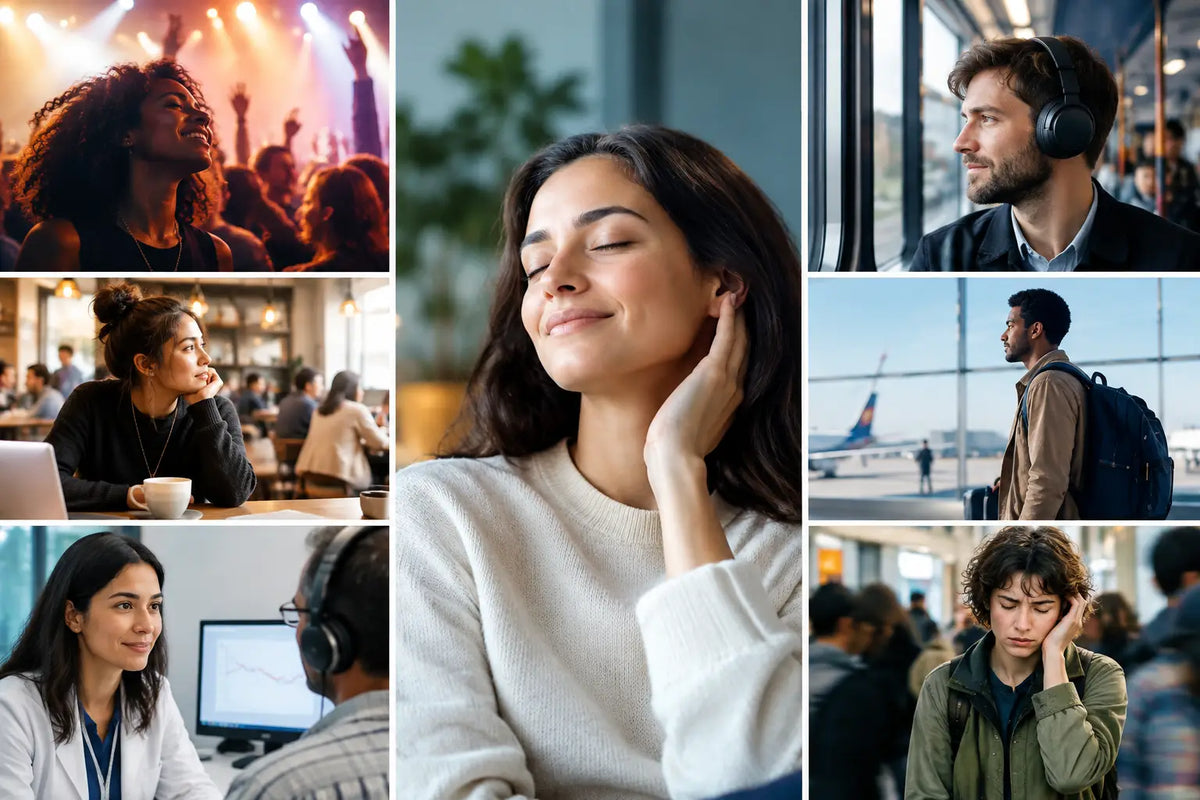
A great night out, a packed train carriage or a busy restaurant can leave your ears feeling tired long after you have gone home. Hearing preservation is not about avoiding the sounds you enjoy. It is about reducing unnecessary exposure, giving your hearing regular recovery time and choosing protection that still lets you take part in the moment.
Hearing responds to both sound level and duration. A sound that feels manageable for a few minutes may be too much over several hours, particularly in enclosed venues or when you are close to speakers. You do not need to judge every environment perfectly. Learning a few practical cues can help you make better decisions before discomfort becomes the signal to leave.
What hearing preservation means in practice
Hearing preservation is the everyday habit of managing sound exposure with the long term in mind. It includes turning down personal audio, stepping away from loud areas, taking quiet breaks and using suitable hearing protection when noise is likely to be high.
The aim is not silence. Sound matters for connection, enjoyment and awareness. For many people, especially at music events or in social settings, the more realistic approach is to reduce volume while retaining enough clarity to follow music and conversation.
Your needs may vary from one setting to another. A musician rehearsing near percussion, a commuter using the Underground and someone who becomes overwhelmed in a crowded bar are dealing with different sound environments. The same pair of earplugs may not feel right for every situation.
Recognise when sound is asking too much
Noise does not always feel painful when it is excessive. Often, the earlier signs are subtler: you begin straining to understand speech, feel unusually tired or irritable, notice muffled hearing after leaving, or experience ringing that was not there beforehand. These are useful prompts to reduce your exposure and give your ears a quieter period.
A simple conversation test can also help. If you need to raise your voice to speak to someone at arm's length, the environment may be loud enough to warrant a break or hearing protection. It is not a precise measurement, but it is practical when you are deciding what to do in real time.
Children, people with existing hearing concerns and those who are sound-sensitive may have different thresholds and responses. Do not assume that what feels comfortable for friends or colleagues will be comfortable for you.
The effect of repeated exposure
One loud event does not tell the whole story. Exposure can build across a day and week: headphones during a commute, a noisy office, exercise classes, a concert, then a loud journey home. Each setting may seem ordinary on its own.
This is why recovery matters. Build in quieter intervals where you can, particularly after sustained noise. Even ten minutes outside a venue or away from a busy room can make the rest of the evening more manageable.
Choose protection that suits the setting
Foam earplugs can reduce sound effectively, but their sound may feel muffled and they can make conversation harder to follow. They may be appropriate in some situations, but they are not always the preferred choice for music or social environments.
Reusable filtered earplugs are designed to reduce overall sound more evenly, so music, speech and your surroundings can remain more natural than with a basic plug. The experience depends on the filter, the seal and the individual ear. No earplug makes a loud environment risk-free, and no design can guarantee that you will hear everything clearly.
For concerts, festivals, rehearsals and busy nightlife, a reusable filtered option can be a practical starting point when you want to reduce volume without feeling cut off. For travel, commuting or concentrated work in a noisy space, some people may prefer greater reduction, while others value being able to hear announcements and conversation. It depends on the sound level, the activity and your comfort.
If you work in a setting with occupational noise requirements, use protection that has been assessed as suitable for that work and follow your employer's safety procedures. General-purpose earplugs are not automatically appropriate for every workplace.
Fit is part of effective hearing preservation
Even a carefully designed earplug cannot perform as intended if it is poorly fitted. A loose plug may provide less reduction than you expect. An overly deep or uncomfortable fit may discourage you from wearing it for long enough.
Start with clean hands and the correct tip size if your earplugs offer options. Gently position the earplug until it feels secure and comfortable, without forcing it. It should not cause pain. In a louder environment, listen for a clear reduction in volume while checking that you can still orient yourself safely.
Fit can differ between ears. One side may need a different tip size or a slightly different insertion angle. This is normal. If earplugs repeatedly feel uncomfortable, fall out or create a blocked sensation that does not settle after removal, pause and seek advice from an audiologist or hearing care professional.
Keep reusable earplugs clean and stored in their case between uses. Earwax, moisture and debris can affect comfort and hygiene. Follow the manufacturer's care instructions rather than using household cleaning methods that could damage the material or filter.
Make quieter choices before and during an event
Small decisions often have the greatest effect because they are easy to repeat. At a gig, choose a position away from speaker stacks rather than waiting until your ears hurt. At a restaurant, ask for a table away from loud music or the kitchen if one is available. On public transport, avoid automatically increasing headphone volume to overpower the background noise.
Consider the full journey, not just the main event. If you are travelling to a festival by train, wearing headphones at a high volume beforehand can add unnecessary exposure before the music begins. A little planning can leave you more comfortable by the end of the day.
For people who experience auditory overwhelm, hearing protection can be one part of a wider plan. Leaving space for breaks, choosing quieter arrival times and having the option to step outside may be just as valuable. Earplugs are not a treatment for tinnitus, sound sensitivity or auditory processing difficulties, but reducing an uncomfortable sound load may help some people feel more able to stay engaged in particular environments.
Be thoughtful with headphones and personal audio
Personal listening is one of the areas where you have the most control. The best volume is not a fixed number because headphones, background noise and individual hearing all differ. As a guide, choose the lowest level that lets you enjoy the content without straining, then reduce it further if you will listen for a long period.
Noise-cancelling headphones can be useful on flights, trains and busy commutes because they may reduce the urge to compete with background sound. They are not a substitute for situational awareness. Keep one ear free, use a transparency setting where appropriate, or remove headphones when you need to hear announcements, traffic or other safety cues.
Give yourself listening breaks. If you have been using headphones for an hour or two, a period without added sound is a sensible reset, especially after a noisy day.
When to arrange professional advice
General hearing preservation advice is useful, but it cannot assess your individual hearing or ear health. Arrange an audiology or medical appointment if you notice persistent ringing, a lasting change in hearing, pain, dizziness, discharge, sudden hearing loss, or difficulty understanding speech that is affecting daily life.
Seek urgent medical help for sudden hearing loss, particularly in one ear, or hearing changes accompanied by severe dizziness or other concerning symptoms. Do not try to solve these symptoms solely by changing earplugs or headphone settings.
A hearing professional can discuss your listening habits, check your hearing where appropriate and advise on options that match your circumstances. This can be particularly helpful for musicians, frequent concertgoers and anyone unsure how to balance comfort, clarity and protection.
The most useful habit is the one you will actually keep: carry hearing protection when you expect noise, use it early rather than after discomfort starts, and give your ears quieter time when the day has been loud. Those ordinary choices support hearing preservation without asking you to miss the music, people and places you enjoy.