
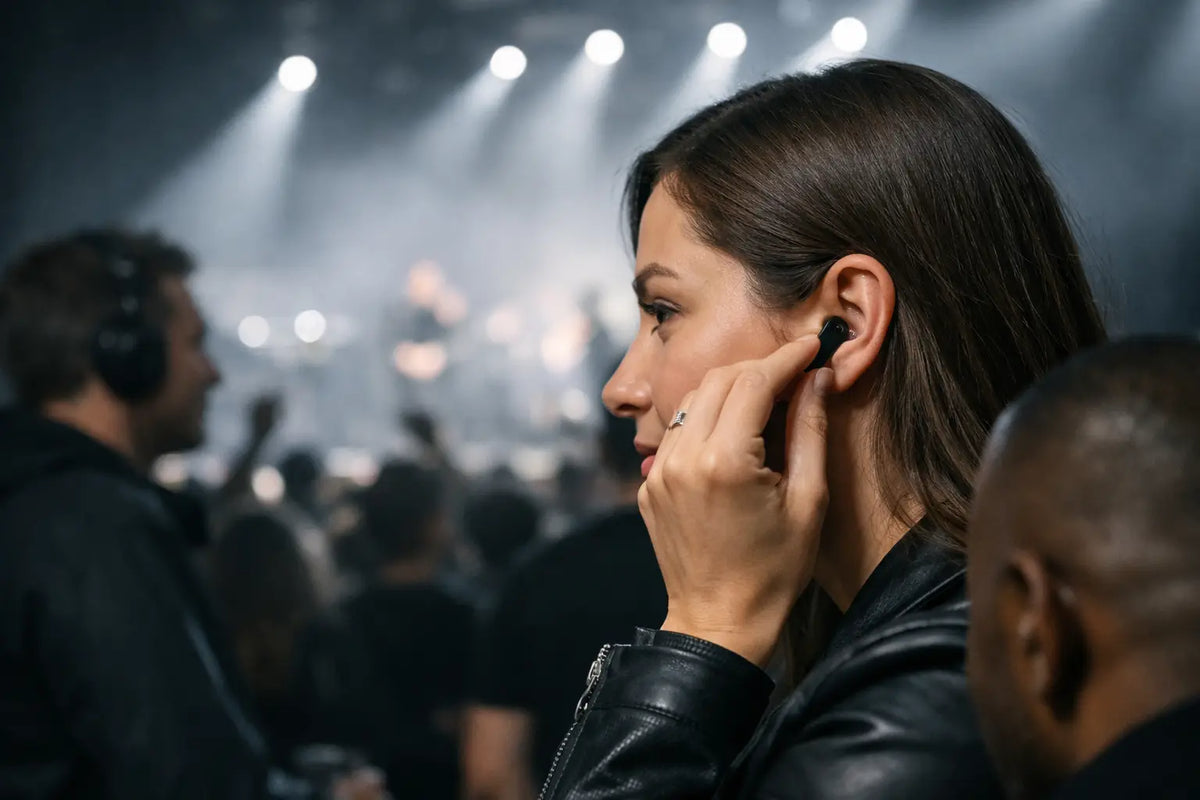
A gig can be loud enough to leave your ears feeling tired long after the final song. A busy flight, a packed sports venue or a power tool in the garden can do the same. Earplugs for tinnitus prevention are not a cure or a guarantee, but they can be a practical way to reduce your exposure to excessive sound and give your hearing a better chance to recover after noisy moments.
The aim is not to block out life. It is to make sensible protection part of the occasions when sound is likely to be louder, closer or longer-lasting than your ears can comfortably manage.
Why loud sound can trigger ringing
Tinnitus is the perception of sound when there is no outside source, often described as ringing, buzzing, humming or hissing. It is common, and its causes vary. A short-lived ringing sensation after loud noise can happen when the hearing system has been under strain. For some people it settles; for others, tinnitus can persist and deserves professional assessment.
Noise exposure is one factor that may contribute to tinnitus or make existing tinnitus more noticeable. The risk is shaped by more than just volume. Duration matters, as does how close you are to the sound source and how often these exposures occur. Standing near a speaker for two hours is very different from passing one briefly on the way to the bar.
This is where hearing protection has a clear role. By reducing the amount of sound reaching the ear, suitable earplugs can lower the overall noise dose during loud activities. They cannot remove every risk, and they are not a treatment for tinnitus. Used well, however, they are a straightforward preventive habit.
When earplugs for tinnitus prevention make sense
You do not need to wear earplugs for every ordinary sound. Normal conversation, a walk outdoors and most daily household noise are part of a healthy sound environment. Wearing protection unnecessarily, particularly in quiet settings, can make you more aware of internal sounds and may be unhelpful for people already sensitive to sound.
Consider earplugs when the environment is uncomfortably loud, when you need to raise your voice to speak to someone nearby, or when you expect to be there for a while. Live music, clubs, festivals, motorsport, sporting fixtures, cinemas with high volume, noisy bars and some DIY tasks are common examples.
Travelling can be another useful case. Earplugs may take the edge off aircraft cabin noise or a loud train carriage, especially when you want to rest. The goal here is often comfort as much as exposure reduction. If you need to hear important announcements, choose a solution that reduces sound without making the world feel completely shut off.
Existing tinnitus needs a measured approach
If you already have tinnitus, loud sound is still worth managing. Yet complete silence is not always the answer. Many people find tinnitus more noticeable in very quiet conditions, so wearing earplugs all day at home or in normal environments can be counterproductive.
Use them for genuinely noisy situations, then take them out when the sound level is comfortable. If tinnitus begins suddenly, is only in one ear, pulses with your heartbeat, follows a head injury, or comes with a noticeable change in hearing, seek prompt advice from a healthcare professional. For ongoing concerns, an audiologist or GP can help you understand the next step.
The right earplug should protect without disconnecting you
The earplug you are willing to wear is the one most likely to help. This is why comfort, fit and sound quality matter as much as the idea of protection itself.
Traditional foam earplugs can be effective when inserted correctly, but many people find them overly muffled. Speech becomes harder to follow, music loses detail and it is tempting to remove them halfway through an event. They can also be difficult to fit consistently, particularly if they are inserted too shallowly.
Filtered, reusable earplugs are designed for people who want a more natural listening experience. Rather than simply turning everything into a dull blur, they aim to reduce sound while retaining more clarity in music and conversation. That can make them a sensible choice for concerts, rehearsals, social events and other settings where staying connected matters.
Jett Maxwell Tone-Filter earplugs are built around this principle: reduce unwanted noise while helping the wearer keep more of the sound they came to hear. The best option still depends on the setting, your ear shape and the level of protection required.
For very high-noise environments or specialist work, do not assume a consumer earplug is suitable. Check the noise level, the protection requirements and any workplace guidance. In some cases, professionally fitted protection or a different type of hearing protection may be more appropriate.
Fit is not a small detail
An earplug only works as intended when it forms a proper seal. A loose fit can let in far more sound than expected, while an uncomfortable fit is unlikely to stay in place.
Take a moment before you leave for an event. Read the fitting instructions, try the earplugs in a calm setting and make sure they feel secure without pressure or pain. If your earplugs include different tip sizes, test them rather than assuming one size will suit both ears. Ear canals are not always identical.
At the venue, put them in before the loudest part of the experience begins. Waiting until your ears feel overwhelmed means you have already had unprotected exposure. Keep a clean case with you so they are easy to use, rather than becoming something left at the bottom of a bag.
Reusable earplugs also need basic care. Clean them according to the manufacturer’s instructions, allow them to dry fully and replace worn or damaged parts. This protects comfort and hygiene as well as performance.
A practical plan for louder days
Earplugs work best alongside a few simple decisions. Give your ears breaks from the loudest area, especially at long events. Move away from speakers when possible. Choose a spot where you can enjoy the music without being directly in the line of the sound system, and build in quieter time after a particularly loud evening.
Pay attention to how your ears feel. Temporary muffling, ringing or sound sensitivity after noise are useful signals to take seriously, not reasons to panic. Reduce further exposure, avoid trying to ‘test’ your hearing with more loud sound and allow time in a comfortable sound environment. If symptoms do not settle or concern you, arrange professional advice.
There is also no benefit in turning personal audio up to overcome background noise. Well-fitting earplugs in a loud setting and sensible headphone volume at other times are complementary habits, not competing ones.
Choosing protection you will actually use
When comparing earplugs for tinnitus prevention, start with the situation rather than the marketing. Ask whether you need to hear music clearly, hold conversations, sleep during travel or simply reduce the intensity of a busy environment. Then consider comfort, reusability, fit options and how easy they are to carry.
Do not chase silence. For many everyday loud situations, the better outcome is a safer, more comfortable level of sound that still lets you take part. That balance is especially valuable for musicians, concertgoers and people with sound sensitivity who do not want protection to feel isolating.
A small case in your pocket or bag can turn good intentions into a reliable habit. Wear earplugs before the volume climbs, choose a fit you trust and let your ears have the quieter moments they need afterwards.