
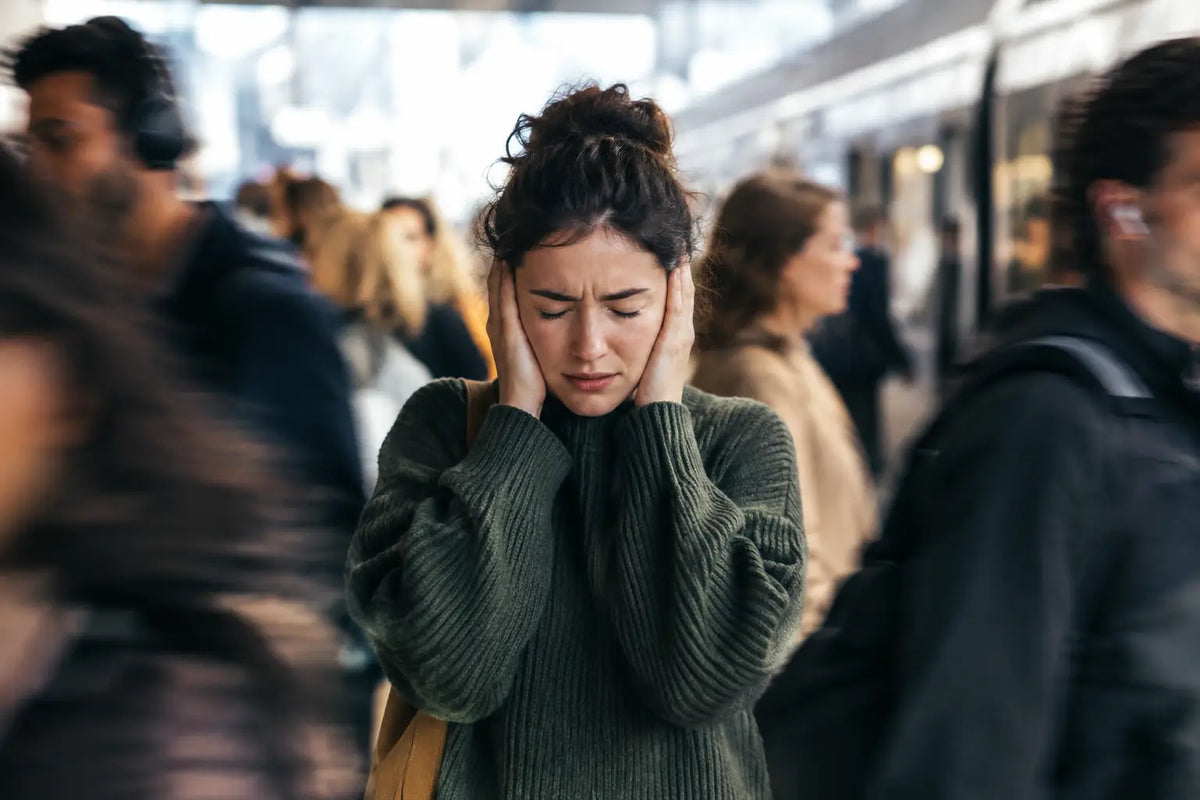
A busy platform, a packed gig or a long flight can leave your ears feeling tired long after the sound has stopped. Noise exposure is not only about obviously extreme volume. It is the combined effect of how loud a sound is, how close you are to it and how long you remain around it.
The useful starting point is simple: reduce the level reaching your ears when you can, and give yourself breaks from sustained noise. You do not need to avoid music, travel or social events to be more thoughtful about your hearing. Small, practical choices can make noisy situations feel more manageable while helping you listen more comfortably over time.
What noise exposure actually means
Noise exposure describes the sound energy your ears receive over a period of time. A brief loud cheer at a match is different from standing beside speakers for several hours. Equally, a moderately loud commute repeated twice a day may be more relevant than one unusual noisy event.
Volume matters, but duration matters too. As sound gets louder, the amount of time your ears can comfortably tolerate it generally becomes shorter. Distance also changes the picture. Moving a few metres away from a speaker, a train platform edge or a noisy group can noticeably reduce the intensity reaching you.
Sound is not experienced identically by everyone. One person may leave a restaurant feeling fine, while another finds the competing voices, clattering plates and background music exhausting. That response can be influenced by fatigue, stress, previous noise exposure, hearing changes and how the brain processes complex sound. It does not need to mean that anything is wrong.
When noise exposure is most likely to build up
The situations that catch people out are often familiar ones. Music venues, festivals and rehearsals can involve high sound levels for extended periods, particularly near speakers or drums. Pubs and restaurants may become louder as more people arrive, prompting everyone to raise their voice in return.
Travelling brings a different kind of exposure. Aircraft cabin noise, rail travel and traffic can create a constant sound backdrop. It may not feel dramatic, but sustained noise can make conversation harder and leave some people mentally drained. Many commuters also turn up headphones to compete with the environment, which can add to their overall listening load.
At home, the volume of headphones, gaming headsets and television matters most when use is prolonged. The right level is not a fixed number for every person or device. A practical check is whether you can still hear someone speaking normally nearby, and whether you feel the need to turn the volume up further as time goes on.
Signs that sound has been too much
Temporary muffled hearing or ringing after a loud event can be a sign that your ears have had a heavy sound load. Some people notice that speech seems less clear, particularly in a busy room, or that ordinary sounds feel sharper than usual the following day.
These experiences are worth taking seriously without panicking. Step away from noise where possible, keep the next day or two quieter and avoid adding more loud headphone listening. If ringing, muffled hearing, pain or a sudden change in hearing persists, or if you are concerned at any point, seek advice from a qualified hearing care professional or your GP. Sudden hearing changes should be assessed promptly.
Feeling overwhelmed by noise can also show up as irritability, concentration difficulties or a strong urge to leave a setting. Hearing protection may make certain environments easier to tolerate, but it is not a treatment for tinnitus, sound sensitivity, auditory processing difficulties or any other condition. Personalised advice is useful when sound is regularly affecting your work, sleep, communication or confidence.
Reduce noise exposure without opting out
The most effective approach is usually a combination of choices rather than one perfect solution. Positioning makes a difference at live events. Avoiding the area directly in front of speakers, taking a break in a quieter space and giving your ears recovery time after the event are all sensible measures.
For everyday listening, lower the volume before extending the listening time. If you are using headphones in a noisy place, consider whether a quieter carriage, a different route or ear protection could reduce the temptation to keep turning them up. The aim is not silence. It is reducing unnecessary sound load.
In social settings, choose a seat away from loudspeakers or the centre of the room if you can. Facing the person you are speaking to, rather than talking side by side, can make speech easier to follow without straining or shouting. For some people, arriving earlier, before the room gets louder, also helps.
Why filtered earplugs can be a practical option
Reusable filtered earplugs are designed to reduce sound more evenly than simply blocking the ear as much as possible. For a concertgoer or musician, that can mean turning down the overall level while retaining more of the balance of music and speech than basic foam plugs may provide.
They are not intended to make every environment quiet, and the experience varies with fit, the sound source and the filter level. However, the ability to reduce volume without feeling completely cut off can make them a realistic option for gigs, nightlife, travel and busy public spaces.
The best choice depends on what you need from the situation. Someone standing near amplification may prioritise greater reduction. Someone who needs to hear conversation at a crowded dinner may prefer a lighter level of reduction. If you rely on hearing alarms, instructions or workplace communication, make sure any hearing protection is appropriate for that setting.
Fit matters as much as the earplug itself
An earplug that is not seated correctly cannot perform as intended. It may feel loose, reduce sound unevenly or fall out when you move. It can also lead people to assume that hearing protection does not work for them when the issue is simply size or insertion.
Start with clean hands and a clean earplug. Gently place it into the entrance of the ear canal and adjust it until it feels secure and comfortable, without forcing it deeply. The earplug should create a consistent seal, but it should not cause pain or pressure. If it feels uncomfortable, try a different tip size or style rather than pushing through discomfort.
Check the fit in a normal environment before relying on earplugs at a loud event. Your own voice may sound different when your ears are partly occluded, especially at first. This is common and may become less noticeable with use, but comfort is still important. If an earplug repeatedly causes soreness, stop using it and seek advice if needed.
Build recovery into your listening habits
Quiet time is not about making life smaller. It is about allowing your auditory system a break after demanding sound. After a loud night out, a lower-volume journey home and a calmer morning can be more helpful than immediately replacing one noisy environment with another.
This is particularly relevant if you work in busy environments, play music or travel frequently. Think about the full week rather than judging each event in isolation. A rehearsal, a noisy train, an evening at a pub and headphone listening may each feel manageable on their own, yet add up when they occur close together.
You may find it useful to keep a simple mental note of when your ears feel tired. Patterns often emerge: perhaps it is certain venues, long video calls with headphones, or the combination of poor sleep and a crowded room. That information can guide practical changes more effectively than trying to avoid all noise.
A calmer way to approach loud sound
Noise is part of work, travel, music and social life. The goal is not to fear it, but to make informed decisions before your ears feel overloaded. Choose your position, lower volume where possible, use well-fitted hearing protection when it suits the setting and allow time for quieter listening afterwards.
A little planning can preserve the parts of sound you value most - conversation, music and connection - while reducing the strain that unnecessary volume can bring.