
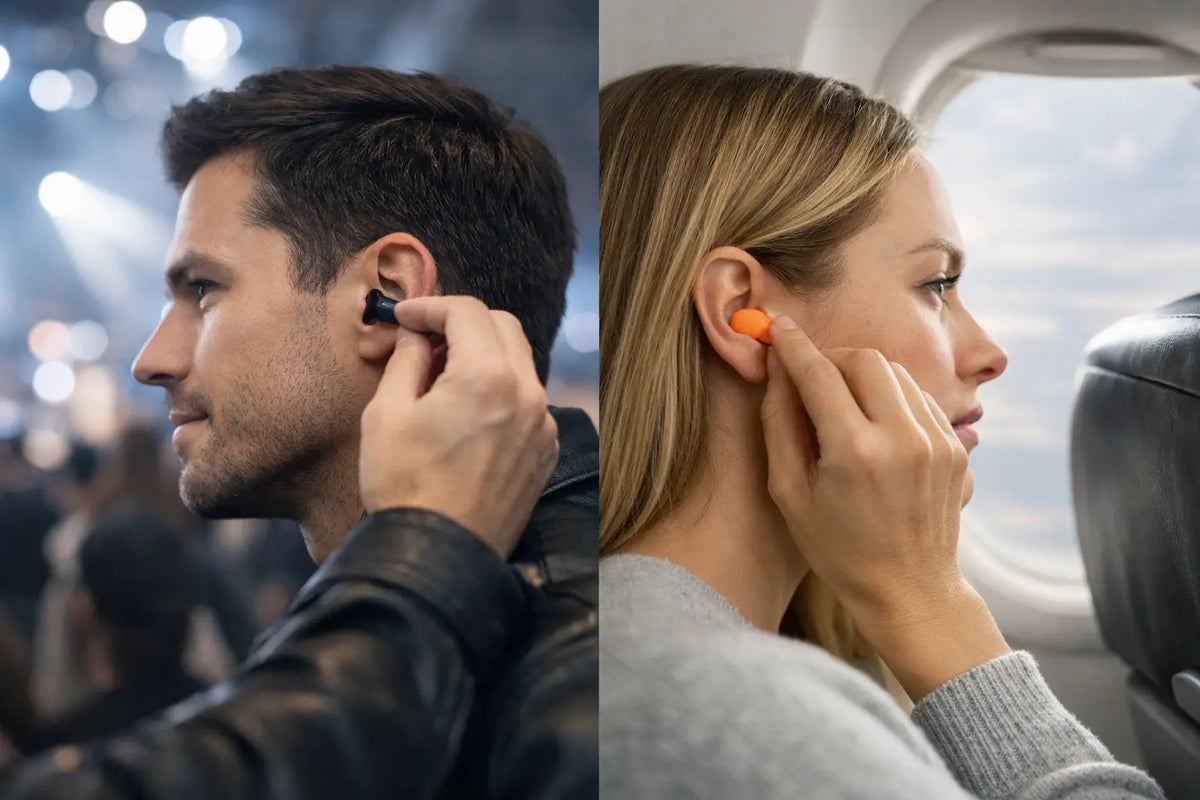
A pair of earplugs can make a crowded gig, overnight flight or busy commute far more manageable. But reusable vs disposable earplugs is not simply a question of spending more or less. The better choice depends on the noise you face, how often you need protection and whether you still want to follow music or conversation.
Foam disposable earplugs have a place. They are widely available, compact and useful when you need a quick option. Reusable earplugs are designed for repeated wear and, depending on their filter design, can offer a more balanced listening experience. Understanding the trade-offs helps you choose protection you will actually feel comfortable using.
Reusable vs disposable earplugs: the key difference
Disposable earplugs are usually made from soft, expanding foam. You roll them between your fingers, insert them into the ear canal, and allow the foam to expand. When fitted well, they reduce a broad range of sound. Their main strength is straightforward, high-level noise reduction in situations where sound quality is not the priority.
Reusable earplugs are commonly made from washable silicone or thermoplastic materials. Many have a structured shape that sits at the entrance to, or just inside, the ear canal. Some use acoustic filters to reduce volume more evenly than foam, helping music, speech and environmental sound retain more of their character.
That distinction matters when you want less noise without feeling cut off. At a concert, for example, foam can make instruments and voices sound heavily muffled. A filtered reusable design may make the overall level more comfortable while preserving greater clarity. It will not make a loud environment quiet, nor should it. The aim is a more manageable listening level with useful awareness of what is around you.
When disposable earplugs make sense
Disposable foam earplugs are a practical choice for occasional, unplanned use. Keep a pair in a bag, glove box or travel case for a noisy hotel, a delayed journey or a one-off event. They are also convenient when cleaning and storing earplugs is unrealistic.
Their low unit cost is another benefit. If you only need earplugs rarely, buying a reusable pair can feel unnecessary. Foam plugs are also soft and can suit some people who prefer the feeling of a material that gently expands in the ear.
The compromise is that correct fitting takes practice. A foam plug that is not rolled tightly enough, inserted properly or allowed time to expand may not perform as expected. It can also work loose with movement. For people with dexterity difficulties, this process can be fiddly.
Foam is usually best where clear sound is not needed. Sleeping in a noisy setting, for instance, is different from attending a gig with friends or travelling when you need to hear announcements. The same heavy reduction that is helpful for rest can be frustrating when communication matters.
Why many people choose reusable earplugs
For regular use, reusable earplugs can be the easier habit to maintain. They come with a case, are kept clean between wears and are ready for the next journey, rehearsal or event. Instead of buying and discarding pairs repeatedly, you have one solution that becomes familiar over time.
Comfort is often a deciding factor. A well-fitting reusable plug should feel secure rather than pressurised. Different tip sizes are particularly useful because ear canals vary considerably. The right fit is not about forcing the largest tip into place. It is about achieving a comfortable seal that stays put.
Sound quality is the other major reason to consider reusable filtered earplugs. Standard foam tends to reduce sound unevenly, with higher frequencies often affected more noticeably. This can leave music duller and speech harder to understand. Filtered designs are intended to lower the level while maintaining a more natural balance, making them well suited to concerts, venues, social events and travel.
For people with sound sensitivity, a reusable option can also offer consistency. Knowing how a familiar pair feels and sounds can reduce the uncertainty of entering a busy café, station or family gathering. The right choice remains personal: some people prefer a stronger reduction, while others value being able to stay engaged in conversation.
Compare comfort, clarity, hygiene and cost
The most useful comparison is not about declaring one type better in every situation. It is about deciding which benefits matter most to you.
Comfort and fit
Foam plugs can be comfortable when fitted correctly, but they are not equally easy for everyone to insert. Reusable plugs often provide a more predictable fit, especially when supplied with more than one tip size. If earplugs feel painful, loose or as though they create excessive pressure, try a different size or style rather than assuming earplugs are not for you.
Sound and communication
If your priority is reducing noise while still enjoying a set, talking to friends or hearing travel announcements, reusable filtered earplugs are usually the more suitable category. If you simply want as much broad noise reduction as practical for a short period, foam may be sufficient.
No earplug allows perfectly natural hearing in every environment. In a very loud venue, speech can still be difficult to follow. Choosing a design that suits the setting can, however, make the experience less tiring and more enjoyable.
Cleaning and hygiene
Disposable plugs should generally be replaced when dirty, damaged or no longer able to expand properly. Reusable plugs need routine care: wash them as directed, let them dry fully and return them to their case. Do not share earplugs, and avoid using any pair that is visibly worn or uncomfortable.
Good care is not complicated, but it is part of the value of a reusable pair. A clean, dry case also makes it much more likely that your earplugs will be where you need them.
Cost over time
Foam plugs cost less upfront, but regular purchases add up for frequent users. Reusable earplugs cost more initially and can be better value over repeated use if they are cared for properly. The environmental difference follows a similar pattern: a durable pair creates less routine waste than using single-use foam plugs week after week.
Choosing earplugs for common situations
For concerts and live music, consider reusable earplugs with acoustic filters. They are designed for people who want to turn the volume down while keeping more detail in music and speech. This is the kind of setting that informed the design of Jett Maxwell Tone-Filter earplugs: reduce noise, keep clarity and remain part of the moment.
For commuting, flying and city travel, reusable earplugs are often convenient because they can live in a pocket or keyring case. A filtered pair may help take the edge off a busy environment while leaving you better able to hear announcements and speak to fellow travellers.
For sleep or a temporary noisy situation, disposable foam earplugs can be a sensible option if they fit you well. Focus on comfort, as a plug that causes irritation is unlikely to stay in overnight.
For sound-sensitive environments, it can be worth trying earplugs at home before relying on them during a demanding day. Notice whether you can tolerate the fit, whether your own voice sounds uncomfortable and whether the sound reduction feels appropriate. A gradual introduction often makes it easier to find what works.
Do not overlook fit and intended use
The label on a packet cannot tell the whole story. Earplugs only work as intended when they fit correctly and are used in an appropriate setting. Follow the fitting instructions, check that the plugs are seated comfortably, and replace any disposable pair that has lost its shape.
If you need hearing protection for a workplace, use equipment selected for the specific noise exposure and work requirements. Workplace protection may need a different approach from earplugs chosen for music, travel or everyday sound.
Persistent ear pain, discharge, sudden changes in hearing or ongoing ringing are reasons to seek advice from a qualified hearing care professional. Earplugs are a useful preventative tool, but they are not a substitute for individual clinical assessment when something does not feel right.
The best earplugs are usually the ones that match your routine closely enough to become second nature. Keep a pair where life gets loud, choose clarity when you want to stay connected, and choose simple foam when a short-term quieting option is all you need.