
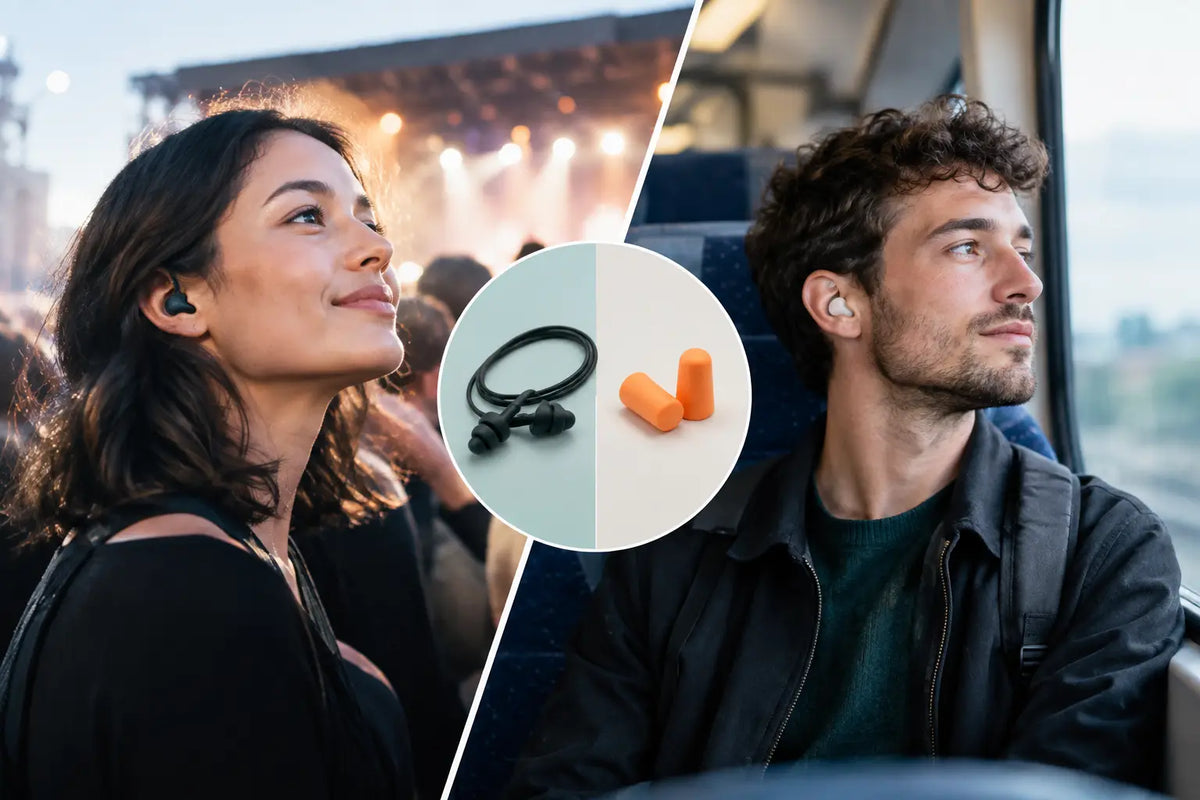
A crowded gig, a late train or a busy restaurant can leave your ears feeling tired long after you have gone home. When weighing up reusable protection versus disposable plugs, the practical answer is simple: disposable plugs are often chosen for short-term, straightforward noise reduction, while reusable filtered earplugs are usually better suited to social settings where you still want music, speech and awareness to remain as natural as possible.
Neither option is right for every situation. The best choice depends on the sound around you, how often you need protection, how reliably the plug fits and what you need to hear while wearing it.
Reusable protection versus disposable plugs: the key difference
Disposable plugs are commonly made from soft foam that is compressed, inserted and allowed to expand in the ear canal. Their purpose is generally to reduce a broad range of sound, often quite substantially when fitted correctly. They are convenient, widely available and useful when you need a simple option for occasional use.
Reusable earplugs are made to be worn more than once and cleaned between uses. Some reusable designs use acoustic filters, which aim to lower overall sound levels more evenly than basic foam plugs. This can make music feel less muffled and conversations easier to follow, although all earplugs change the sound you hear to some degree.
For a concertgoer, musician or anyone who spends time in lively venues, that difference matters. Protection is more likely to be worn consistently when it allows you to stay connected to the experience rather than feeling cut off from it.
Sound quality and communication
The strongest reason to choose reusable filtered protection is usually sound balance. Foam plugs can be very effective at reducing noise, but they may make speech and music sound dull or distant. That may be perfectly acceptable when your priority is rest, quiet or short-term relief from a noisy environment.
At a live event, however, you may want to hear the detail of the music, talk to the person beside you or remain aware of announcements and your surroundings. Filtered plugs are designed with these uses in mind. Rather than simply blocking as much sound as possible, they seek to reduce the level while retaining a more balanced listening experience.
This is not the same as making a loud environment safe at any volume or removing every uncomfortable sound. The protection achieved depends on the specific earplug, the filter, the seal in your ear and the nature of the noise. Very loud sound still calls for sensible decisions, including taking listening breaks and moving away from speakers where possible.
When disposable plugs may make more sense
A disposable foam plug can be a reasonable choice if you need something quickly, are trying earplugs for the first time or expect to use them only rarely. Some people also prefer a simple plug for sleep or travel, where preserving the quality of speech and music is less relevant.
The limitation is that good foam-plug performance depends heavily on insertion. If the plug is not rolled, placed and held correctly while it expands, it may sit too shallowly and reduce far less sound than expected. It can take practice, and it is not always convenient to do in a busy public space.
Fit is more important than most people realise
An earplug cannot work as intended without a suitable seal. Ear canals vary in size, shape and sensitivity, so a plug that feels comfortable for one person may feel loose, pressurised or irritating for another.
Disposable foam plugs are usually one-size or limited-size products. They can feel secure once properly expanded, but some people find them bulky or difficult to insert. Reusable plugs may be available with different tip sizes, making it easier to find a stable, comfortable fit. A well-fitting reusable plug should sit securely without needing frequent adjustment or causing pain.
Comfort is not a minor consideration. If your ears feel sore after twenty minutes, you are unlikely to keep the plugs in through a full set, a flight or a long journey. It is often worth testing any new earplug in a lower-pressure setting before relying on it at an important event.
If you experience ear pain, discharge, sudden hearing changes, persistent ringing or a sensation of blockage that does not settle, seek advice from an appropriate healthcare professional or audiologist rather than continuing to experiment with earplugs.
Hygiene, convenience and environmental impact
Disposable plugs are designed for limited use. They are practical when you need a clean pair without carrying a case, but they create waste each time they are replaced. They can also become unsuitable for reuse if dropped, dirty or misshapen.
Reusable earplugs require a little more care, but the routine is straightforward. Keep them in their case, clean them according to the manufacturer’s instructions and allow them to dry fully before storing them. This makes them a more considered option for people who regularly attend gigs, travel, commute or work in busy shared spaces.
There is a trade-off. A reusable pair is only useful when you remember to take it with you. Keeping a case in your coat pocket, bag or key everyday carry can make protection available when plans change and a quiet evening becomes a loud one.
Cost over time
A disposable plug usually costs less at the point of purchase. For a one-off occasion, that can be the sensible decision. But frequent replacement adds up, particularly if you use earplugs every week for rehearsals, venues, commuting or travel.
Reusable protection has a higher upfront cost in many cases, reflecting the materials, design and, where used, acoustic filtering. For regular users, it may offer better value over time because one pair can be maintained and used repeatedly. The value is not only financial: having familiar earplugs that fit well can remove the uncertainty of relying on whatever is available at the last minute.
Consider the setting, not just the label
The phrase “hearing protection” covers very different needs. A person enjoying a club night, a drummer rehearsing, a passenger on a flight and someone who finds crowded cafés tiring may all benefit from reduced sound, but they may not need the same level or type of reduction.
For music and social events, choose protection that supports clearer, more balanced listening and stays comfortable for several hours. For occasional, uncomplicated use where maximum sound quality is not the priority, disposable foam plugs may be enough. For busy environments that feel overwhelming, reusable filters can provide a gentler way to reduce the overall intensity while keeping you engaged with people and surroundings.
People with tinnitus, sound sensitivity or difficulty following speech in noise may have individual needs that go beyond a general product choice. Earplugs can be useful in particular situations, but they are not a treatment for these concerns. An audiologist can offer personalised advice if sound is affecting your daily life, work, sleep or wellbeing.
How to make either option work better
Start by using earplugs before the room becomes uncomfortably loud. Trying to fit them while standing next to speakers or in a crowded queue makes it more likely that they will be inserted poorly or abandoned.
With foam plugs, follow the fitting instructions closely and check that they stay in place as they expand. With reusable plugs, try each supplied tip size if available, then gently adjust the plug until it feels secure and even in both ears. Avoid pushing any earplug excessively deep, and never insert one into an ear that is painful or infected.
It also helps to manage the environment alongside the earplugs. Step outside for a few minutes, choose a position away from the loudest source and give your ears time in quieter spaces after prolonged noise. These small choices can make a noticeable difference to listening comfort.
The better choice is the one you will wear
Reusable filtered earplugs are often the stronger everyday option for people who value music quality, conversation and environmental awareness. Disposable plugs remain useful for occasional situations, emergencies and times when simple noise reduction is all that is needed.
The most useful pair is the one that fits your ears, suits the setting and is with you when the volume rises. Choosing protection that feels comfortable and sounds acceptable makes it easier to build a lasting, sensible hearing-care habit.