
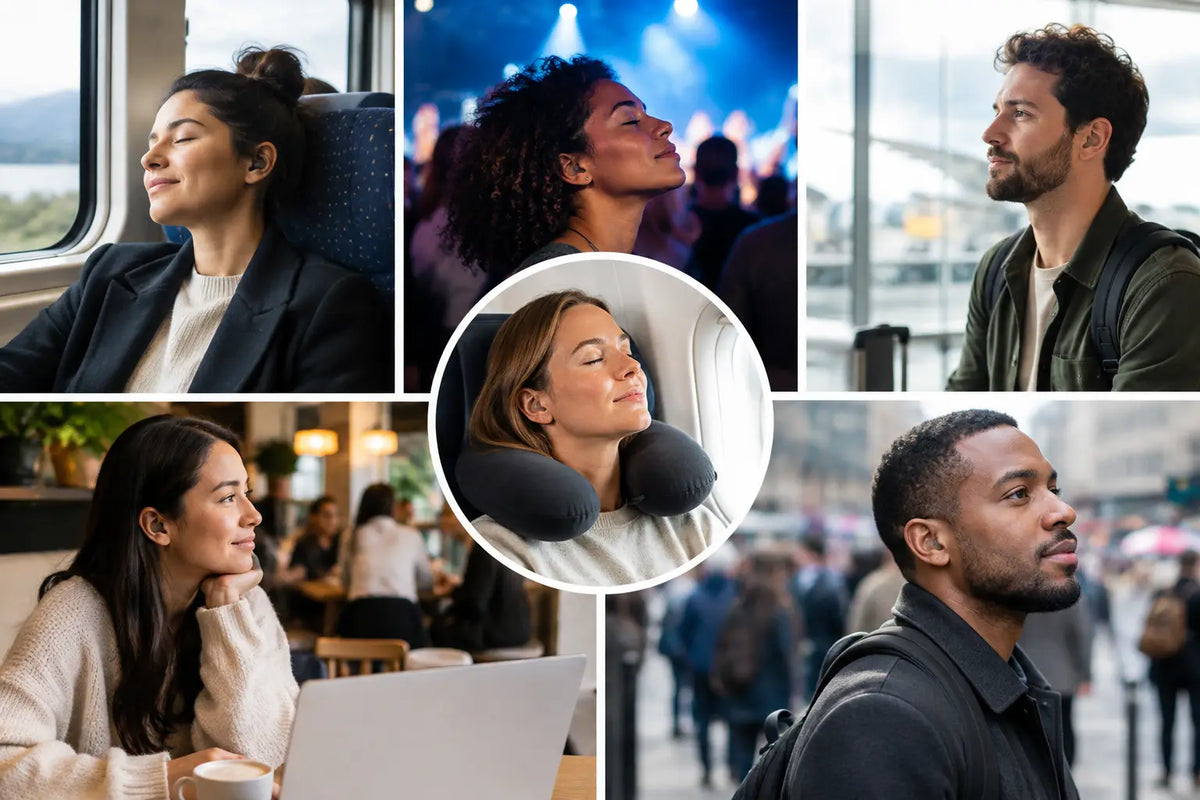
A noisy carriage at the end of a long working day, a child crying two rows back on a flight, the constant hum of hotel ventilation - travel noise is rarely one single sound. It is often a mix of engines, announcements, conversation and unexpected clatter. When people search for quiet travel accessories adults can genuinely use, the most helpful choices are usually the ones that reduce unnecessary noise without making them feel cut off from the world.
For many travellers, a small set of well-chosen accessories is more useful than trying to block every sound. The aim is comfort, better rest where possible and a greater sense of control in busy environments. What works best will depend on your journey, your sensitivity to sound and how much awareness you need to retain.
Start with the noise you are trying to manage
Before buying anything, consider the character of the noise. A long-haul flight has a persistent low engine rumble, while a train platform can be unpredictable, with sharp announcements and sudden braking sounds. A shared hostel or hotel may bring intermittent voices, doors and street noise.
This matters because no single accessory is ideal for every setting. Over-ear headphones may make a flight feel calmer, but can be bulky in a small day bag. Foam earplugs can be useful for sleep, but they may make an alarm, travelling companion or safety announcement harder to hear. Reusable filtered earplugs are often better suited to times when you want to soften a busy environment while retaining more natural awareness.
A practical travel kit should match the journey rather than promise complete silence. Complete silence is neither realistic nor always desirable when you need to navigate unfamiliar places.
Reusable filtered earplugs for busy journeys
For adults who find stations, airports, coaches, city streets or crowded cafés tiring, reusable filtered earplugs can be a considered option. Unlike earplugs designed solely to block as much sound as possible, filtered designs are intended to reduce overall volume while preserving a more balanced sound. Speech and environmental cues may still be easier to follow than with a heavily blocking plug, although results vary with the fit, filter and setting.
They can be particularly useful during the parts of a journey when rest is not the only priority. You may want to hear your platform announcement, respond to a colleague, order a coffee or remain aware while walking through a busy terminal. A well-fitting pair also takes up very little space, making them easier to keep in a coat pocket or travel pouch.
Fit deserves more attention than it usually gets. An earplug that feels loose may offer inconsistent sound reduction; one that is too large can become uncomfortable, particularly on a long journey. Reusable earplugs commonly come with different tip sizes for this reason. Try them at home before departure, and do not wait until you are boarding a flight to work out whether they sit comfortably.
If you experience pain, persistent blocked-ear sensations, discharge, sudden changes in hearing or troublesome tinnitus, seek advice from a qualified healthcare professional or audiologist rather than relying on travel accessories alone.
Noise-cancelling headphones have a different job
Noise-cancelling headphones can be very effective against steady low-frequency sound, such as aircraft engine noise, road noise and the continuous hum of public transport. For some people, this makes music, podcasts or audiobooks easier to enjoy at a lower listening level. Others prefer to use the noise-cancelling function without playing audio at all.
There are trade-offs. Headphones can feel warm or restrictive, may be less comfortable for sleeping upright, and need charging. They are also not a substitute for awareness in every situation. If you are moving around a station, crossing roads or listening for boarding information, use any noise-reducing technology with care and adjust it to the environment.
The choice between headphones and filtered earplugs often comes down to the task. Headphones suit sustained transport noise and personal audio. Filtered earplugs are convenient for conversations, queues, events and generally busy surroundings where you would prefer lower volume without an audio device over your ears.
Sleep accessories: choose comfort over maximum blockage
Trying to sleep while travelling presents a separate problem. The best solution is often a combination of small adjustments rather than one product. A supportive neck pillow can reduce the need to constantly reposition, while an eye mask can help limit visual stimulation in bright cabins or early-morning rooms.
For sound, soft earplugs may help when you are ready to rest and do not need to follow conversation or announcements. However, consider your circumstances first. If you are travelling alone and need to hear an alarm, a gate change or a travel companion, maximum sound reduction may not be the sensible option.
It is worth testing sleep earplugs in your usual sleeping position before a trip. Side sleepers, in particular, may find that a plug which feels acceptable while sitting becomes uncomfortable against a pillow. Keep your expectations realistic too: earplugs reduce sound but do not remove every disturbance, especially sudden sharp noises.
Small accessories that make a noticeable difference
The quietest journeys are often helped by details that have little to do with hearing protection. A compact organiser prevents the repeated rustling and searching that can make a crowded seat feel more stressful. Keeping earplugs, charging cables, tissues, medication and travel documents in consistent places reduces avoidable friction.
A refillable water bottle can be useful on long journeys, particularly in dry aircraft cabins. Hydration will not solve noise sensitivity, but basic physical comfort can affect how tolerable a demanding environment feels. Similarly, comfortable layers give you more control over temperature changes between platforms, cabins and accommodation.
If you use headphones, pack a short charging cable and check battery levels before leaving. For reusable earplugs, carry the protective case rather than putting them loose into a pocket or bag. This keeps them cleaner and makes them easier to find when the environment becomes noisy quickly.
Quiet travel accessories for adults who feel overwhelmed by sound
Some adults find complex sound especially tiring. This might mean difficulty focusing on conversation in a crowded restaurant, feeling drained after an airport, or becoming unsettled by layered noise on public transport. These experiences are individual and do not necessarily point to a particular diagnosis.
A useful approach is to plan for the points in the journey most likely to be demanding. Put earplugs somewhere accessible before entering the terminal. Download tickets and key travel information in advance, so you are not trying to search through an app while surrounded by announcements. If possible, allow a little extra time, as rushing tends to make noise feel more intrusive.
It can also help to give yourself short breaks from high-stimulation areas. On a longer journey, a quieter waiting area, a brief walk outside a station or even a few minutes without audio can be enough to reset. The goal is not to avoid travel or withdraw from shared spaces. It is to make the sound environment more manageable.
How to pack hearing protection properly
Hearing protection is only useful if it is available when you need it. Keep reusable earplugs in a case that is easy to reach, rather than at the bottom of a suitcase. Many people find it sensible to carry them in a day bag, jacket pocket or small pouch alongside travel documents.
Clean reusable earplugs according to the manufacturer’s care instructions before and after travel. Avoid sharing them, and replace any parts that are worn, damaged or no longer fitting securely. If you are taking both headphones and earplugs, use them for different moments rather than assuming more sound reduction is always better.
Jett Maxwell reusable filtered earplugs are designed for people who want to reduce sound while maintaining a more natural connection to music, conversation and their surroundings. For travel, that balance can be more useful than simply chasing the strongest possible reduction.
The right accessories should make the journey feel more manageable, not more complicated. Start with one change that fits your usual travel routine, test it before a major trip, and adjust according to what genuinely helps you feel comfortable and aware.