
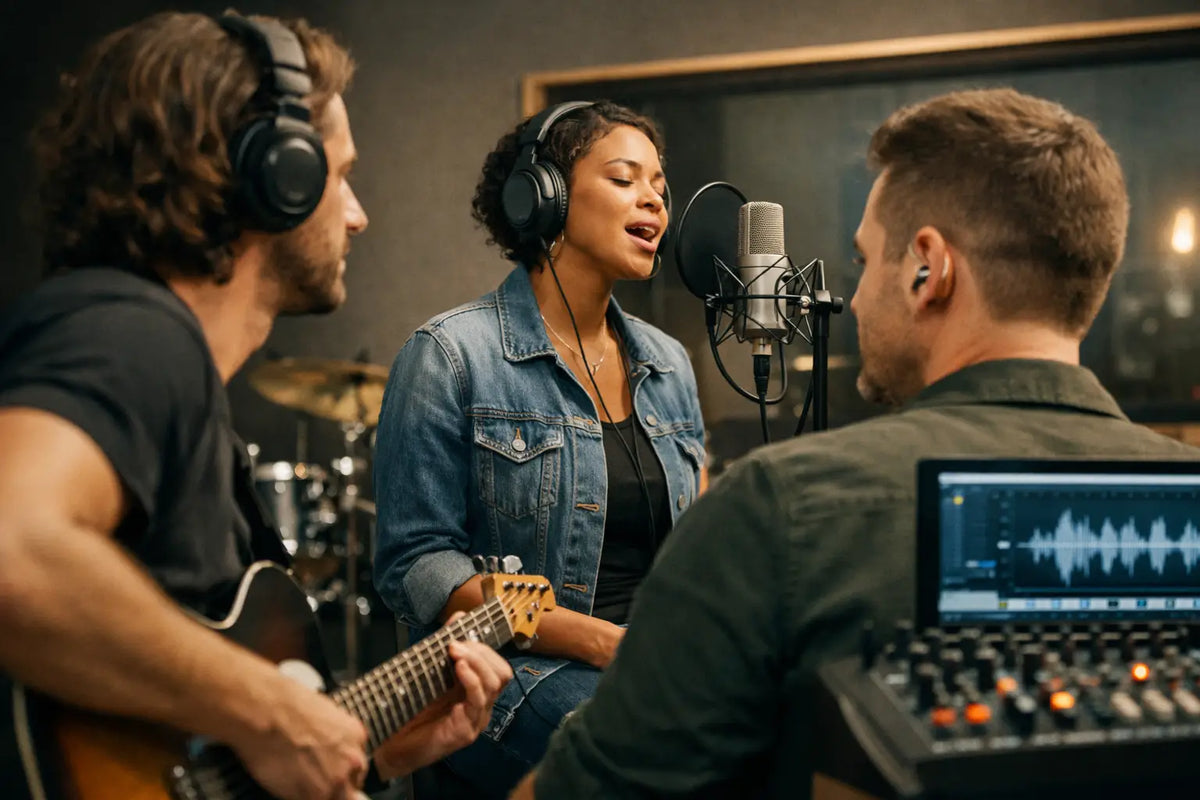
A musician hearing guide should begin with one practical principle: reduce the sound reaching your ears without losing the musical information you need. That usually means managing volume at its source, taking meaningful breaks and using well-fitted filtered earplugs where sound levels are high. Hearing protection is not an admission that you cannot cope with live music. It is part of looking after the hearing you rely on to perform, create and enjoy sound.
Musicians often work in sound that is both loud and complex. A rehearsal room can build volume quickly, while stages add wedges, amplifiers, cymbals and crowd noise. Even a short session can feel tiring when your ears are working hard to separate speech, pitch, timing and tone. The right approach depends on your instrument, role, venue and personal listening needs, but a few habits are useful for almost everyone.
Why musicians need a hearing plan
Hearing exposure is not just about whether a sound feels painfully loud. Duration matters, as does proximity to the source. Playing beside a drummer, standing near a cymbal or placing one ear close to an amplifier can create a very different exposure from the same rehearsal experienced elsewhere in the room.
Musicians also need detail. You may need to hear the attack of a snare, the blend of a harmony, a cue from a bandmate or a spoken instruction from a sound engineer. This is why simply blocking as much sound as possible is not always the best answer. Excessive reduction can encourage players to remove their protection, play harder or turn monitoring up to compensate.
A considered plan aims for comfortable, usable sound. It should help you stay engaged with the performance while reducing unnecessary exposure. It may take some adjustment, particularly if you are used to rehearsing or performing without protection.
Musician hearing guide: start with the source
The most effective sound-management choices are often made before earplugs go in. If the overall stage or rehearsal volume comes down, everyone benefits, including the audience, crew and musicians who are not directly beside the loudest source.
Position amplifiers so they are directed towards the player’s ears rather than their knees. Raising or angling an amplifier can make it easier to hear at a lower setting. Drummers may benefit from considering where cymbals, wedges and other players are positioned, as nearby high-frequency sound can be particularly fatiguing over a long session.
In rehearsal, agree a sensible starting level before the first song. It is much easier to build a balanced mix gradually than to begin loudly and spend the evening competing for space. If one instrument cannot be heard, the answer is not always to turn everything else up. Arrangement, placement and monitoring may solve the problem more effectively.
For performers using monitors, lower volume is not automatically better if it makes cues unclear or causes you to strain to hear. The aim is a controlled, intelligible mix at the lowest practical level. In-ear monitoring can be useful for some musicians, but fit, isolation, mix quality and individual preference all matter. It is not a one-size-fits-all solution.
Choose earplugs designed for listening
Foam earplugs can be appropriate in some situations, but many musicians find that they make music and speech sound muffled. Reusable filtered earplugs are designed to reduce sound more evenly, helping preserve a more natural sense of music while lowering the overall level.
That does not mean every filtered earplug will sound identical or suit every setting. The amount of reduction needed may differ between a quiet acoustic set, a full-band rehearsal, a club show and a festival stage. Some musicians prefer a lower level of reduction when communication is the priority, while others need more reduction beside loud instruments or speakers.
Fit is central to performance. An earplug that is loose, uncomfortable or inconsistently sealed will not give predictable results. Try fitting them before a gig rather than for the first time in a pressured soundcheck. Insert them according to the manufacturer’s guidance, check that both sides feel secure, and give yourself a few rehearsals to adapt to the change in sound.
A properly fitted earplug should feel stable rather than painful. If it causes persistent discomfort, pressure or irritation, stop using it and seek advice from an appropriate hearing care professional. Never force anything into the ear canal.
Build breaks into rehearsals and gigs
Your ears need recovery time after sustained sound, especially where concentration is high. A five-minute break spent beside the PA or in a noisy bar is not much of a break for your hearing. Where possible, step into a quieter space between sets, during changeovers or after rehearsal.
This matters for listening fatigue as well as exposure. When your auditory system has been working hard, speech can become more difficult to follow and small musical details may seem less clear. A quieter interval can make the rest of the session feel more manageable.
After a loud performance, avoid adding further high-volume listening on the journey home. Give your ears a calmer environment where you can. This is a practical choice, not a rule that music must be avoided after every show.
Notice changes without self-diagnosing
Temporary muffled hearing, ringing or buzzing after a gig can be a sign that your ears have had more sound than they were comfortable with. Difficulty following conversation in a busy venue, increased sensitivity to everyday sounds or frequent listening fatigue are also worth paying attention to.
These experiences can have different causes and do not confirm a diagnosis. However, recurring symptoms deserve a professional conversation. An audiologist or other qualified hearing care professional can assess your hearing and discuss appropriate next steps based on your circumstances.
Seek prompt medical advice for sudden hearing changes, sudden one-sided hearing loss, severe ear pain, discharge, marked dizziness or new persistent symptoms. General guidance cannot replace an individual assessment.
A workable routine for working musicians
Consistency is more useful than saving protection for only the loudest headline gig. Keep your earplugs in the case you use every day: your instrument bag, gig bag or key pouch. Use them during rehearsals, soundchecks, live sets and other loud environments where they make sense.
It can help to make protection part of your setup routine. Tune your instrument, check cables, fit earplugs, then begin. Once this becomes familiar, you are less likely to make a rushed decision when the room suddenly gets loud.
Musicians who experience sound sensitivity or find busy audio environments overwhelming may need more planning around breaks, positioning and communication. Earplugs may help make certain settings more manageable, but they are not a treatment for tinnitus, auditory processing difficulties or any other condition. Individual support from an audiologist can be valuable where sound affects daily life or work.
Protect the hearing behind the performance
Hearing protection should support your musicianship, not get in its way. The best setup is one you can wear consistently, hear through comfortably and use alongside sensible control of rehearsal and stage volume. At Jett Maxwell, that practical balance matters: reducing sound while retaining as much clarity, connection and environmental awareness as the situation allows.
Your hearing is part of your instrument. Treat each rehearsal, session and show as an opportunity to make sound choices that still let the music feel like music.