
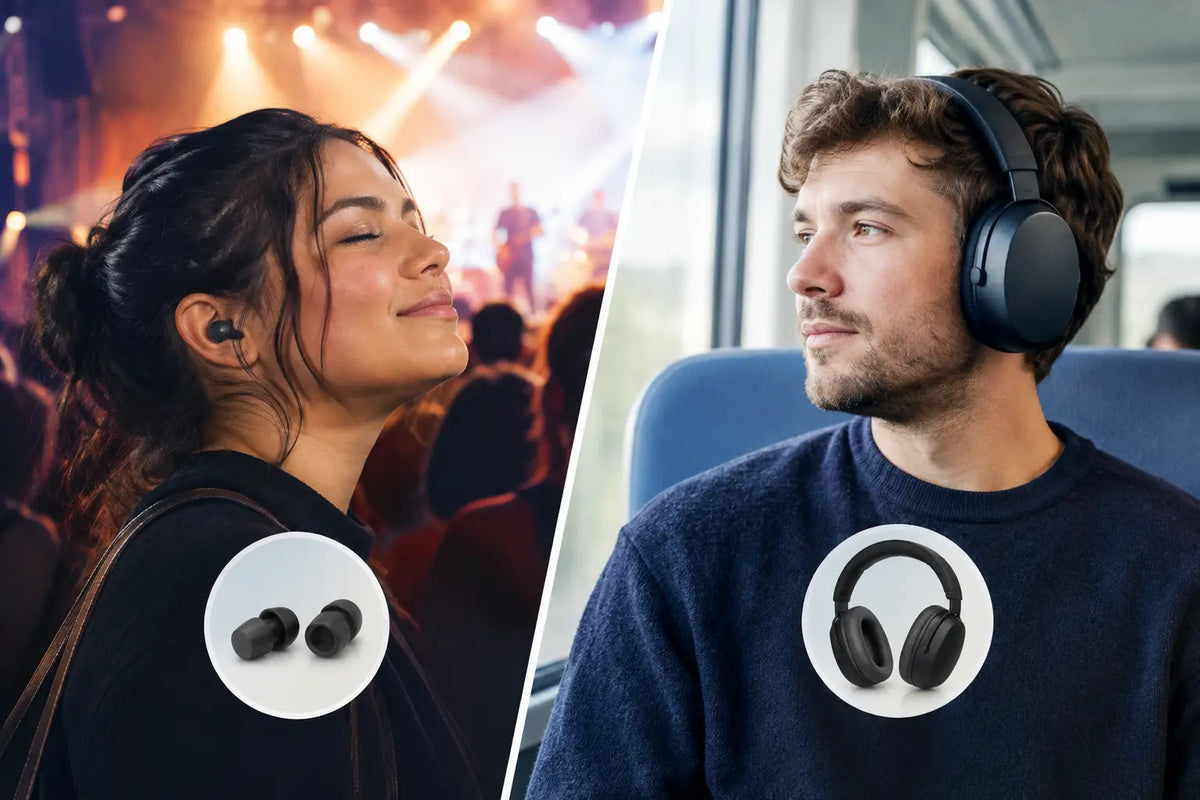
A loud gig is rarely just loud. It is music, conversation, crowd noise and the room itself, all arriving at once. That is why the choice between music earplugs versus earmuffs is not simply about which option blocks more sound. It is about where you are going, how long you will be there and how clearly you need to hear what remains.
For most concerts, festivals and social settings, reusable filtered earplugs are usually the more practical choice. They sit discreetly in the ear and are designed to reduce volume while retaining a more balanced sense of music and speech. Earmuffs can be very useful in particular environments, especially where comfort, visibility or a higher level of broad sound reduction matters more than musical detail. Neither is automatically right for everyone.
Music Earplugs Versus Earmuffs: The Core Difference
Earplugs reduce sound at the entrance to the ear canal. Music earplugs, often called filtered or high-fidelity earplugs, use an acoustic filter to lower the overall level without aiming to make everything sound muffled. The experience varies by design and fit, but the intention is straightforward: turn the volume down while keeping the sound more natural than basic foam plugs often do.
Earmuffs create a seal around the outer ear. Their padded cups can provide a reassuring physical barrier from sound, and they are quick to put on or remove. They may be a sensible option for short periods in very noisy surroundings, for children who cannot safely insert earplugs, or for people who prefer not to have anything in their ear canal.
The key trade-off is that earmuffs are larger, warmer and more noticeable. They can also make music and conversation feel less clear, particularly if the cups are not designed with listening quality in mind. Earplugs are smaller and easier to carry, but their performance depends heavily on achieving a good seal in the ear.
For Music: Clarity Matters as Much as Reduction
At a live show, people often want to feel immersed rather than cut off. Standard foam earplugs can be appropriate for some situations, but they commonly reduce higher frequencies more than lower ones. This can leave music sounding dull or distant, and it may make speech harder to follow between sets.
Filtered music earplugs are designed for a different experience. By aiming for a more even reduction across frequencies, they can make amplified music more comfortable without removing the character of the performance. Vocals, guitars and the overall mix may remain easier to recognise, although the result will always depend on the venue acoustics, the sound system and the fit of the plug.
Earmuffs can reduce the impact of a loud venue, but they are rarely the first choice for adult concertgoers. They can interfere with glasses, hairstyles and hats, feel hot during a busy set, and make it awkward to speak with friends. For musicians, they can also make monitoring, communication and awareness of the room more difficult.
That said, some people genuinely prefer earmuffs. If loud environments feel overwhelming, the sensation of a fuller physical cover around the ears may feel more containing than an earplug. Preference is valid here. The best option is one you can tolerate, use correctly and keep in place for the time you need it.
Comfort and Fit Change the Result
A well-designed earplug that is not inserted properly cannot provide its intended reduction. It may feel loose, work its way out when you talk or chew, or produce an uneven sound between ears. Before relying on reusable earplugs at an important event, practise fitting them at home in a calm setting.
The plug should sit securely and comfortably, following the manufacturer’s fitting guidance. It should not cause pain, pressure or persistent irritation. Ear canals differ in size and shape, so one style will not suit every person. If a reusable plug never feels stable or comfortable, a different tip size or design may be more appropriate.
Earmuffs have their own fit considerations. The cushion needs to make contact around the ear. Thick glasses arms, hair caught beneath the seal, hats and jewellery can all affect the fit. Earmuffs may also feel uncomfortable after prolonged wear because of heat and pressure around the head.
For people with sound sensitivity or auditory overwhelm, physical comfort can be as significant as sound reduction. A solution that feels oppressive may lead you to remove it at the moment you most want support. It can help to try hearing protection for short periods first, rather than making a first attempt in the middle of a crowded event.
When Earmuffs May Be the Better Choice
Earmuffs are worth considering when ease of use is the priority. They are visible, quick to check and do not require insertion into the ear canal. This can be useful for a child who needs hearing protection under close adult supervision, or for an adult who finds earplugs difficult to fit because of dexterity, comfort or ear-health concerns.
They can also suit brief, very loud moments where music quality is not the main concern. Think of watching fireworks from nearby, standing close to a noisy household task or taking a short break from an overstimulating environment. In these moments, their bulk may be less of a drawback.
For travelling, the answer depends on what you need. Earmuffs can make sense where you want a noticeable barrier from surrounding sound and do not mind the size. Filtered earplugs are usually easier to carry and sleep with, and may be more comfortable for longer journeys. Neither option will remove all noise, and neither should prevent you from remaining appropriately aware of your surroundings.
When Music Earplugs Are Usually More Practical
Reusable filtered earplugs tend to suit situations where you want lower volume without stepping away from the experience. This includes concerts, rehearsals, festivals, clubs, pubs with live music, sporting events and busy social venues. Their small size makes them easy to keep on a keyring or in a bag, which matters because protection only helps when you have it with you.
They can also be useful for commuters and frequent travellers who find prolonged background noise tiring. The aim is not silence. It is often about creating a more manageable listening level while preserving enough speech and environmental sound to navigate the setting.
Jett Maxwell approaches this balance through reusable filtered earplugs intended to reduce sound while keeping music, conversation and everyday awareness more usable. As with any hearing protection, the right choice comes down to the setting, the fit and your own listening needs.
Do Not Choose by Appearance Alone
A low-profile earplug may be preferable at a gig, while an over-ear design may feel more reassuring in another setting. But appearance alone says very little about actual performance. Look for clear information from the manufacturer about intended use, fitting and care. If an attenuation rating is supplied, remember that it is a test value, not a personal guarantee of the exact reduction you will experience.
Fit, insertion depth, movement and the shape of your ears all affect real-world results. The same applies to earmuffs: a good-looking pair with a poor seal may not perform as expected. Avoid assuming that doubling up products, such as wearing earplugs beneath earmuffs, is suitable for every situation or product combination without appropriate guidance.
Keep reusable earplugs clean and dry according to their care instructions, and replace them if their material, filters or fit appear compromised. Earmuff cushions also wear over time. Cracked, flattened or hardened cushions can affect comfort and the seal around the ear.
A Sensible Choice for Your Next Event
If you are heading to a music venue and want to hear the performance with less intensity, filtered earplugs are generally the natural starting point. If you want quick, visible protection for short periods, dislike in-ear products or prefer the feeling of external coverage, earmuffs may be more suitable.
If you have ongoing ear pain, a sudden change in hearing, persistent ringing or concerns about sound tolerance, speak with an audiologist or other appropriate healthcare professional for individual advice. Hearing protection can be useful support, but it is not a substitute for assessment where symptoms need attention.
The most helpful protection is the kind you will wear consistently and comfortably. Try it before the volume rises, check the fit, and give yourself permission to step into a quieter space when your ears need a break.