
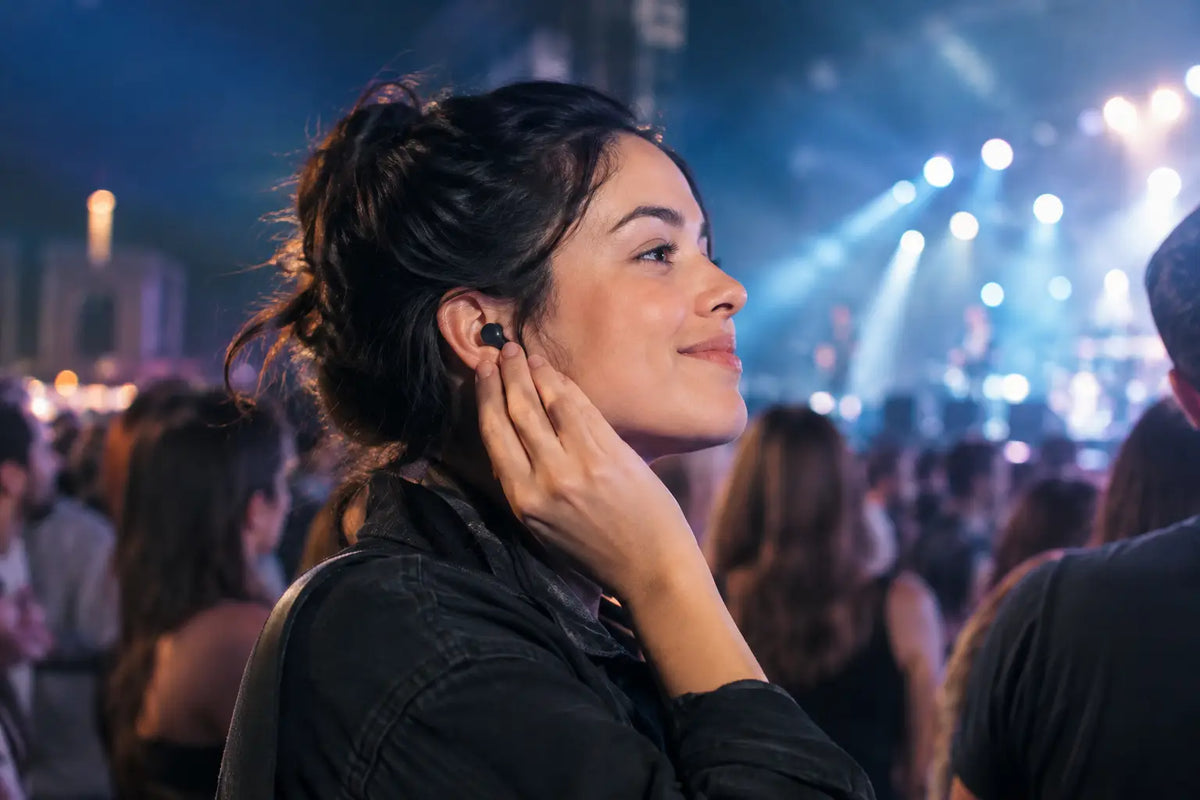
A good pair of concert earplugs should feel secure, reduce the harshness of a loud venue and still let you enjoy the detail of the music. The key to how to wear concert earplugs is simple: use the correct tip size, insert them gently until they seal, then check that both ears sound and feel balanced. They should not hurt, work loose when you move your jaw, or leave the music sounding muffled in one ear.
For most people, this takes less than a minute once they know what a proper fit feels like. It is worth practising at home before a gig or festival, rather than trying to work it out in a crowded, noisy room.
How to wear concert earplugs properly
Start with clean hands and inspect the earplugs. Check that the tips are clean, undamaged and firmly attached. If your reusable earplugs include different tip sizes, begin with the medium size unless you already know that you need something smaller or larger.
Hold the earplug by its outer stem or body, rather than pressing on the filter section. With your opposite hand, reach over your head and gently pull the top of your ear upwards and backwards. This helps straighten the ear canal, making insertion easier and more comfortable.
Place the tip at the entrance to your ear canal and use a slow, gentle twisting motion to guide it in. There is no need to force it deeply. Stop when the tip has formed a comfortable seal and the earplug sits securely without protruding excessively. Repeat on the other side.
Once both earplugs are in place, speak aloud or rub your fingers together near each ear. The sound should be reduced fairly evenly. Your own voice may sound a little different at first, which is normal with any earplug, but it should not feel painfully blocked or pressurised.
A filtered concert earplug is designed to lower the overall level of sound more evenly than a basic foam plug. In practical terms, music should remain more balanced and conversation may be easier to follow than with plugs that heavily reduce higher frequencies. The result still depends on the fit, the venue and the volume around you.
Choose the tip size before the show
Tip size is the most common reason reusable earplugs either feel uncomfortable or fail to reduce enough sound. An undersized tip may slip out, feel loose or allow too much sound around the edges. An oversized tip can create pressure, tenderness or the sense that the plug will not settle properly.
Try the supplied sizes in a quiet place. A suitable tip should sit comfortably for 10 to 15 minutes without needing adjustment. It should remain in place when you smile, chew or gently move your jaw. These movements matter at a concert, where singing, talking and eating can all affect a loose fit.
Your two ears may not need the same size. Ear canals are often slightly different, and it is reasonable to use a different tip in each ear if that gives you a more secure, comfortable result. What matters is a balanced seal, not matching sizes for their own sake.
If you have particularly narrow ear canals, sensitive skin, recurring ear irritation, recent ear surgery or an active ear infection, seek individual advice from an audiologist or other appropriate clinician before using in-ear protection.
Do not push through discomfort
Concert earplugs should feel present, but they should not be painful. Stop if you feel sharp discomfort, significant pressure or irritation. Removing and reinserting the earplug more gently may solve the issue, but persistent discomfort usually means the tip size, shape or style is not right for your ear.
Never use tools, hairpins or other objects to push an earplug further in. This can injure the ear canal or push wax deeper inside. If an earplug is difficult to remove, stay calm, avoid probing your ear and seek help from a healthcare professional if needed.
Check the seal without silencing the experience
A sealed earplug does not mean you will hear nothing. At a live show, you should still hear music, crowd noise and announcements, simply at a lower level. With filtered earplugs, the aim is often a more comfortable listening level without unnecessarily losing the character of the performance.
A quick test is to cover and uncover each ear with your hands after inserting the plugs. If one side sounds noticeably more open than the other, remove that earplug and try again. A small twist or a change of tip size may improve the seal.
Avoid judging the fit solely by how much bass you can hear. Low-frequency sound can travel through the body and through the venue, so it may remain noticeable even with a well-fitted earplug. Instead, consider whether the overall sound is less aggressive, whether cymbals and vocals feel more manageable, and whether you can stay comfortable for longer.
For people who find loud or complex sound overwhelming, a good fit can also make a busy environment feel easier to tolerate. Earplugs are not a treatment for sound sensitivity or auditory processing difficulties, and individual responses vary. However, reducing the intensity of an environment may help some people feel more in control of their listening experience.
When should you put concert earplugs in?
Put them in before the headline act begins, ideally before the room reaches its loudest point. Waiting until your ears already feel uncomfortable can make the change seem more dramatic and leaves you rushing to fit them in low light or among a crowd.
At festivals, keep them accessible throughout the day. Sound levels and your distance from speakers can change quickly between stages. It can be sensible to wear them for louder sets, near the front of the audience, in enclosed venues and during particularly busy travel home.
There is no prize for staying closest to the loudspeakers. If the sound is uncomfortably loud even with earplugs correctly fitted, create more distance from the source where you can. A few steps to the side or further back can make a meaningful difference while still leaving you with an excellent view and atmosphere.
Common fitting mistakes to avoid
The most frequent mistake is only placing the earplug at the very edge of the ear. It may look as though it is in place, but it will not create a reliable seal and is likely to fall out. Gentle insertion and a slight twist usually give a more stable fit.
Another is inserting one earplug more deeply than the other. This can make the sound feel uneven and tempt you to keep adjusting during the show. Take both out, reset and insert them slowly rather than trying to correct one side while it is already in your ear.
Some people also remove one earplug to speak. With quality filtered plugs, conversation can often remain possible if you face the person, reduce the distance between you and move away from the speaker stack. Taking one plug out repeatedly creates uneven exposure and makes it easier to misplace it.
Finally, do not share reusable earplugs. They are personal items that sit inside the ear canal. Keep yours in their case when not in use, particularly at a festival or in a bag where dirt and moisture can collect.
Removing and caring for your earplugs
After the show, remove each earplug slowly by holding the outer stem and easing it out with a gentle twist. Do not yank it out quickly, especially if it has formed a close seal.
Wipe reusable earplugs with a clean, dry cloth after use. Follow the manufacturer’s cleaning guidance for the specific materials and filters, as soaking or using harsh cleaning products can damage some designs. Let them dry fully before returning them to their case.
Regular care protects comfort as well as hygiene. Earwax, make-up, dust and moisture can affect the seal over time. If the tips become damaged, stiff, discoloured or difficult to clean, replace them where suitable replacements are available.
If you notice persistent ringing, pain, a sudden change in hearing or a blocked sensation after a loud event, arrange an assessment with an audiologist or GP. Earplugs are a sensible part of enjoying live music, but they do not replace professional advice when symptoms persist.
The best concert earplugs are the ones you will actually wear from the first support act to the journey home. Fit them calmly, check the seal, keep them clean and give yourself permission to step back from the speakers when the room feels too loud.