
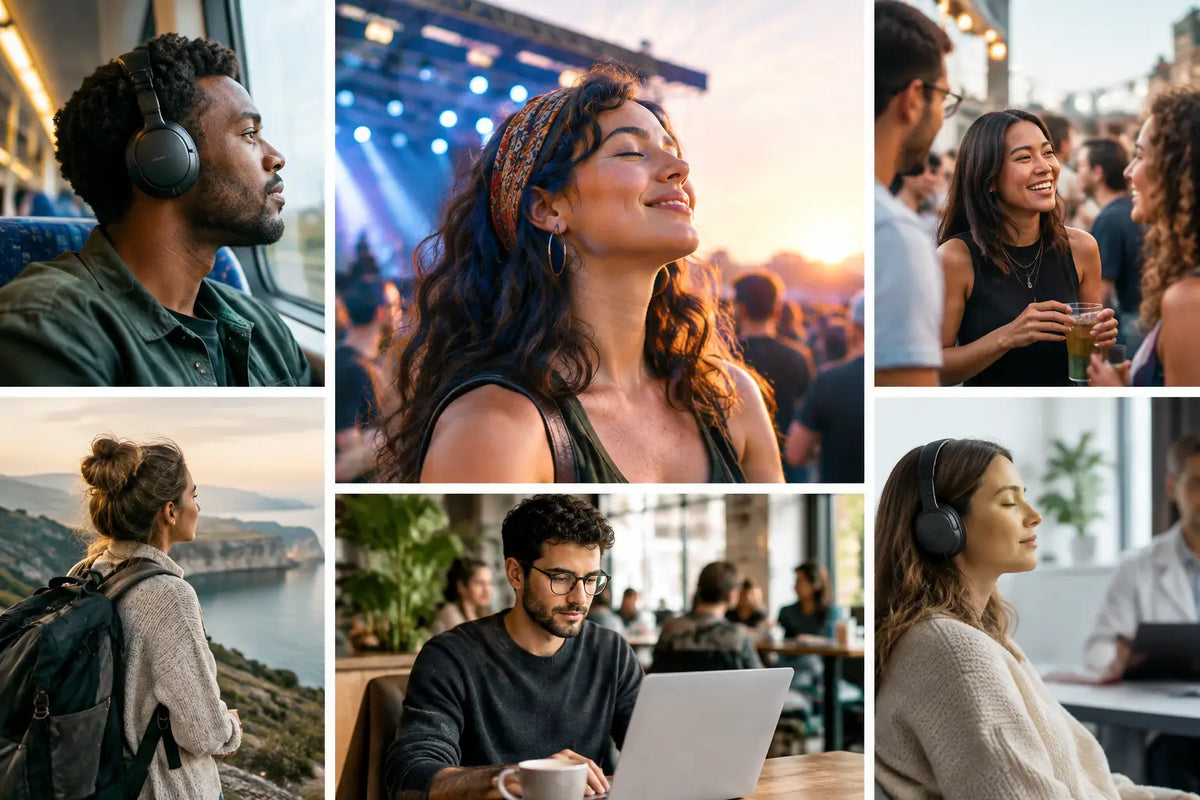
A festival can move from a quiet campsite to a packed crowd and a powerful sound system in minutes. Festival hearing essentials are not about taking the energy out of live music. They are about giving your ears and brain a more manageable experience, so you can stay comfortable, follow conversations and enjoy the day for longer.
For most people, the useful starting point is simple: take well-fitting reusable filtered earplugs, put them in before the music becomes loud, and give yourself permission to step away from the speakers when you need to. The right approach will vary with the venue, the set, your own sound sensitivity and how long you plan to stay.
Festival hearing essentials to pack
Reusable filtered earplugs are the main item to bring. Unlike basic foam plugs, filtered designs aim to lower the overall level while keeping music more balanced and speech more recognisable. That can make them a practical choice for festivals, where you may want protection without feeling disconnected from the performance or the people around you.
Fit matters as much as the type of earplug. An earplug that sits loosely in the ear canal may offer less reduction than intended and can work its way out as you talk, eat or move through a crowd. Try your earplugs at home first. You should be able to insert them comfortably, and your own voice may sound different but should not feel painfully blocked or pressured.
Keep them in a small protective case, rather than loose at the bottom of a bag. Festival conditions are dusty, wet and unpredictable. A clean case also makes it easier to remove the plugs briefly for a quieter conversation, then put them back in without transferring dirt into your ears.
It is sensible to pack a backup pair if you have one, particularly for a multi-day event. Earplugs are small and easy to misplace, and having a spare avoids the all-or-nothing choice of going without protection after the first day.
Other useful items are less specialised: a water bottle, weather-appropriate layers and a charged phone can all help you take calm, practical breaks when the site feels overwhelming. If you use prescription hearing aids or other hearing technology, speak with your hearing care professional before the festival about moisture, retention and whether a particular listening setting may be appropriate.
Choose your position, not just your earplugs
Where you stand can change your exposure substantially. The area directly in front of loudspeakers is often more intense than positions further back or to the side. You do not need to stand at the perimeter all day, but avoiding speaker stacks is a straightforward way to reduce the load on your ears without missing the show.
Outdoor stages can still be loud, especially near the front. Indoors, sound may feel more concentrated because of reflections from walls and ceilings. If your ears start to feel tired, music becomes unpleasantly sharp, or following speech takes increasing effort, treat that as useful feedback. Moving back for a song or two can make a meaningful difference to comfort.
For people who experience auditory overwhelm, the challenge is not always volume alone. A busy festival combines bass, announcements, crowd noise, queues, visual activity and unpredictable interruptions. Filtered earplugs may soften the overall soundscape, but they will not remove every source of stimulation. Planning a quiet point on the site, agreeing a meeting place with friends and allowing extra time between stages can make the day feel more manageable.
Put earplugs in before the loud part starts
Many people wait until their ears hurt or ring before using earplugs. A better habit is to put them in before entering a crowded arena, before a headline set begins or before moving close to a stage. This also gives you time to check the seal and get used to the sound before the environment becomes demanding.
There can be an adjustment period, particularly if you have only used foam earplugs before. Music may sound quieter at first, but a good filter should allow the shape and detail of the performance to remain more natural than an unfiltered plug. Give yourself a few songs to adapt rather than repeatedly taking them in and out.
If one earplug feels uncomfortable, do not force it deeper. Remove it, check that it is clean, and reinsert it gently according to the instructions provided. Persistent pain, pressure or irritation is not something to push through. Different ear shapes can require different tip sizes or styles.
Keep conversations realistic
Earplugs can make a noisy conversation easier for some people by reducing competing sound, but they cannot turn a festival crowd into a quiet room. Face the person speaking, move a little away from the densest part of the crowd and ask for a quieter spot if you need one. These small changes often help more than shouting directly into someone’s ear.
If you are attending with friends, agree on simple signals before the music starts. A gesture for “I need a break” or “let’s meet by the exit” avoids trying to communicate over a loud set. It is particularly helpful after dark, when crowds become denser and finding one another is harder.
Build recovery into the day
Hearing comfort is affected by duration as well as loudness. A full festival day can include several hours of amplified music, travel, busy food areas and late-night campsites. Short periods in a quieter area give your ears and attention a chance to settle before the next set.
This does not need to mean missing your favourite artists. You might take a break during a changeover, listen from further back for one performance, or choose one later set to enjoy from a calmer location. Think of it as managing your capacity, not failing to make the most of the ticket.
Alcohol and fatigue can make it easier to overlook discomfort and harder to notice when earplugs have shifted. Check the fit occasionally, drink water and avoid placing yourself closer to speakers simply because the crowd is moving forward. Looking after your hearing is usually easier when it is part of the plan, rather than a decision made at the end of a long night.
What to do after loud music
A temporary muffled feeling or ringing after a loud event can be a sign that your ears have had more sound than they comfortably tolerate. Give yourself a quieter period afterwards where possible. Avoid adding more loud headphone listening on the journey home, and allow your ears some rest the following day.
If ringing, reduced hearing, pain, dizziness or a blocked sensation is severe, one-sided, sudden or does not settle, seek advice from an appropriate healthcare professional promptly. This article offers general guidance rather than personal clinical advice, and individual symptoms deserve individual assessment.
Do not use cotton buds or other objects to try to clear the ears after a festival. They can push wax further in or irritate the ear canal. If you suspect wax or have recurring ear discomfort, an audiologist or other qualified clinician can advise on the most suitable next step.
A calmer way to enjoy the crowd
Festival hearing essentials work best when they support your plans rather than interrupt them. Pack earplugs you have already tried, use them early, choose your position with care and take short breaks before discomfort becomes the reason you have to leave.
The goal is not to hear less of the festival. It is to leave with more of the music, conversation and memory still feeling good.