
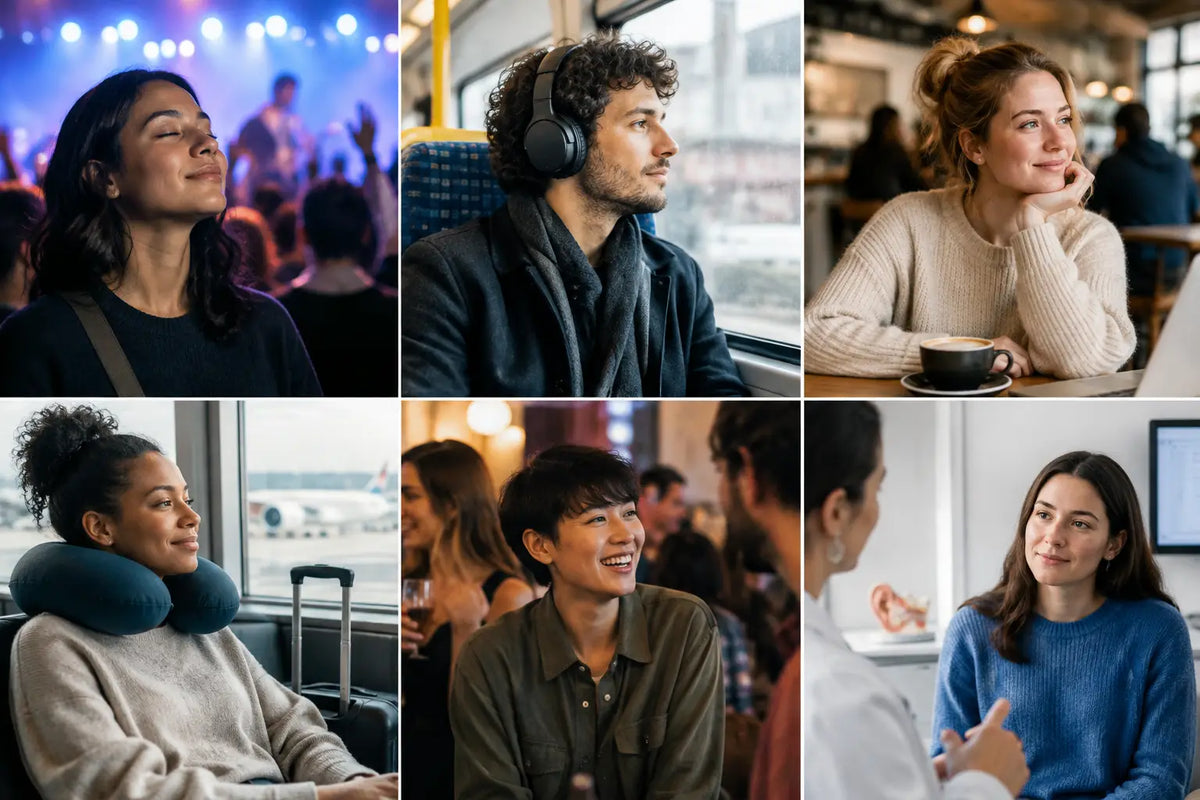
A crowded train, a busy café or a long afternoon in an open-plan office can become tiring long before it becomes unbearable. Everyday sensory comfort tools offer practical ways to reduce unnecessary strain from sound, light, touch and visual activity, while helping you stay present in the places you need or want to be.
The right tool is not necessarily the one that removes the most input. It is the one that makes an environment more manageable without cutting you off from useful information, conversation or enjoyment. For many people, a small, well-chosen adjustment can make the difference between leaving early and feeling able to stay.
What sensory comfort tools are designed to do
Sensory comfort tools are everyday items that help you adjust your surroundings or your response to them. They are not a cure for sound sensitivity, anxiety, tinnitus, auditory processing difficulties or neurodevelopmental conditions. Instead, they can support comfort and control in situations that feel demanding.
Needs vary considerably. One person may find fluorescent lighting distracting; another may be comfortable with bright light but fatigued by overlapping conversations. You may only need support at a concert, during a commute or after a particularly busy week. It is worth noticing the setting, the type of sensory input and the point at which it starts to feel difficult.
A good starting question is: what would make this situation easier to tolerate? The answer might be less noise, fewer visual distractions, a more comfortable texture, a brief break or clearer communication with the people around you.
Everyday sensory comfort tools for sound
Sound is often the hardest part of a busy environment because it is difficult to step away from completely. Restaurants, public transport, music venues and shared workspaces can combine volume, sudden noises and multiple voices at once. This can leave people feeling mentally tired, even where hearing is otherwise healthy.
Filtered reusable earplugs
For social events, live music, travel and busy public places, reusable filtered earplugs can be a useful option. Unlike solid foam plugs, which may make sound feel heavily muffled, filtered designs are intended to reduce the overall level of sound while retaining a more balanced listening experience.
That distinction matters when you still want to hear music, follow speech or remain aware of what is happening around you. The amount of reduction needed depends on the setting. A loud gig may call for a different approach from a coffee shop or a train journey.
Fit is just as important as the filter. An earplug that feels loose, painful or unstable is unlikely to be worn consistently. Follow the fitting guidance supplied with the product, and allow a little time to become used to the sensation. If you experience ear pain, discharge, sudden hearing changes or persistent one-sided symptoms, seek advice from an appropriate healthcare professional rather than trying to manage the issue with earplugs alone.
Jett Maxwell reusable filtered earplugs are designed for people who want to reduce sound without unnecessarily losing the character of music, speech and their surroundings. They can be particularly practical when noise is part of an activity you enjoy, rather than something you can simply avoid.
Noise-cancelling headphones and ordinary headphones
Headphones can be helpful during travel or focused work, especially when they reduce steady background noise such as engine hum. However, they are not always the best choice. Playing audio loudly to cover external noise can add to your overall sound exposure, and over-ear headphones may feel warm or uncomfortable over time.
Where possible, use a comfortable volume and take breaks. If you need quiet rather than entertainment, no audio is often the simpler option.
A quieter place and a planned exit
Not every sensory tool needs to be something you buy. Choosing a table away from speakers, travelling outside peak hours or taking a five-minute pause outdoors can reduce the load significantly. At an event, knowing where the quieter areas and exits are can make it easier to relax because you have options.
Tools for light, touch and visual overload
Sound rarely works alone. Busy spaces often include glare, movement, strong smells, warmth and physical crowding. Combining a few modest adjustments may work better than relying on one solution.
Tinted glasses or a cap can help with glare outdoors or under harsh indoor lighting. The effect is personal: a tint that feels calming to one person may make another feel less alert or distort colour perception. For driving and other safety-critical tasks, choose eyewear appropriate for the conditions.
For touch, familiar layers can be useful. A soft scarf, comfortable jumper or jacket with a texture you already know can make travel and waiting areas feel less intrusive. Some people prefer a small tactile item, such as a smooth keyring or textured object, to occupy their hands during meetings or queues. The aim is not to draw attention to the tool, but to give yourself a discreet point of comfort.
Visual input can be reduced by positioning yourself carefully. Sitting with a wall behind you, facing away from foot traffic or putting your phone on a less visually demanding display may make a surprisingly noticeable difference. These are small choices, but they can reduce the number of things your brain has to monitor.
Choosing the right sensory comfort tools
The most useful approach is specific rather than general. Avoid building a large collection of items before you know what genuinely helps. Start with the situations you encounter most often and test one or two changes.
Consider these practical questions:
- Which setting is hardest: commuting, work, shopping, travel, socialising or live events?
- Is the issue mainly volume, unpredictable sound, speech in noise, bright light, physical discomfort or several things at once?
- Do you need to communicate, hear announcements or enjoy music while using the tool?
- Will you realistically carry and use it when you need it?
It can also help to test tools in lower-pressure situations. Wear reusable earplugs for a short café visit before relying on them at a festival. Try a cap on a bright walk before using it for a full day out. This gives you time to notice fit, comfort and any compromises without the pressure of a demanding environment.
When less input is not always better
Reducing sensory input can be helpful, but complete withdrawal is not always the goal. You may need to hear a platform announcement, speak to colleagues or stay connected to friends at a gig. Too much reduction can make conversation harder or leave you feeling isolated.
This is why moderation matters. Choose a level of support that fits the environment, and adjust it as circumstances change. You might use filtered earplugs during the loudest part of a concert, then remove them when you move to a quieter area. You might take headphones off before crossing a road or speaking with a member of staff.
If sound feels painful, overwhelming or unusually difficult to process on a regular basis, an audiologist or other suitable clinician can help you explore what may be contributing. Personal advice is especially worthwhile if your experience is changing, affecting daily life or occurring alongside hearing concerns.
Make comfort part of your routine
The best sensory comfort tools are usually the ones that feel ordinary enough to use without a second thought. Keep them where they are easy to reach: earplugs in a small case, glasses near the front door, headphones in your work bag or a familiar tactile item in your coat pocket.
Comfort is not about avoiding every demanding environment. It is about having sensible options when an environment asks more of you than usual, so you can stay involved on your own terms.