
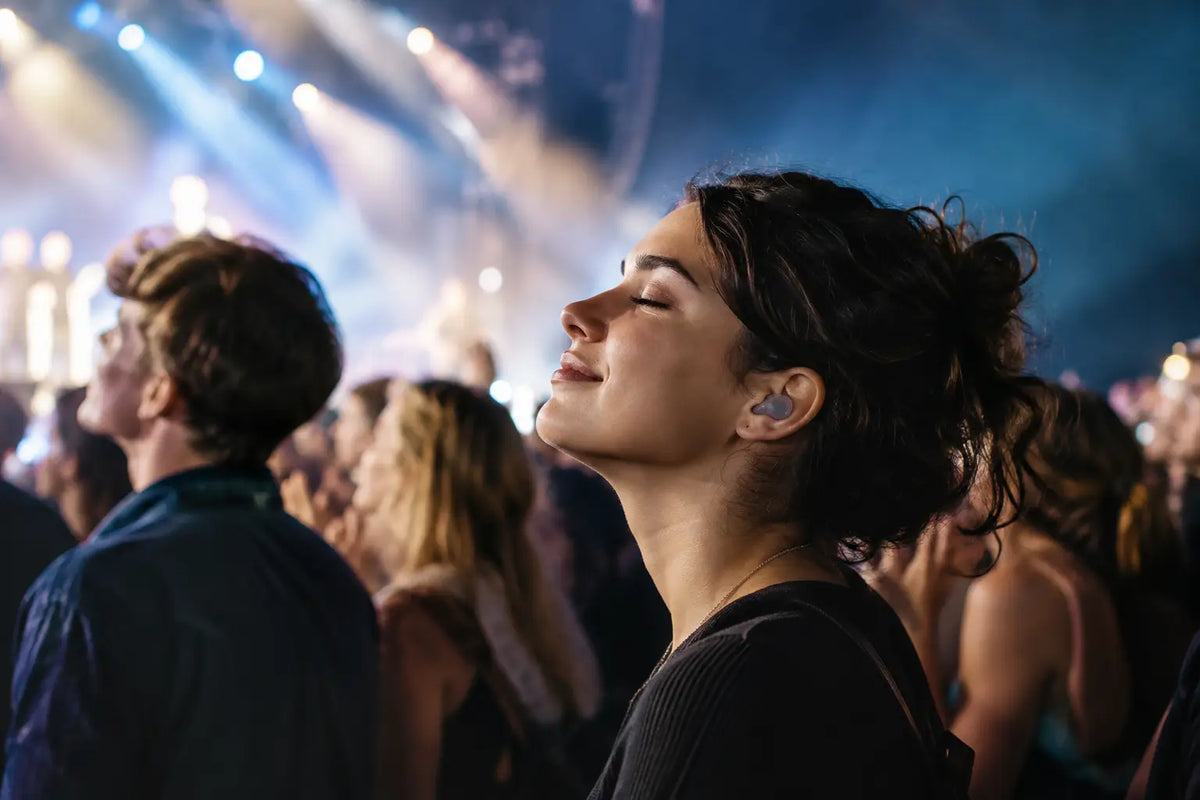
A gig can be enjoyable right up to the point where conversation becomes effort, every cymbal hit feels sharp and you leave feeling mentally spent rather than simply tired. So, can earplugs reduce listening fatigue? For many people, well-fitted filtered earplugs can help by reducing the overall sound load reaching the ears while retaining more useful detail than basic foam plugs.
They are not a cure for fatigue, and the result depends on the noise level, the fit of the earplugs and your own hearing and sound sensitivity. But reducing unnecessary volume can make demanding sound environments feel more manageable, particularly when you need to stay engaged for several hours.
What listening fatigue actually feels like
Listening fatigue is the tiredness that can follow sustained effort to hear, understand or tolerate sound. It is common after concerts, festivals, busy restaurants, long rail journeys, open-plan offices and social events where several conversations compete at once.
It is not always about sound being painfully loud. A space can feel tiring because it is loud, reverberant, unpredictable or full of overlapping voices. Your brain is continually sorting useful sound from background noise: following a friend’s voice, noticing an announcement, keeping time with music or deciding whether a sound needs your attention.
By the end of the day, this can show up as irritability, difficulty concentrating, a strong wish for quiet, or the sense that speech has become harder to follow. Some people are more affected than others. This may include people with tinnitus, sound sensitivity, neurodivergence or auditory processing difficulties, but listening fatigue can affect anyone after enough noise and effort.
Can earplugs reduce listening fatigue in noisy places?
Filtered earplugs may reduce listening fatigue because they lower the intensity of sound before it reaches the ear. This can reduce the amount of sound your auditory system needs to manage, without aiming to block every sound around you.
The distinction matters. Traditional foam earplugs can be useful where maximum attenuation is appropriate, but they often make music and speech sound muffled. For a concert, rehearsal, bar or busy commute, many people prefer reusable filtered earplugs because they are designed to take the edge off volume more evenly. Music can remain more balanced, and speech may be easier to follow than it would be with a heavily occluding plug.
That does not mean conversation will always be effortless. In a very loud venue, no earplug can recreate a quiet room or separate one voice perfectly from crowd noise. The benefit is usually that the environment feels less intense, so you may have more capacity to enjoy it for longer.
Less volume can mean less listening effort
When sound is very loud, the challenge is not only hearing it. It is processing it. Loudness, distortion, competing frequencies and sudden peaks can all make the auditory system work harder.
A suitable filter reduces the level of sound entering the ear canal. For some wearers, that creates a useful margin: music feels less aggressive, crowd noise is less overwhelming and they are less likely to leave with the familiar sense of being sonically drained. The change can be subtle rather than dramatic, especially with lower-level filters, but subtle can be exactly what is wanted when awareness matters.
Predictability can also help
Busy sound environments are tiring partly because they change quickly. A train braking, a hand dryer, a loud laugh beside you or a sudden cheer at a gig can all demand attention.
Earplugs cannot remove unpredictability, but reducing the peak level of everyday noise may make these changes feel less intrusive. People who become overwhelmed in complex environments often value this reduction in intensity while still being able to take part in what is happening around them.
Why fit matters as much as the earplug itself
An earplug only works properly when it forms a consistent seal in the ear canal. A poor fit can lead to uneven sound reduction, discomfort or the feeling that one ear is more blocked than the other. It can also tempt you to keep adjusting the plug, which is distracting in itself.
Reusable earplugs should sit securely without being forced too deeply. Follow the fitting guidance supplied with the product and take a moment to check both sides. Your own voice may sound different when plugs are worn, which is normal and is often more noticeable with designs that create a stronger seal.
Ear canals vary considerably in shape and size. If an earplug repeatedly works loose, causes pain or feels impossible to fit, a different tip size or design may be more suitable. Do not push earplugs further in to solve a fit problem.
Keep reusable earplugs clean and dry, too. Build-up on the tips can affect comfort and hygiene, while damaged parts should be replaced in line with the manufacturer’s guidance.
Choosing the right level of sound reduction
More reduction is not automatically better. The right level depends on where you will wear the earplugs and what you need to hear.
For live music, many people want enough reduction to take down the overall volume while preserving the character of the performance. Musicians may need to hear their own instrument, other players or cues. For travelling or commuting, comfort over a long period and the ability to hear announcements may be more relevant. In a crowded restaurant or social setting, the priority may be reducing the general din without withdrawing from the conversation.
A moderate, more even reduction is often a sensible starting point for these situations. If you still find the setting uncomfortably loud, move away from speakers, take regular quiet breaks or shorten your exposure where practical. Earplugs are one useful part of managing sound, not a reason to ignore an environment that feels too intense.
Use earplugs before you feel overloaded
Many people wait until a venue becomes unbearable before putting in earplugs. Wearing them earlier can be more helpful. You begin with a lower sound load rather than spending the first hour in high volume and trying to recover later.
This is particularly worth considering at events where volume builds over time, such as festivals, weddings, club nights and long rehearsals. Keep your earplugs accessible rather than at the bottom of a bag. A small case makes them easier to use consistently and protects them between wears.
It is also reasonable to give yourself permission to step outside or find a quieter area. A few minutes away from the noise can make returning feel easier. That is not failing to enjoy the event; it is a practical way to pace your listening.
When earplugs may not be the whole answer
Earplugs can lower sound exposure, but listening fatigue may have more than one cause. Poor sleep, stress, long days, illness, difficult acoustics and the effort of social interaction can all contribute. If you are already tired, a manageable level of noise on one day may feel much harder on another.
If sounds seem unusually distorted, one-sided, persistently uncomfortable, or you notice a sudden change in hearing, seek advice from a qualified hearing care professional. The same applies if tinnitus, sound sensitivity or difficulty understanding speech is affecting daily life. Personal assessment can help identify the most appropriate support without assuming there is one explanation for every experience.
For most concertgoers, commuters and people who spend time in lively places, the aim is straightforward: reduce excess volume, keep enough clarity to stay connected and give your ears and brain less to contend with. A well-fitted pair of filtered earplugs can be a calm, practical addition to that plan - letting you stay present without asking your hearing to work quite so hard.