
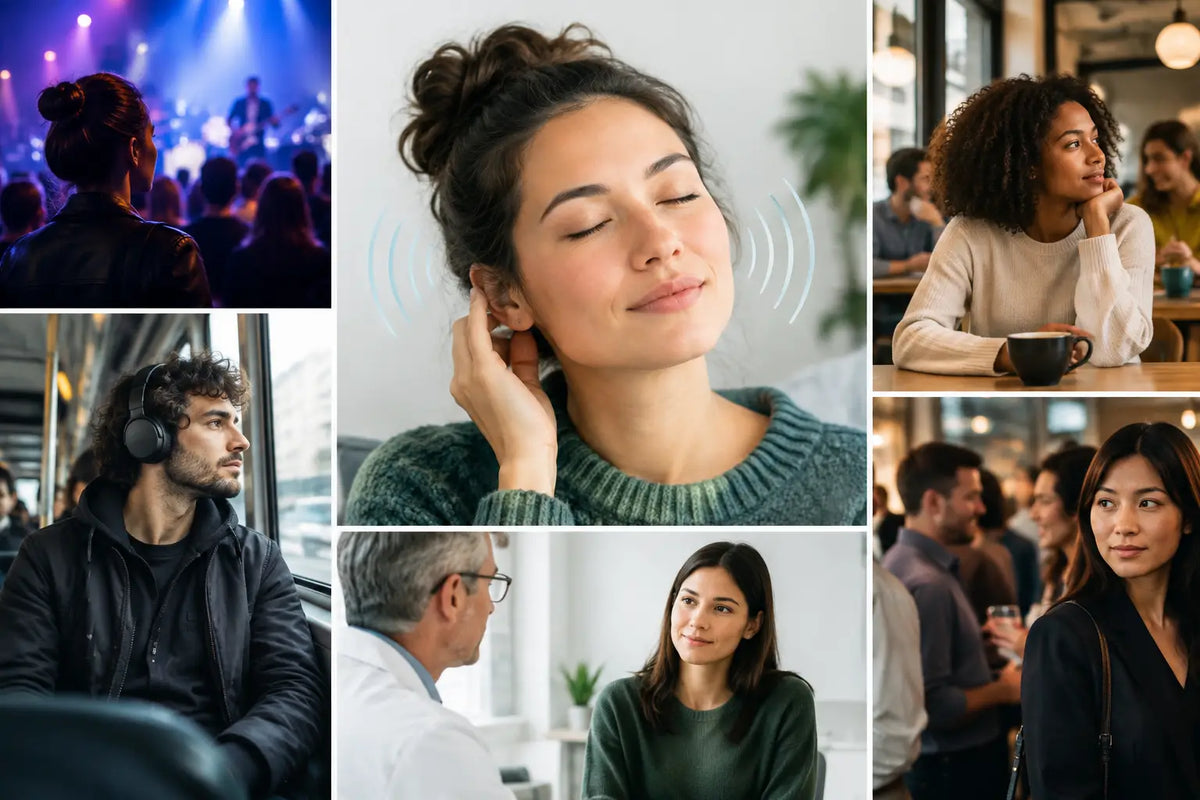
A crowded train carriage, a busy restaurant or a standing area at a gig can make sound feel tiring long before it feels painfully loud. So, can earplugs reduce background noise? Yes. Well-designed earplugs reduce the overall level of sound reaching your ears, which can make busy environments feel more manageable. The degree of reduction, and how natural everything still sounds, depends on the earplug type, fit and the noise around you.
For many people, the best result is not silence. It is taking the edge off unwanted noise while retaining enough speech, music and environmental awareness to stay connected to what is happening.
How earplugs reduce background noise
Earplugs work by creating a physical barrier in the ear canal. This reduces the sound energy that reaches the eardrum. Background noise is not separated out in the way a person might wish for - an earplug cannot identify a nearby conversation as useful and a clattering coffee machine as unwanted. Instead, it lowers sound across a range of frequencies.
That overall reduction can still be very helpful. When the sound level in a room comes down, your listening system has less to process. A lively pub may feel less intense, a train journey less fatiguing, or amplified music more comfortable for longer.
Different earplugs alter sound differently. Soft foam earplugs usually provide a relatively high level of attenuation when inserted correctly, but they can make speech and music sound muffled. Reusable filtered earplugs are designed to reduce sound more evenly across frequencies. In practical terms, this can help music retain more of its balance and make conversation easier to follow than with a basic foam plug, although no earplug makes speech in noise effortless.
Can filtered earplugs reduce background noise without muffling music?
Often, yes - but expectations matter. A filter aims to lower the volume more evenly, rather than blocking mainly higher-frequency detail. That is why filtered designs are often preferred by concertgoers, musicians and people who want to stay engaged in social settings.
Music may sound quieter, but ideally it should retain more clarity and tonal balance. Speech can also remain more natural than it does with heavily occluding plugs. However, if a venue is very loud, highly reverberant or crowded, following conversation may still be difficult. Earplugs reduce the level of competing sound; they do not remove the acoustic challenges of a noisy room.
This distinction matters for people who find complex sound overwhelming. Lowering the overall volume can reduce the pressure of the environment, but everyone’s sensory needs and tolerance for sound are individual. Earplugs can be a useful practical support, not a diagnosis or treatment for an underlying hearing or auditory processing concern.
The fit matters as much as the earplug
An earplug that does not seal properly will let more sound pass around it. It may feel as though it is doing very little, even if the material or filter itself is capable of meaningful reduction. Conversely, an overly large or poorly positioned earplug can feel uncomfortable and may encourage you to remove it before it is useful.
Reusable earplugs commonly come with different tip sizes because ear canals vary considerably. A good fit should feel secure without pain or excessive pressure. It should not work loose when you talk, chew or move your jaw. You may notice your own voice or chewing more than usual, especially with a more sealed fit. This is known as the occlusion effect and is common with earplugs.
Take a moment to insert them properly before entering a noisy place. Clean hands and clean earplugs are sensible basics. If one side consistently feels less effective, try adjusting the position or a different tip size. Do not push an earplug deeply or force it if it causes pain.
A quick way to judge whether they are helping
Put the earplugs in before the noise becomes uncomfortable where possible. Listen for an overall reduction in intensity rather than expecting the room to become quiet. At a music event, the sound should feel less sharp or forceful while remaining recognisable. In a café or on public transport, the general hubbub should recede even if you can still hear it.
If you need to raise your voice substantially to speak, or you cannot hear an important announcement, consider whether the setting requires a different level of protection or whether you need to remove yourself from the noise. Earplugs are only one part of managing a loud environment.
What earplugs can and cannot do
Earplugs can reduce sound exposure and improve comfort in many everyday situations. They may be useful for live music, commuting, travelling, busy social events and any setting where you would like the volume turned down without leaving entirely.
They cannot create perfect quiet in a loud, shared space. They also cannot selectively eliminate bass from a venue, block every sudden sound or guarantee that you will understand every word of a conversation. Low-frequency sounds, vibration and sound conducted through the skull can still be noticeable, particularly on aircraft, trains and near powerful music systems.
The right amount of reduction is situation-dependent. Too little reduction may not provide enough relief in a loud venue. Too much can make communication, orientation and awareness harder. For social and music settings, a moderate, even reduction is often the most practical balance. For situations involving workplace noise or specialist safety requirements, use hearing protection specifically assessed and suitable for that setting.
Background noise, speech and listening effort
People often describe background noise as the main problem when the real difficulty is listening effort. In a busy room, your brain is constantly sorting speech from music, reflections, other conversations and sudden sounds. Even someone with normal hearing can find this draining.
Earplugs can lessen that workload by reducing the overall sound level. Yet speech clarity depends on more than volume. Distance from the speaker, room acoustics, visual cues, fatigue and the amount of competing noise all matter. Standing closer to the person you want to hear, facing them and choosing a quieter edge of the room can make a genuine difference alongside earplugs.
If you regularly struggle to follow speech in background noise, notice ringing after sound exposure, or find ordinary sounds uncomfortably loud, an audiologist can offer personalised advice. A hearing assessment can help identify whether there is a hearing-related factor worth exploring, without assuming that one is present.
Choosing earplugs for busy environments
Start with the environment you use them in most. For gigs, festivals and rehearsals, many people want reusable filtered earplugs that reduce volume while preserving the character of music. For commuting, cafés and travelling, comfort over several hours and easy conversation may be the priority.
Look for a design that offers a secure fit, reusable construction and a level of sound reduction that suits your use case. Keep the earplugs clean and store them in their case so they are ready when plans become louder than expected. Jett Maxwell reusable filtered earplugs are designed around this balance: reducing sound while helping users remain connected to music, speech and their surroundings.
There is no single best earplug for every person or place. The useful question is not simply whether an earplug blocks noise, but whether it reduces enough noise for you to feel more comfortable without taking away the awareness you need.
A well-fitted pair can make a busy environment feel less demanding. Use them early, give yourself permission to step outside for quieter breaks when needed, and treat comfort and clear awareness as part of looking after your hearing over time.