
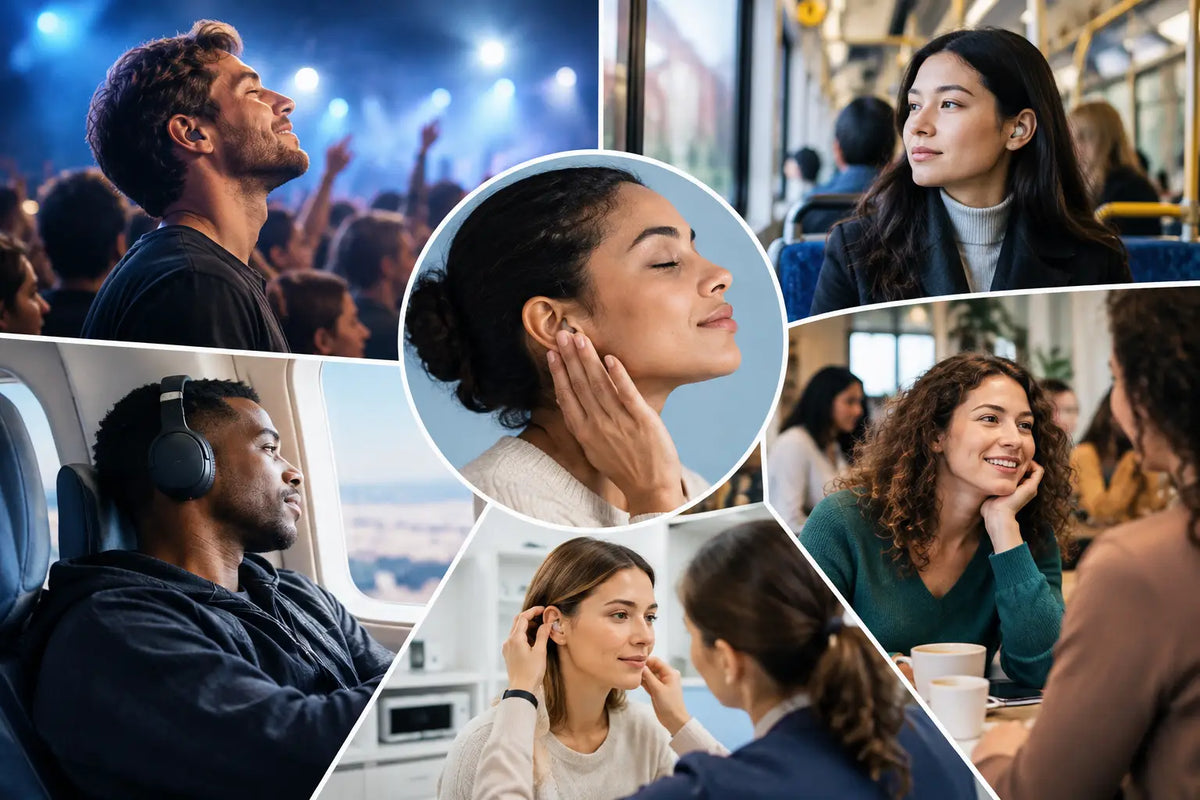
A loud gig can leave your ears ringing on the journey home. A busy train, club or open-plan venue can feel tiring long before it feels painfully loud. So, can earplugs protect hearing permanently? They can help reduce the sound exposure that contributes to noise-related hearing damage, but no earplug can guarantee permanent protection in every situation.
The benefit comes from reducing the amount of sound reaching the ear when you wear them correctly and consistently. The right earplugs should make loud environments more manageable while still allowing you to enjoy music, follow conversation where possible and remain aware of what is happening around you.
What earplugs can and cannot do
Reusable earplugs create a physical barrier that lowers the level of sound entering the ear canal. Filtered designs aim to reduce sound more evenly across frequencies, rather than simply muffling everything. For concertgoers and musicians, this can mean music retains more of its balance and detail than it may with basic foam plugs.
Lowering exposure matters because hearing damage is linked to both sound level and duration. Very loud sound can be harmful in a short period, while moderately loud sound may become a concern after a longer period. Earplugs reduce the dose of sound your ears receive, giving you more protection than going without them.
What they cannot do is make any setting automatically safe, restore hearing that has already been damaged or remove every risk. A poorly fitted plug, removing it repeatedly, standing close to speakers or spending many hours in a loud environment can all reduce the practical benefit. Think of earplugs as a useful layer of protection, not permission to ignore the volume and duration of your exposure.
Can earplugs protect hearing permanently in real life?
They can support long-term hearing health when they are suitable for the environment and used regularly. The word “permanently” is where care is needed. Earplugs do not permanently strengthen the ear or create lasting immunity to loud sound. Their protective effect happens while they are being worn.
Used over time, however, they can reduce repeated unnecessary exposure. That is particularly relevant if loud sound is part of your routine: rehearsals, live music, festivals, commuting, motorsport events, nightlife or busy social settings. Small decisions made repeatedly can make a meaningful difference to the sound load your ears experience.
Individual risk varies. Previous noise exposure, personal hearing history, the type of sound, proximity to the source and the time spent there all matter. If you already have tinnitus, sound sensitivity or concerns about hearing speech in noise, an audiologist can offer advice based on your own hearing and circumstances. Earplugs may help with comfort in some situations, but they are not a treatment for these concerns.
Fit is as important as the earplug itself
An excellent earplug that does not seal properly may offer far less reduction than expected. This is one reason reusable plugs should feel secure but not painful. They need to sit correctly in the ear canal and remain in place when you talk, move or chew.
Before relying on a new pair at a concert or event, practise fitting them somewhere quiet. Insert each plug according to its instructions, then notice whether the sound around you becomes consistently softer. If one ear still sounds almost unchanged, the plug may not be seated properly or the size may not suit your ear.
Comfort matters too. If earplugs hurt after 20 minutes, you are unlikely to keep them in for a full evening. Reusable options with multiple tip sizes can be helpful because ear canals differ, including from one side to the other. Never force an earplug deep into the ear, and stop using it if it causes pain, irritation or persistent discomfort.
A good fit should not mean total isolation
For many people, especially at music events, the aim is not silence. It is a more comfortable, safer listening level with enough clarity to enjoy the performance and communicate.
Filtered earplugs are designed with this use in mind. They may make speech easier to manage than solid plugs in certain noisy settings, although conversation will still be more difficult when the background sound is very loud. No earplug can make speech perfectly clear in every crowded venue.
Choose protection for the setting
The most suitable earplug depends on where and how you will use it. A person attending an occasional concert may prioritise musical clarity and discreet comfort. A musician might need a consistent reduction across rehearsals and performances. Someone who finds travel or busy public spaces overwhelming may prefer a gentler reduction that preserves awareness of announcements and conversation.
Avoid assuming that one product is appropriate for every high-noise task. Occupational and specialist environments may require specific hearing protection, training and workplace assessment. If you need protection for work, check your employer's requirements and use equipment rated and approved for that setting.
For leisure and everyday noise, it is sensible to consider four practical questions:
- Will you wear the earplugs for several hours without discomfort?
- Do you need to hear music, speech or announcements with reasonable clarity?
- Are you likely to be close to speakers, instruments or other loud sound sources?
- Will you remember to carry and use them every time?
Use earplugs alongside sensible listening habits
Earplugs work best when paired with a few simple choices. Put distance between yourself and speakers where possible. Take breaks in quieter areas during longer events. If a venue feels uncomfortably loud even with earplugs, move away from the source or step outside for a while.
Pay attention to the signs your ears may be overworked. Temporary ringing, muffled hearing, fullness or difficulty tolerating ordinary sound after an event are reasons to reduce further loud exposure and give your ears time in quieter surroundings. These symptoms can settle, but repeated episodes should not be dismissed as an unavoidable part of having a good night out.
Listening through headphones deserves the same approach. Earplugs do not protect you from music delivered directly through earbuds or headphones. Keep the volume at a comfortable level, take regular breaks and avoid turning it up to compete with background noise. Noise-cancelling headphones can help some people listen at lower volumes during travel, provided they are used sensibly.
Cleaning and replacing reusable earplugs
Reusable earplugs need basic care to remain comfortable and hygienic. Clean them as directed by the manufacturer, allow them to dry fully and store them in their case. Earwax, dust or damaged tips can affect fit and comfort.
Do not share earplugs with other people. Replace them if the material becomes split, stiff, misshapen or difficult to clean. If you have an ear infection, discharge, recent ear surgery or a painful blocked ear, seek appropriate medical advice before inserting anything into the ear canal.
When to arrange a hearing check
A hearing check is worthwhile if you notice persistent ringing, ongoing muffled hearing, increasing difficulty following conversation in background noise or a clear change in hearing after loud sound exposure. Sudden hearing loss, particularly in one ear, should be assessed urgently.
An audiologist can discuss your hearing history, test your hearing where appropriate and help you understand which protection is likely to suit your routine. That is more useful than guessing, particularly for musicians, frequent concertgoers and anyone whose work or wellbeing is regularly affected by noise.
Hearing protection is most effective when it becomes an ordinary part of preparing for loud places, much like taking a coat when the forecast is uncertain. Choose a comfortable fit, wear it before the noise starts and give your ears a little more consideration than the volume around you does.