
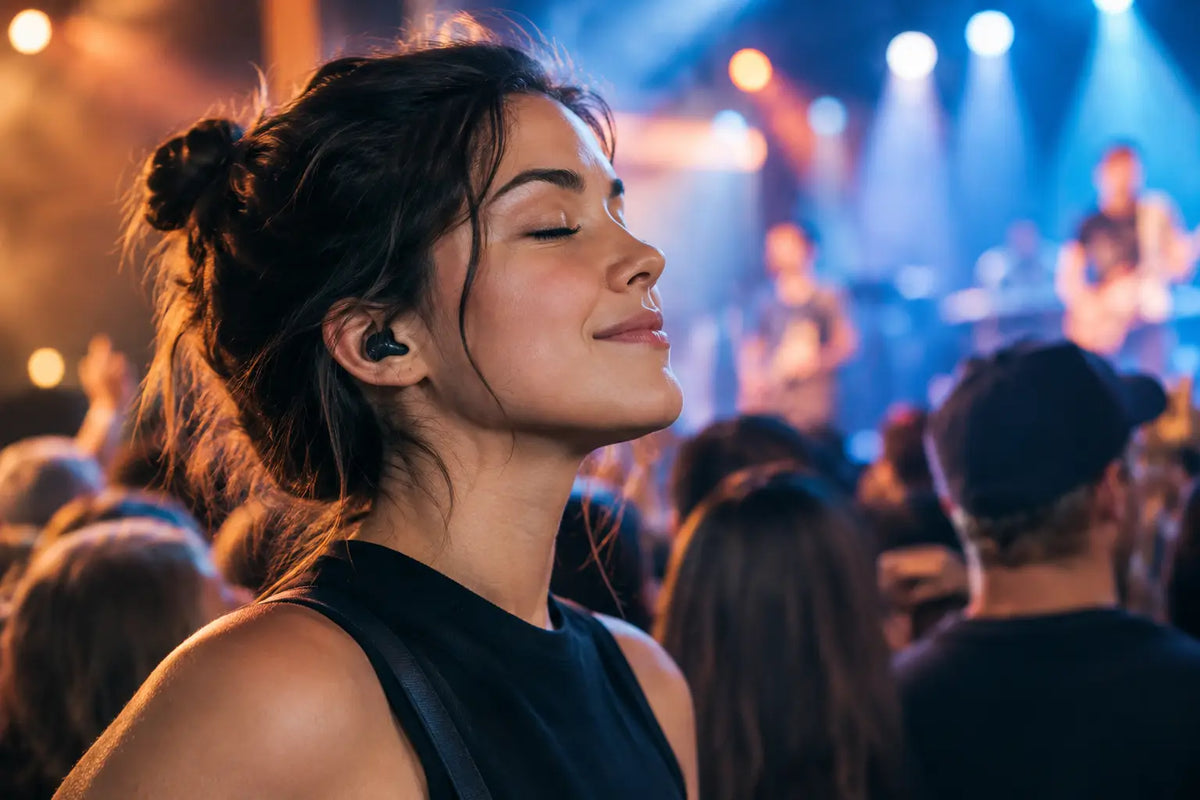
A great live set should leave you thinking about the music, not the ringing, muffled hearing or fatigue afterwards. The best earplugs for live bands reduce the overall level without making guitars, vocals and conversation disappear behind a wall of sound.
For most people, reusable filtered earplugs are the strongest starting point. Unlike basic foam plugs, which can make music sound dull or uneven, filtered designs aim to lower sound more evenly across frequencies. The result is usually a more natural balance: less intensity, while retaining enough detail to follow the performance and speak to people nearby.
What makes the best earplugs for live bands?
The right choice is not necessarily the pair that blocks the most sound. It is the pair that gives you an appropriate reduction for the venue, fits securely and is comfortable enough to keep in for the full set.
Live bands create a changing sound environment. A quiet support act, a packed standing area, a drummer on stage and a small club with hard walls can all feel very different. The aim is to bring sound down to a more manageable level while keeping the character of the music intact.
For gig-goers, look for reusable earplugs with an acoustic filter. This is designed to reduce volume more evenly than a simple solid plug. Speech may still be harder to follow in a noisy room - that is a feature of the environment, not necessarily a problem with the earplug - but a well-chosen filter should avoid the heavily muffled effect many people associate with ear protection.
For musicians, the priorities are similar, with an added focus on monitoring your own instrument, following cues and hearing bandmates clearly. What works for an audience member at an occasional concert may not be the best option for someone rehearsing and performing regularly.
Choose protection for the venue, not just the label
Earplugs are often described by how much sound they reduce. That figure is useful as a guide, but it is not a promise of the exact reduction you will experience. Fit, ear shape, insertion depth and movement all affect real-world performance.
A moderate filter may suit many concerts, pubs and rehearsals where you want to remain connected to the music and people around you. A higher-reduction option can be more suitable for particularly loud venues, extended sets, frequent exposure or positions close to speakers and drums. It depends on the sound level, how long you will be there and your own comfort with sound.
Do not assume that a lower reduction is always better because it feels more natural. If a venue remains uncomfortably loud with your earplugs in, move away from the speakers where possible, take a quiet break and consider whether you need greater reduction next time. Earplugs are one part of sensible listening habits, alongside distance and time spent in loud sound.
Filtered versus foam earplugs
Foam earplugs can be a practical option when a high level of reduction is the immediate priority. They are widely available and can work well when inserted correctly. However, they commonly alter the tonal balance of music, often reducing treble detail and making vocals less distinct.
Reusable filtered earplugs are generally better suited to live music when sound quality matters. They are designed for repeated use, are often easier to carry to gigs, and can offer a more balanced listening experience. The trade-off is that they need proper care and a good fit, and different filters may suit different settings.
Neither type is automatically right for everyone. If you are attending an especially loud event or find that music remains too intense, the greater reduction of foam may be preferable on that occasion. The most effective earplug is the one you can wear correctly and consistently.
Fit changes everything
A premium filter cannot perform as intended if the earplug is loose, uncomfortable or partly working its way out during a set. A secure seal helps reduce sound reliably, while a comfortable fit makes it more likely you will leave the plugs in rather than removing them midway through the headline act.
Reusable earplugs commonly come with more than one tip size. Take the time to try them in a quiet setting before a gig. The correct size should feel stable and snug without pressure, pain or a blocked sensation that becomes distracting. Your ears may not be identical, so it is perfectly reasonable to use different tip sizes in each ear if that gives a better fit.
Insert the earplugs as directed and check them after a few minutes. If the sound seems nearly unchanged, or one side sounds noticeably louder, refit the earplug. A gentle twist can help seat some designs, but avoid forcing anything deeply into the ear canal.
If earplugs consistently cause discomfort, fall out or are difficult to manage, seek advice from an audiologist or hearing care professional. Individual ear shape, wax build-up and existing ear conditions can affect comfort and fit. This is general information rather than personalised clinical advice.
Consider how you use live music
The best choice changes with your role in the room. A person attending a few arena shows each year may want a discreet, reusable filtered pair that preserves the enjoyment of the event. Someone who plays in a band every weekend may place more value on consistent fit, dependable filtering and the ability to hear musical detail over long rehearsals and performances.
People who experience auditory overwhelm or find busy soundscapes tiring may also appreciate earplugs before sound becomes unbearable. Reducing the overall intensity can make it easier to stay present in a crowded venue. Earplugs are not a treatment for sound sensitivity, tinnitus or auditory processing difficulties, but they can be a useful practical support in loud environments for some people.
Think about the moments before and after the music, too. You may need to order at a bar, speak to friends or travel home on public transport. A filtered design is often a sensible compromise when environmental awareness and conversation matter alongside sound reduction.
Look for practical details you will actually use
The most useful live-music earplugs are easy to take with you and easy to maintain. A protective case reduces the chance of loss in a coat pocket or bag. Replaceable tips can help you maintain a comfortable fit over time. Clear care instructions also matter, as reusable earplugs need regular cleaning to remain hygienic and comfortable.
Avoid sharing earplugs, even between friends. Keep them clean, dry them properly after washing and inspect tips and filters for wear. If a component is damaged or no longer fits securely, replace it according to the manufacturer’s guidance.
Jett Maxwell reusable filtered earplugs are designed around this real-world balance: reducing excessive sound while helping music, speech and surrounding awareness remain more natural. As with any hearing protection, the right fit and the right level of reduction are central to the experience.
A simple decision for your next gig
If you want one answer, choose reusable filtered earplugs with multiple tip sizes and a level of reduction suited to the venues you attend most often. Test their fit before the event, carry the case with you and put them in before the room becomes uncomfortably loud.
Live music is meant to be felt, but it does not need to feel punishing. A well-fitting pair of earplugs can help you keep the energy of the performance while making a long night of music easier on your ears.