
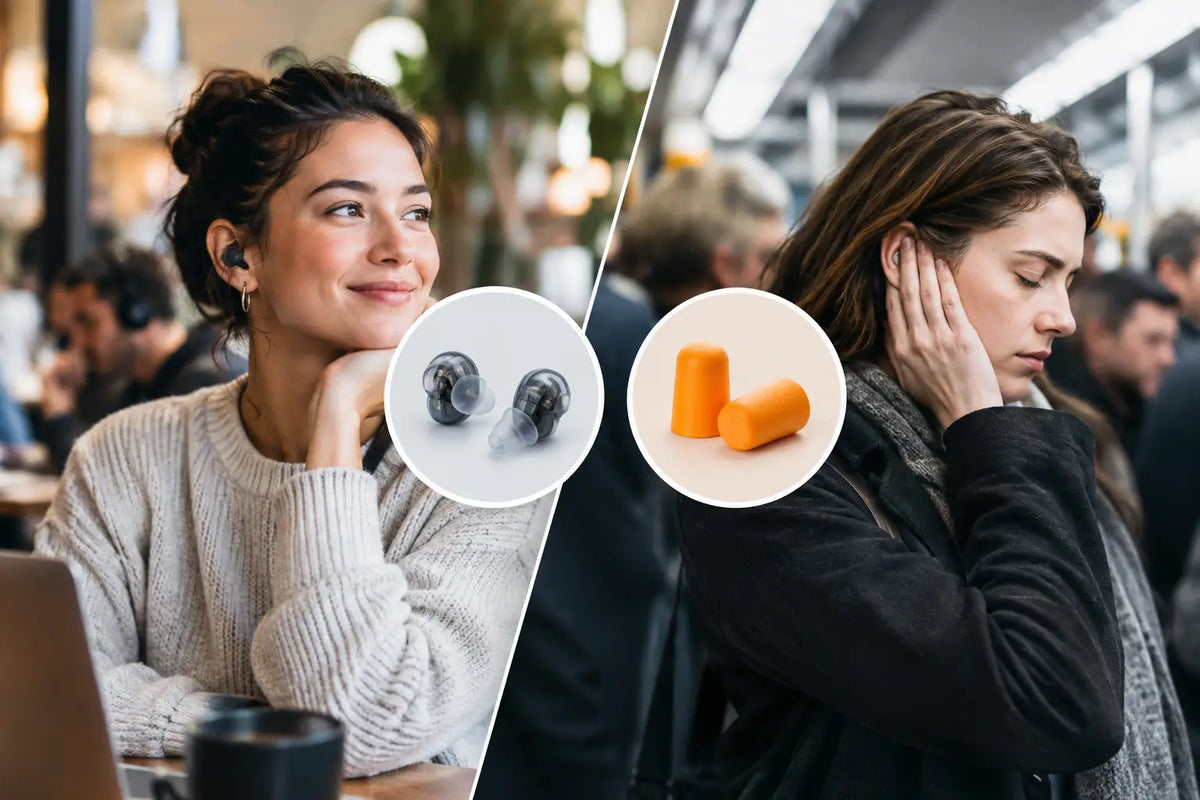
At a gig, on a busy train or in a crowded pub, the choice between acoustic filters versus solid plugs usually comes down to one question: do you want to turn the volume down while keeping the sound usable, or reduce as much sound as possible? Neither option is automatically better. The right choice depends on the environment, how long you will be there and what you need to hear.
Filtered earplugs are often the more practical option for music, conversation and everyday noisy settings. Solid plugs can be useful when maximum quiet is the priority. Understanding the difference helps you choose hearing protection that feels comfortable enough to use consistently.
What acoustic filters and solid plugs do differently
Solid plugs create a physical barrier in the ear canal. Foam plugs are the familiar example, although reusable silicone and mouldable options also exist. They can substantially reduce sound when they fit well, but they tend to reduce different frequencies unevenly. This can leave music sounding muffled and make speech harder to follow.
Acoustic filters are designed to reduce sound more evenly across a broader range of frequencies. Rather than simply blocking the ear canal, a filter uses carefully shaped channels and materials to manage how sound enters the ear. The aim is a lower, more balanced version of the original sound.
In practical terms, a band may still sound like a band rather than a distant thump, and a friend’s voice may be easier to understand than it would be through a basic foam plug. That does not mean filtered earplugs make every sound perfectly clear, particularly in a very loud or reverberant room. They reduce sound, not the complexity of the environment.
Acoustic filters versus solid plugs for music and social settings
For concerts, festivals, rehearsals, nightlife and busy events, filtered earplugs are commonly preferred because enjoyment still matters. Music contains low, middle and high frequencies, and uneven reduction can change its balance noticeably. A more even reduction helps preserve detail, rhythm and vocal clarity while bringing the overall level down.
Speech is another consideration. When you are in a crowded venue, following a conversation is already demanding. Solid plugs can make speech less distinct, especially consonants that provide much of a word’s definition. Filtered earplugs may make conversation more manageable, although no earplug can remove background noise and leave speech completely untouched.
Environmental awareness can matter too. Some people want to hear announcements, companions or changes around them while reducing the intensity of a noisy setting. Acoustic filters can offer a sensible middle ground for those situations. They are not a substitute for remaining alert or for following venue guidance, but they can be less isolating than more heavily blocking plugs.
When solid plugs may be the better choice
There are times when preserving sound quality is not the priority. If you are trying to rest during travel, share a noisy household or take a break from a sound-heavy environment, a solid plug may feel more suitable. The muffled quality can be a benefit when your main aim is quiet rather than communication.
This choice is personal. Someone who finds busy sound overwhelming may prefer greater reduction during a particular journey or event, while another person may feel more comfortable with a filtered option that keeps them connected to what is happening around them. It can also vary from one day to the next.
The type of plug alone does not determine protection. A poorly fitted solid plug may provide far less reduction than expected, while a well-fitted filtered plug may be the option you are most willing to wear for the full duration of an event. Consistent, correct use matters.
Fit is as important as the filter
Even a well-designed earplug cannot work as intended if it is sitting loosely at the entrance to the ear. The ear canal is individual in shape and size, so comfort and seal are closely linked. If a plug causes pain, works its way out or feels as though sound is leaking around it, it may not be the right size or style for you.
Reusable earplugs often come with more than one tip size. Take a few quiet minutes to try them rather than judging the fit at the venue door. A suitable fit should feel secure and comfortable, without needing to be forced deep into the ear canal. Your voice may sound somewhat different once plugs are in place, which is normal, but pressure or pain is not something to ignore.
For foam plugs, the fitting technique is particularly important. They need to be rolled, inserted and held briefly while the foam expands. Simply pushing a foam plug into the outer ear often gives a poor seal. Always follow the manufacturer’s instructions for the specific product.
Choosing the level of reduction
Earplugs are not all intended for the same sound level or use case. Product labelling may state an attenuation value, but this is best viewed as a comparison point rather than a promise of exactly what you will experience. Real-world reduction varies with fit, ear anatomy, insertion and movement.
For a concert or social event, many people value moderate, balanced reduction that makes the setting more comfortable without removing the experience. Musicians may need to hear timing, pitch and colleagues clearly, so a filtered design is often worth considering. For travel, commuting or a noisy café, the best option may be the one that reduces the edge of the sound while allowing you to respond when needed.
If you are regularly exposed to very loud sound, choose hearing protection that is appropriate for that environment and use it for the full exposure, not only once your ears begin to feel uncomfortable. If you are unsure what level or type is suitable, an audiologist or hearing care professional can offer personalised guidance.
A note for sound sensitivity and auditory overwhelm
People experience sound differently. You may notice that certain environments feel tiring, sharp or difficult to process even when others appear comfortable. Earplugs can be a practical tool for selected situations, helping you control how much sound reaches you.
They are not a treatment for tinnitus, sound sensitivity, auditory processing difficulties or any other condition, and it is not always helpful to block sound at every opportunity. For some people, frequent use in ordinary quiet settings can make day-to-day listening feel more difficult. A measured approach is usually best: use protection when the environment is genuinely loud or demanding, and seek clinical advice if sound tolerance has changed suddenly or is affecting everyday life.
It can be useful to keep a simple note of which situations feel difficult, how long you are exposed and which type of earplug feels helpful. This gives you a clearer basis for choosing rather than relying on a one-size-fits-all answer.
How to make a practical choice
Start with the setting. If you are buying earplugs for live music, events, rehearsals or busy social spaces, acoustic filters are likely to suit your needs because they aim to retain useful sound quality and awareness. Jett Maxwell reusable filtered earplugs are designed around this balance: lower sound levels without unnecessarily losing the music or conversation that brought you there.
If rest, quiet or strong reduction is your main aim, a solid plug may be more appropriate. You may also find it useful to keep different options for different situations. There is no rule that says one pair must cover every train journey, concert, flight and night at home.
The best earplug is the one that fits properly, suits the setting and makes it easier for you to look after your hearing without stepping away from the moments you want to enjoy.